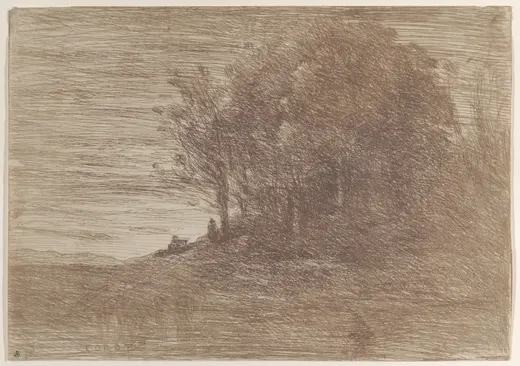
The Woods of the Hermit (Le Bois de l'ermite)
1858 · Cliché-verre; first state of two · Sheet (Trimmed): 6 7/16 × 9 1/8 in. (16.3 × 23.1 cm)
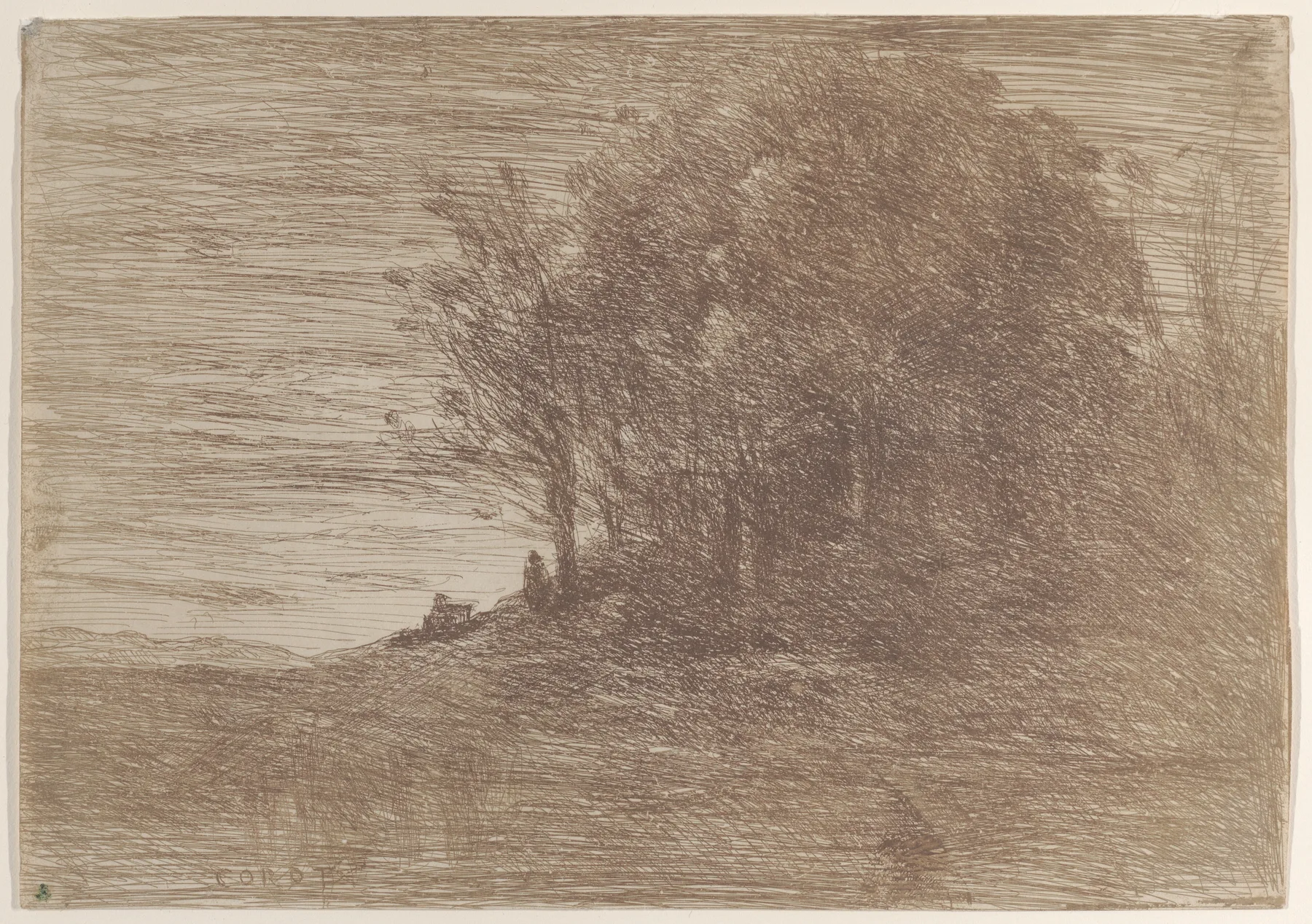
Corot, The Woods of the Hermit (Le Bois de l'ermite), 1858. Cliché-verre; first state of two.
The Metropolitan Museum of Art · The Elisha Whittelsey Collection, The Elisha Whittelsey Fund, 1989
How to look at a Corot
- Squint first. Count the masses. If you count more than four, squint harder.
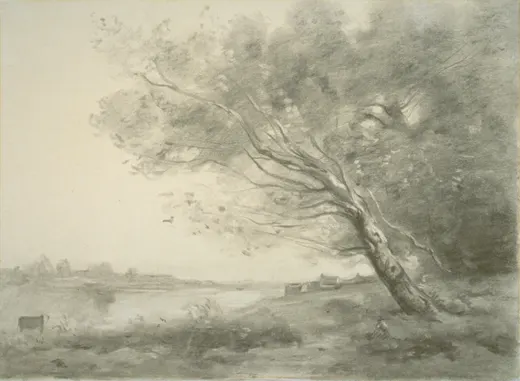
- Find the lightest light (nearly always sky, or water reflecting sky) and the darkest dark (nearly always a foreground tree trunk or a shadow under foliage). Everything else sits between them.
- In the Italian graphite sheets, notice how much paper is untouched and how few lines describe a whole hill town. Then notice that every one of those lines is exactly placed.
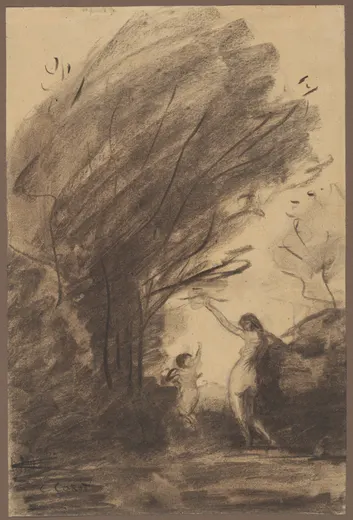
- In the late charcoals, look for where an edge disappears: a trunk into shadow, a hill into sky. Those lost edges are the air.
- In the etchings, half-close your eyes until the lines vanish and only tones remain. That is what he was building.
Draw this
1 study of this work