Primary master · French · 1796 to 1875
Jean-Baptiste-Camille Corot
One never saw him without charcoal in his hand.
Corot is the rare master whose own life maps the whole of this program. He arrived in Rome at the end of 1825, aged twenty-nine, and spent three years drawing the city and the Campagna with a sharp lead pencil: hill towns, aqueducts, parapets and arches set down with what one cataloguer called a force of execution that vies with accuracy of observation. Around 220 drawings and 150 oil studies came home with him. That is the LINE half of this course.
Forty years later the same man was working almost entirely in charcoal, turning the stick on its side to lay broad tone, lifting lights out with bread and a stump, and drawing landscapes from memory that he titled Souvenir. He said he composed by value rather than colour, and his students recorded that he taught form and values first and let colour and finish come afterward. That is the MASS half.
He organised every landscape into what he called three divisions of light: a foreground with the deepest darks and strongest contrasts, a midground of halftones, and a distance of pale, close values. Learn that one idea and half of landscape drawing is yours.
He also printed. His etchings and his cliché-verre plates (drawings scratched into a coated glass plate and printed photographically) are the best place to watch him build tone from pure line, which is exactly the skill the architectural half of this course demands.
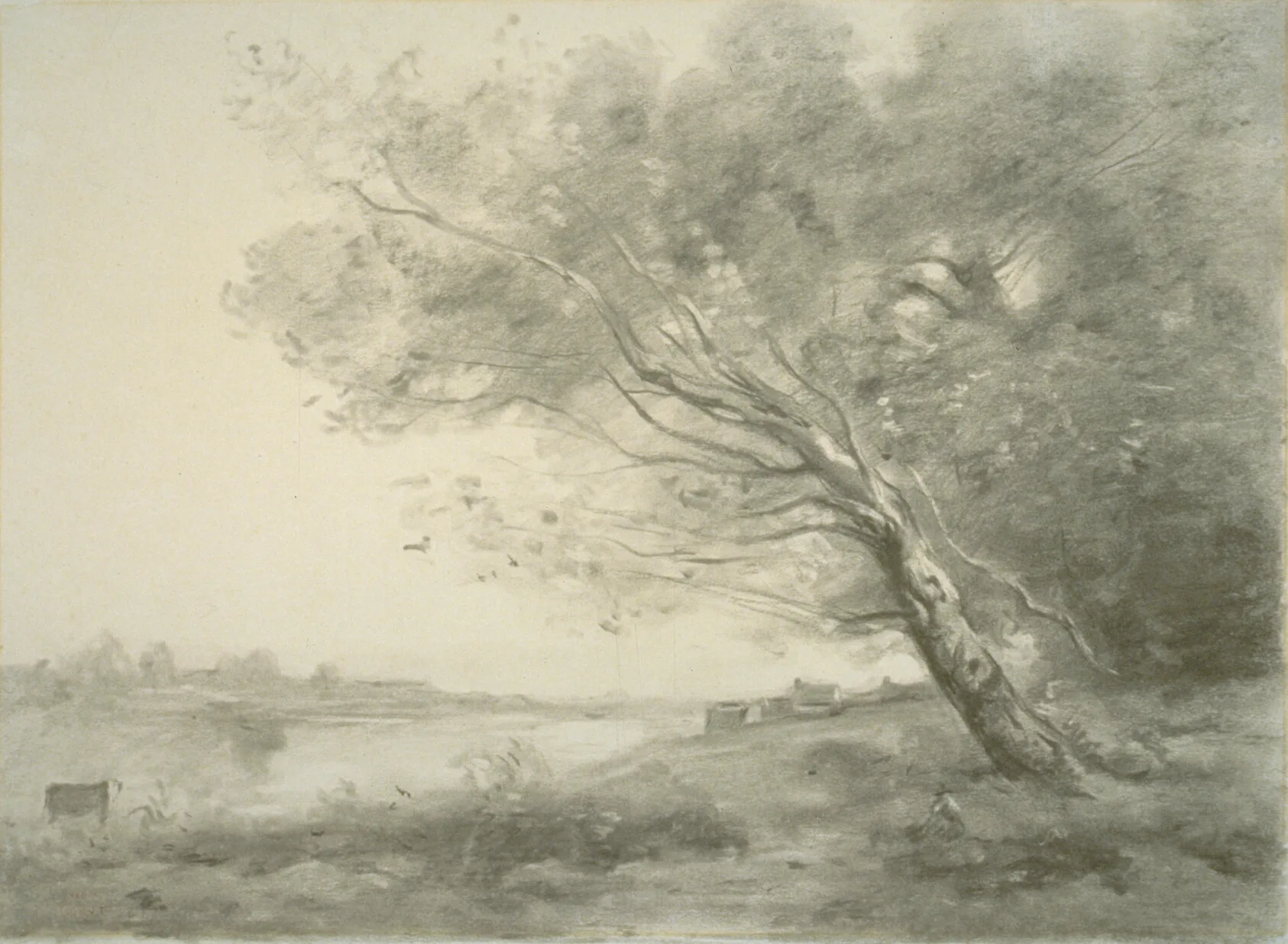
Corot, Bent Tree by the Water, 1860/70. Charcoal, with stumping and erasing, on cream wove paper, laid down on cream board.
The Art Institute of Chicago · Harold Joachim Birthday Fund, purchased with funds provided by the Alsdorf Foundation, Mr. and Mrs. William O. Hunt and Frank B. Hubachek
What to steal
- 1The three divisions of light. Decide them before the first mark, and never let the distance borrow a dark from the foreground.
- 2Trees as masses that catch light, with branches that zig-zag upward and vanish into the clumps. Not one branch ends in open air.
- 3The young Corot's contour: a hard, sharp pencil, almost no shading, every edge placed exactly, acres of untouched paper.
- 4The old Corot's charcoal: side of the stick, grain of the paper left for air, edges lost on purpose, lights lifted rather than left.
- 5The souvenir: look hard, turn away, draw what the memory kept. Memory is the best filter for detail ever invented.
How to look
- Squint first. Count the masses. If you count more than four, squint harder.
- Find the lightest light (nearly always sky, or water reflecting sky) and the darkest dark (nearly always a foreground tree trunk or a shadow under foliage). Everything else sits between them.
- In the Italian graphite sheets, notice how much paper is untouched and how few lines describe a whole hill town. Then notice that every one of those lines is exactly placed.
- In the late charcoals, look for where an edge disappears: a trunk into shadow, a hill into sky. Those lost edges are the air.
- In the etchings, half-close your eyes until the lines vanish and only tones remain. That is what he was building.
Works
60 public-domain
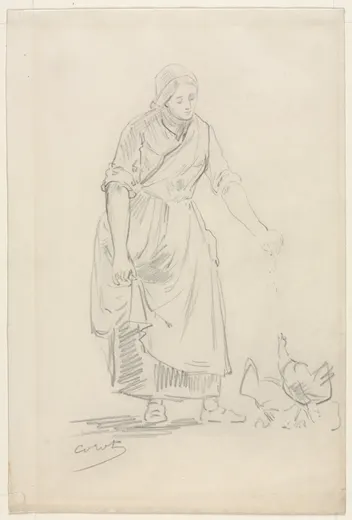
Peasant Girl Feeding Chickens
1800s(?) · graphite
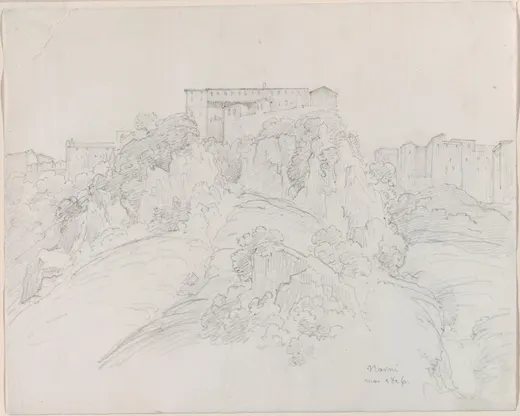
View of Narni
1826 · Graphite
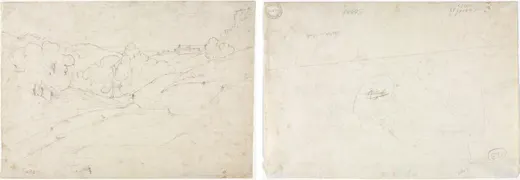
View of Marino (recto); Sketch for a Landscape (verso)
1827 · graphite
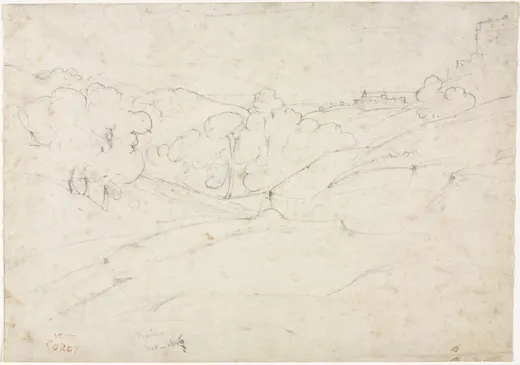
View of Marino (recto)
1827 · graphite
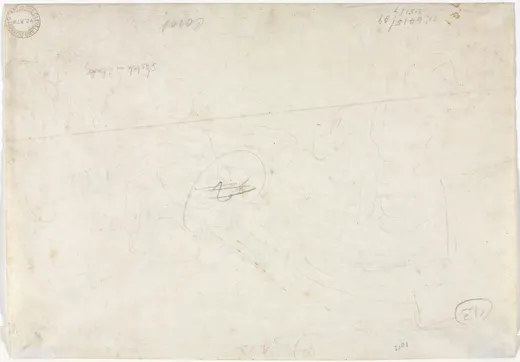
Sketch for a Landscape (verso)
1827 · graphite
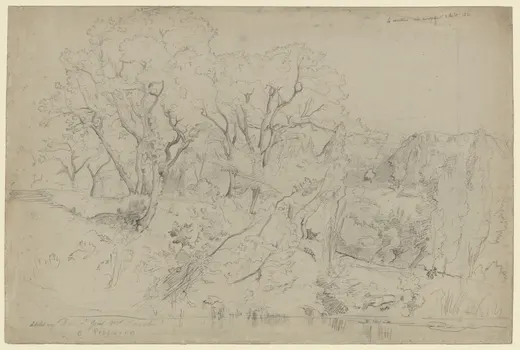
Le Martinet near Montpellier
1836 · Pen and black ink
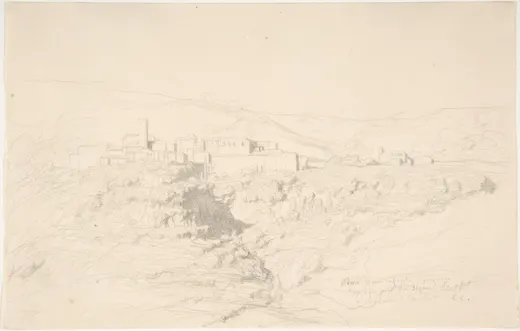
View of Nemi
1843 or 1826 · Graphite
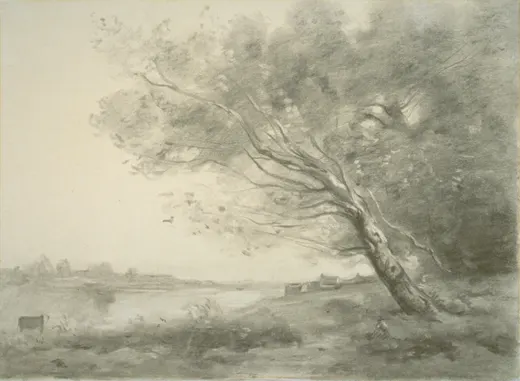
Bent Tree by the Water
1860/70 · Charcoal
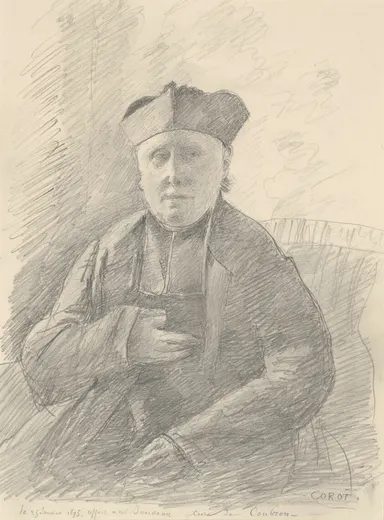
Portrait of Abbé Jouveau
1875 · Graphite
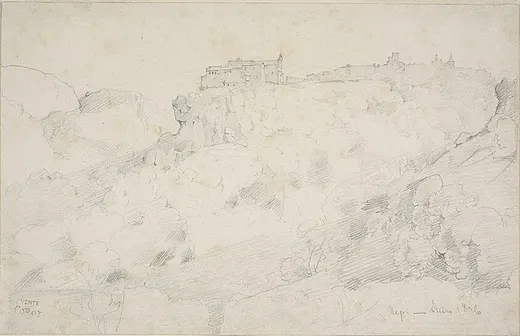
View of Nepi
c. 1826 · Graphite
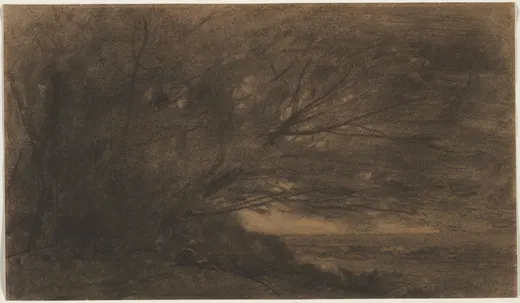
Landscape (The Large Tree)
c. 1865–70 · charcoal with stumping
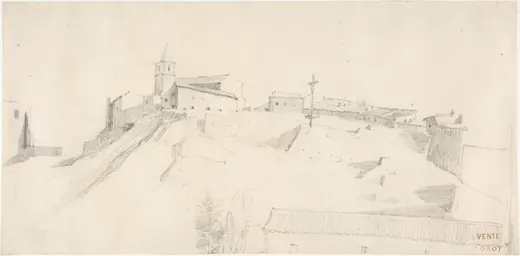
View of a Hill Town with a Crucifix
possibly 1830s · Graphite
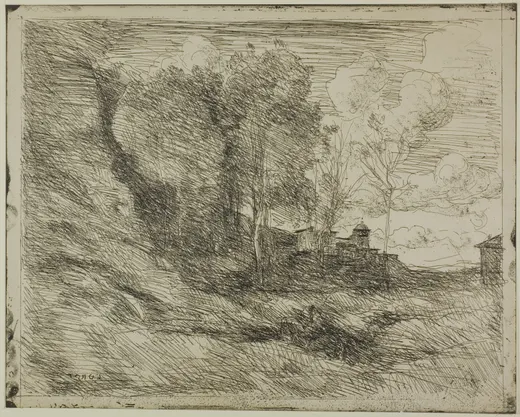
Souvenir of Ostia
1855 · Cliché-verre
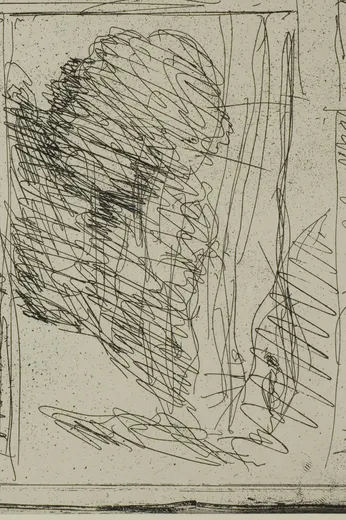
The Woodcutter
1856 · Cliché-verre
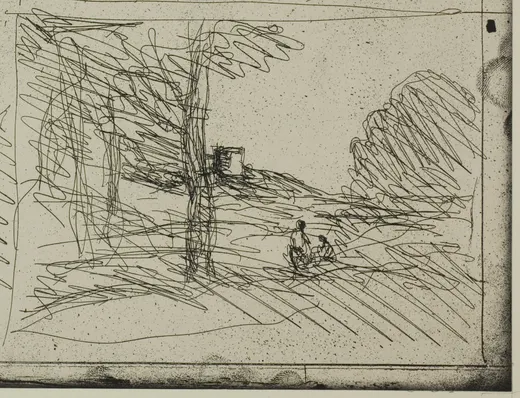
The Tower of Henry VIII
1856 · Cliché-verre
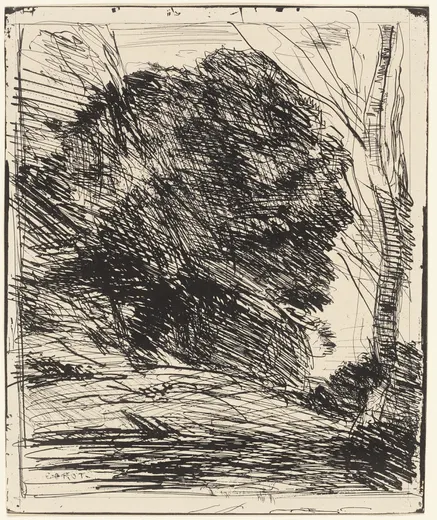
Trees on a Mountainside
1856 · Cliché-verre
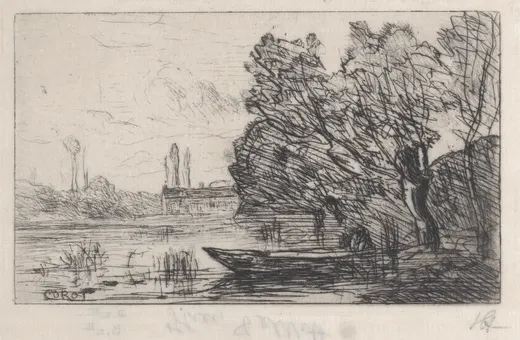
Ville d'Avray: Boat Under the Willows (Morning Effect)
1857 · Etching; second state of two
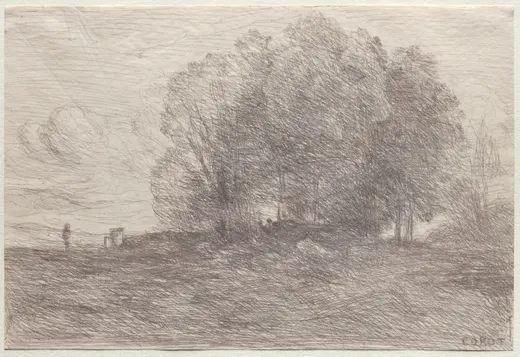
Group of Trees
1858 · cliché-verre
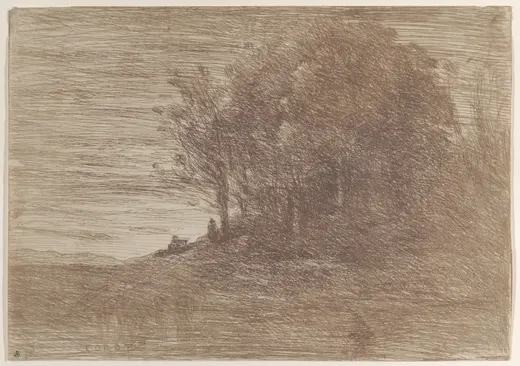
The Woods of the Hermit (Le Bois de l'ermite)
1858 · Cliché-verre; first state of two
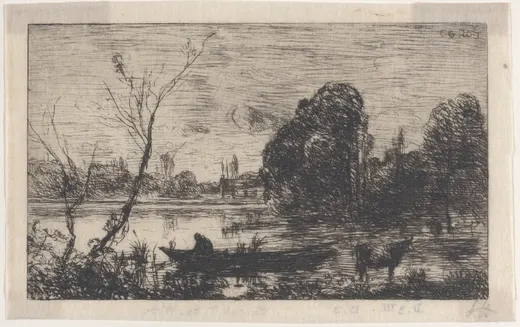
Ville d'Avray: Boatman on a Pond (Evening Effect)
1862 · Etching; third state of three
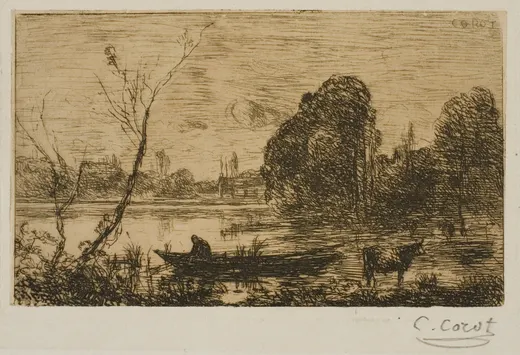
Ville d'Avray: Pond with Boatman, Evening
1862–63 · Etching and drypoint
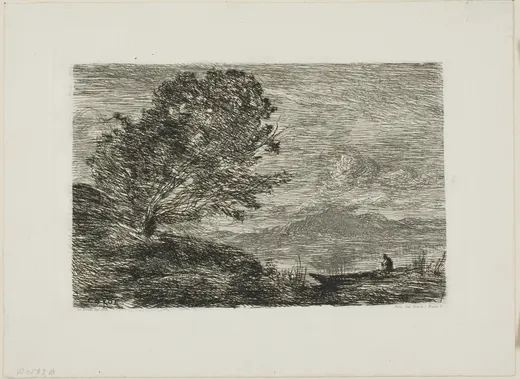
Lake in the Tyrol
1863 · Etching
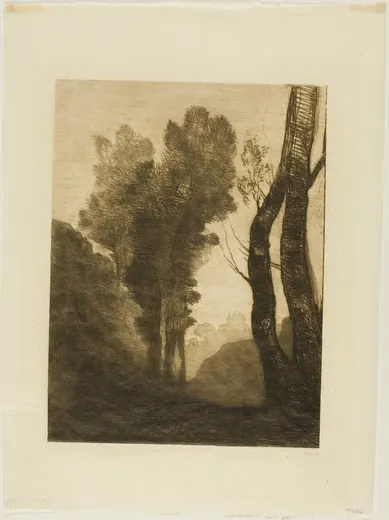
Outskirts of Rome
1866 · Etching
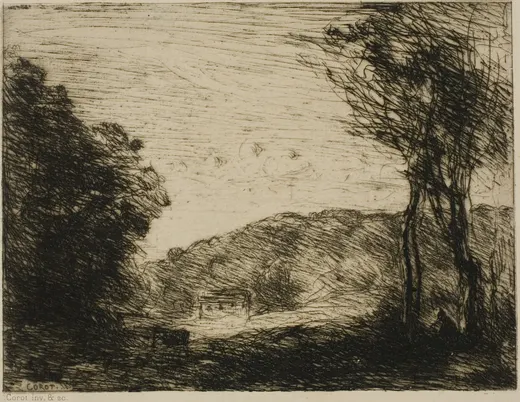
Wooded Countryside
1866 · Etching
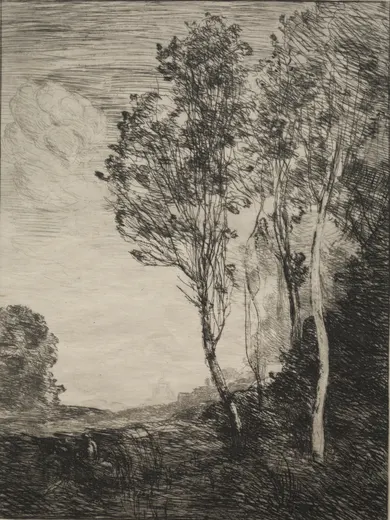
Souvenir of Italy
1866 · etching
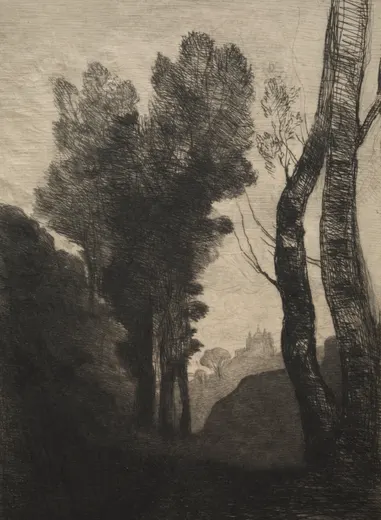
Environs of Rome
1866 · etching
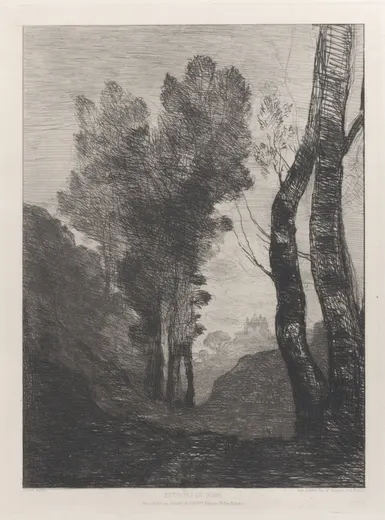
Environs de Rome
1866 · Etching; between second and third state of three
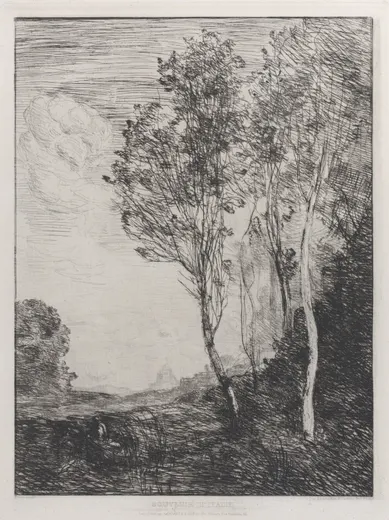
Souvenir of Italy (Souvenir d'Italie)
1866 · Etching; probably an intermediate state between the second and third
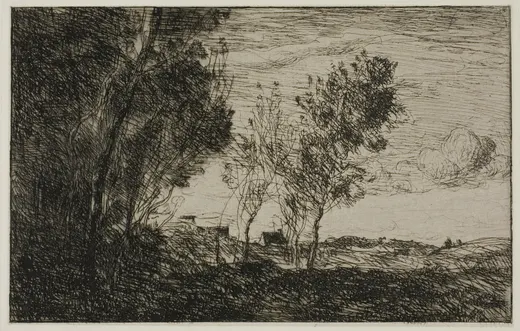
In the Dunes: Souvenir of the Woods of the Hague
1869 · Etching
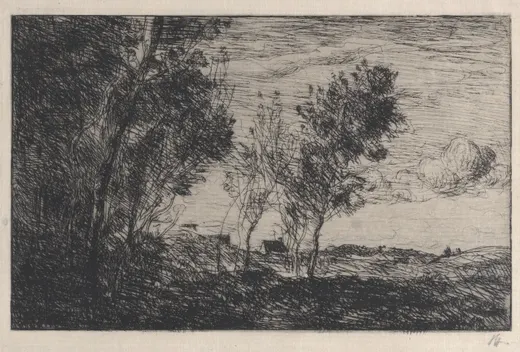
In the Dunes: Souvenir of the Woods at the Hague (Dans les dunes: Souvenir du bois de la Haye)
1869 · Etching; second state of two
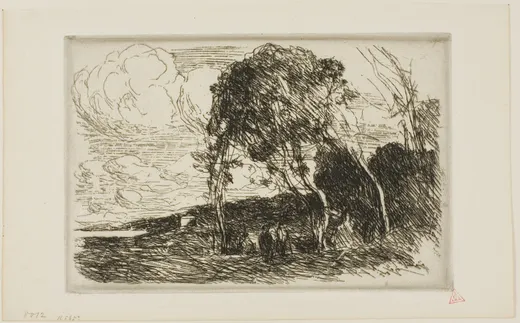
Souvenir of the Fortifications of Douai
1869–70 · Etching
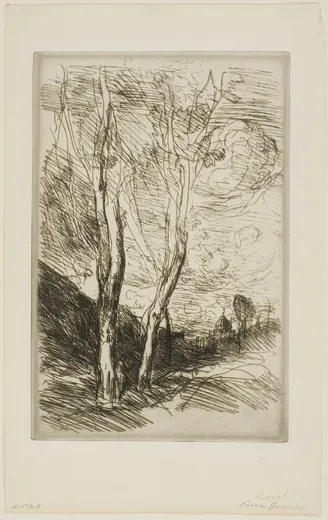
The Florentine Duomo
1869–70 · Etching
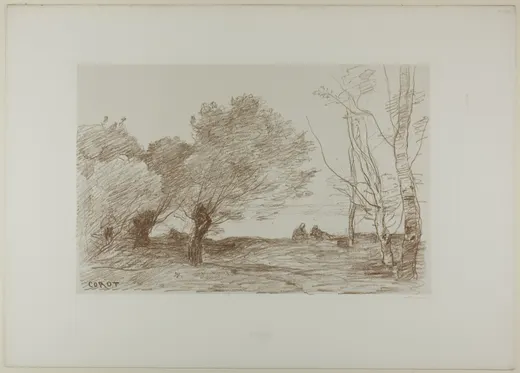
Willows and White Poplars
1871 · Transfer lithograph printed in brown
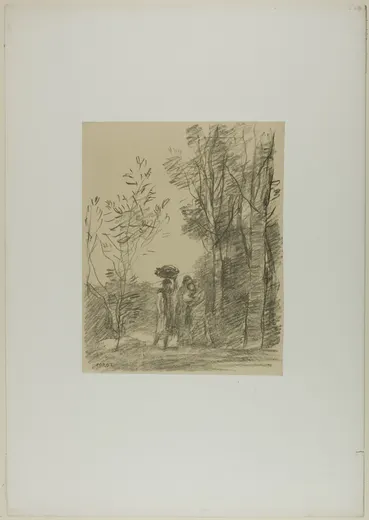
The Meeting in the Woods
1871 · Transfer lithograph
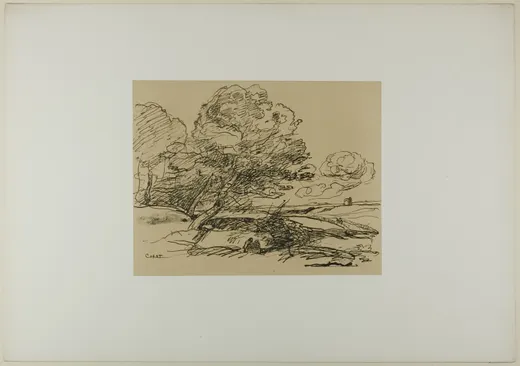
The Lonely Tower
1871 · Transfer lithograph in black
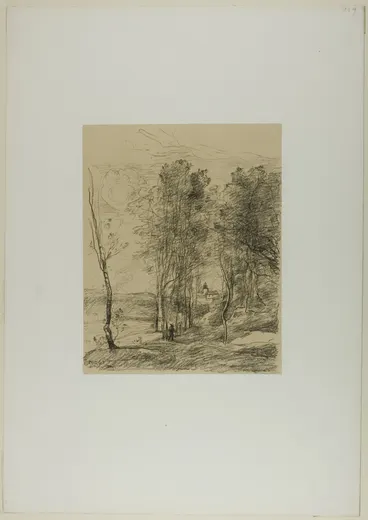
The Bell Tower of St. Nicolas-lez-Arras
1871 · Transfer lithograph
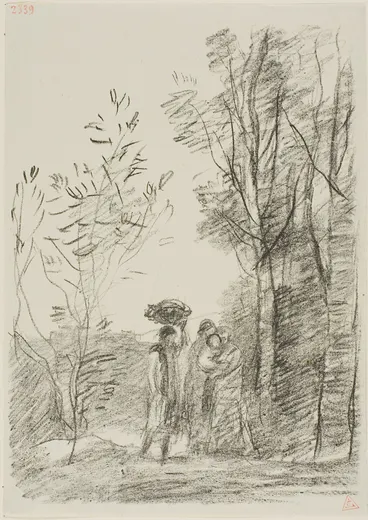
Meeting in the Woods
1871 · Transfer lithograph
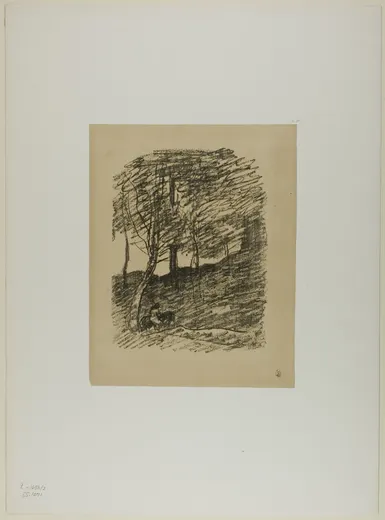
Beneath the Trees
1871 · Transfer lithograph printed in black
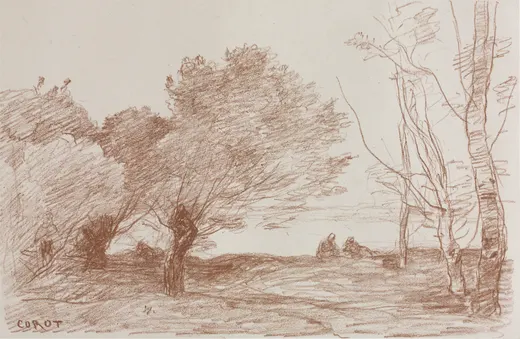
Willows and Poplars
1871 · lithograph with chine collé
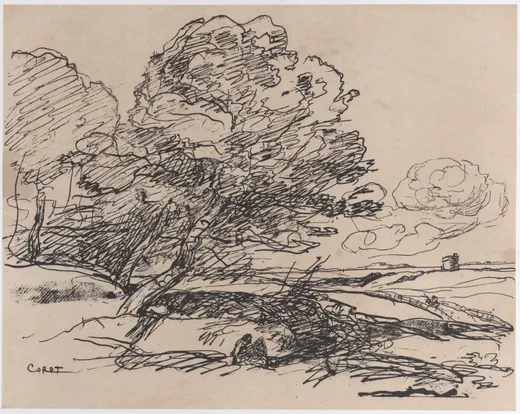
The Lonely Tower (La Tour isolée)
1871 · Lithograph
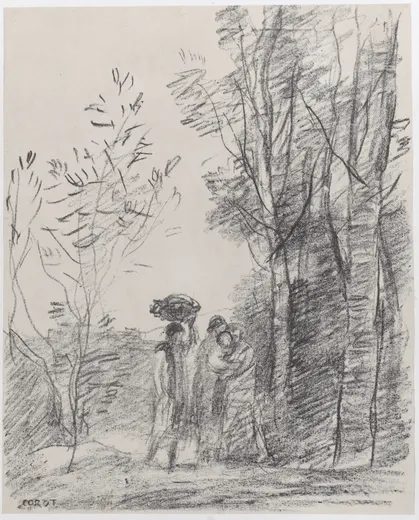
The Meeting in the Grove (La Rencontre au bosquet)
1871 · Lithograph; second state of two
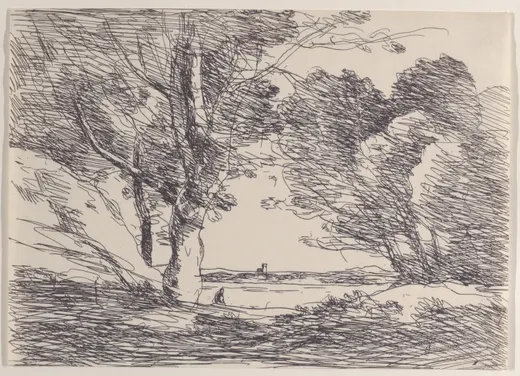
Tower at the Lake's Horizon (Tour á L'Horizon d'un Lac)
1871 · Cliché-verre
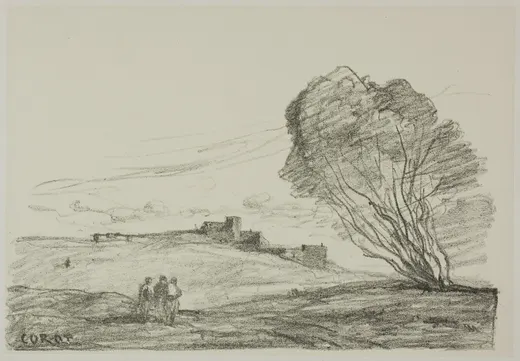
The Isolated Fort
1874 · Transfer lithograph printed in black
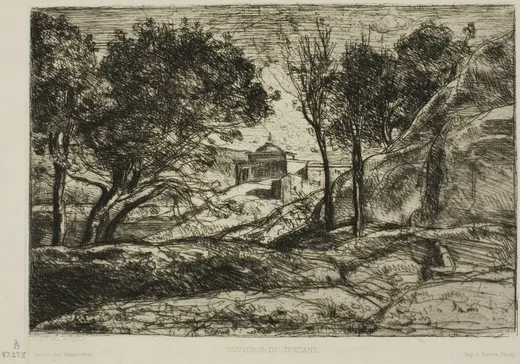
Souvenir of Tuscany
c. 1845 · Etching
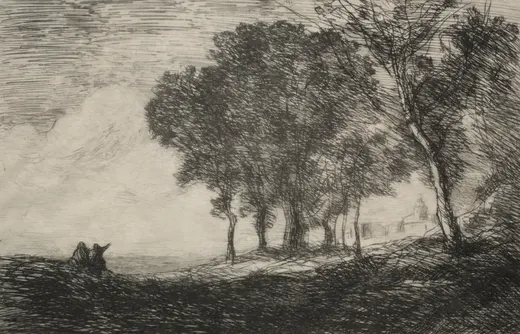
Italian Landscape
c. 1865 · etching
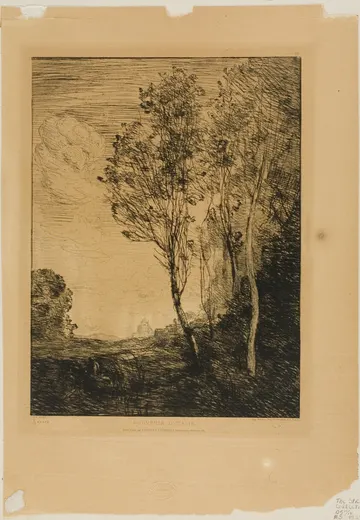
Remembrance of Italy
c. 1866 · Etching
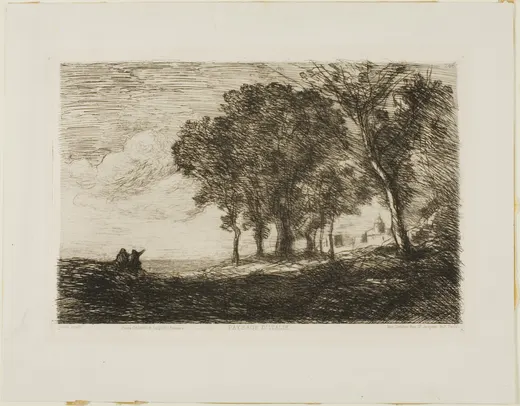
Italian Landscape
c. 1866 · Etching
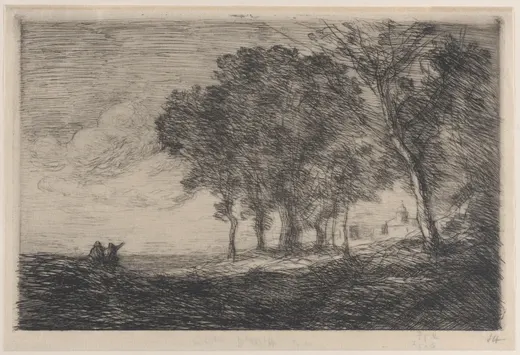
Italian Landscape (Paysage d'Italie)
ca. 1865 · Etching; first state of three
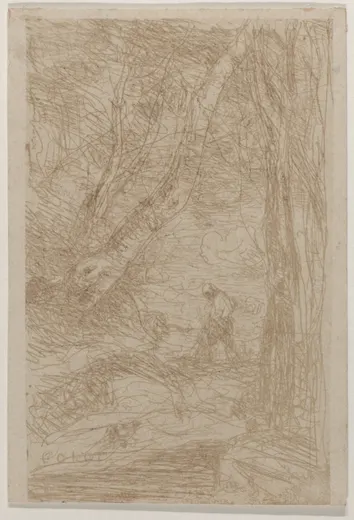
The Woodcutter of Rembrandt (Le Bûcheron de Rembrandt)
May 1853 · Cliché-verre; first state (?) of three
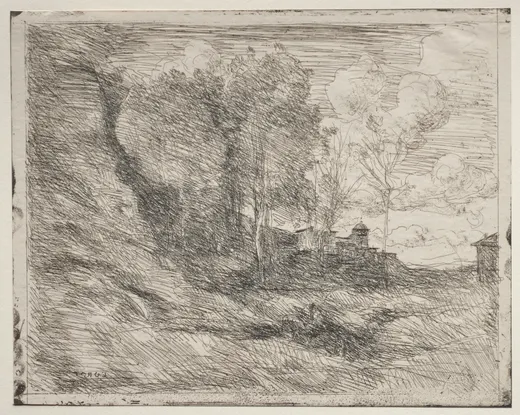
A Souvenir of Ostia
original impression 1855, printed in 1921 · cliché-verre
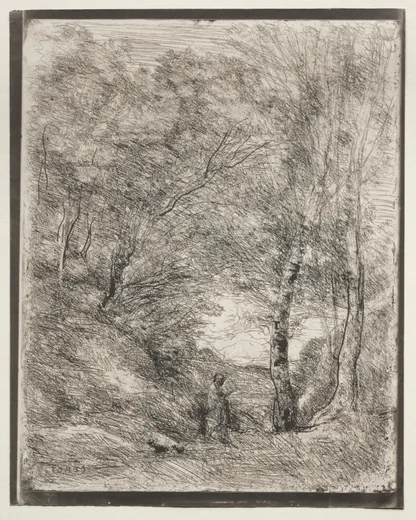
The Gardens of Horace
original impression 1855, printed in 1921 · cliché-verre
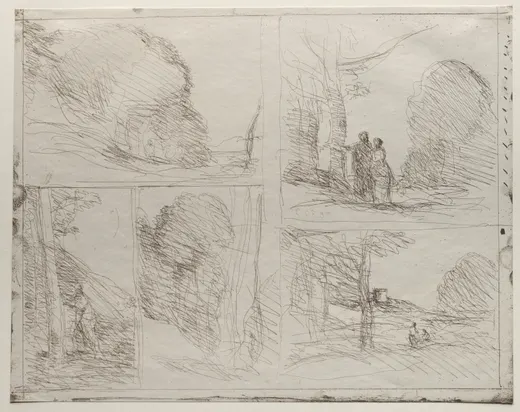
The Garden of Pericles; The Painter's Lane; Scrawl; The Large Woodcutter; The Tower of Henry VIII
original impression 1856, printed in 1921 · cliché-verre
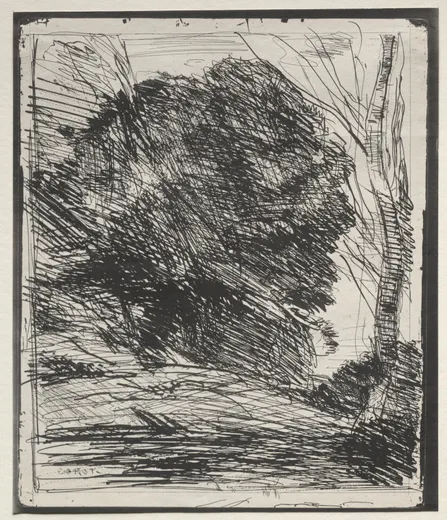
Trees on the Mountain
original impression 1856, printed in 1921 · cliché-verre
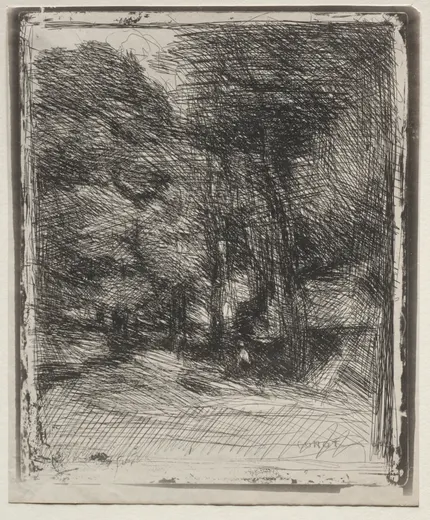
A Souvenir of the Bas-Bréau
original impression 1858, printed in 1921 · cliché-verre
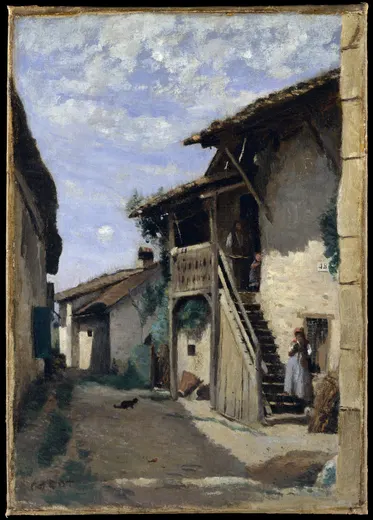
A Village Street: Dardagny
1852, 1857, or 1863 · Oil
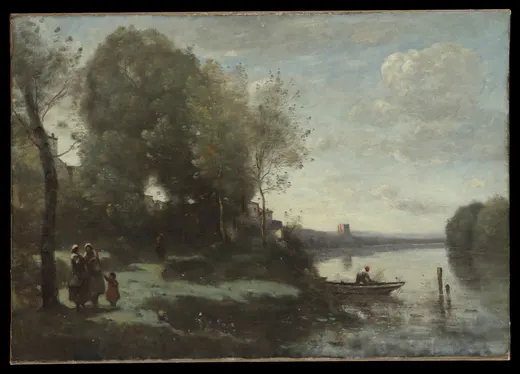
River with a Distant Tower
1865 · Oil
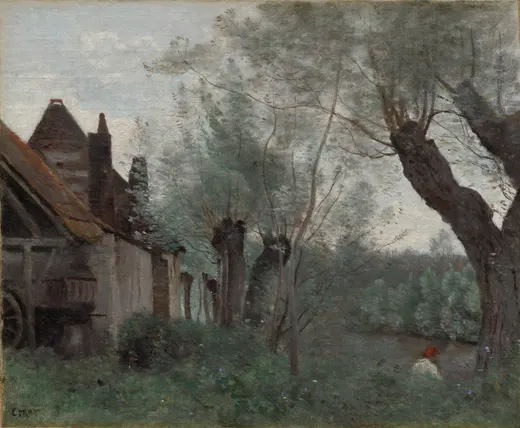
Willows and Farmhouse at Sainte-Catherine-lès-Arras
1871 · oil
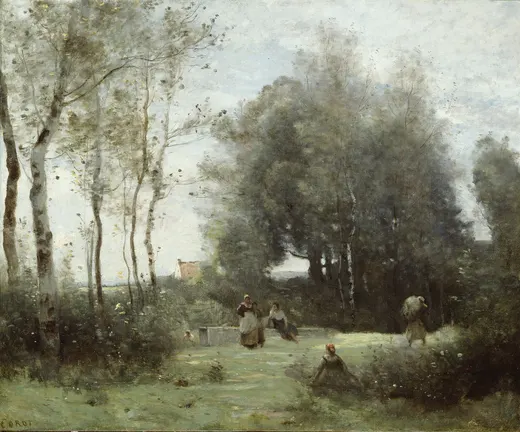
Arleux-Palluel, The Bridge of Trysts
1871–72 · Oil
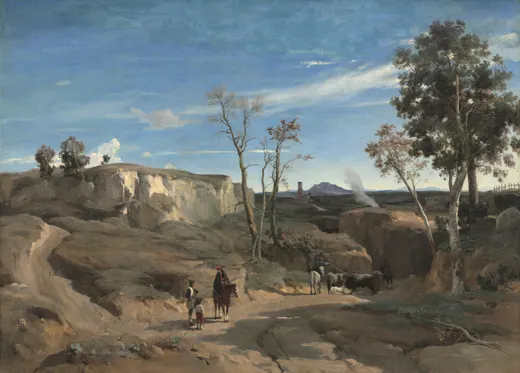
La Cervara, the Roman Campagna
c. 1830–31 · oil
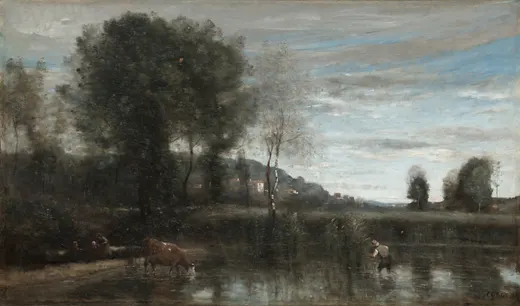
Pond at Ville-d'Avray
late 1860s · oil