The masters
Two hands, and a lineage.
All images are public domain or CC0, from The Cleveland Museum of Art, The Art Institute of Chicago and The Metropolitan Museum of Art, with each museum's credit line attached.
Primary
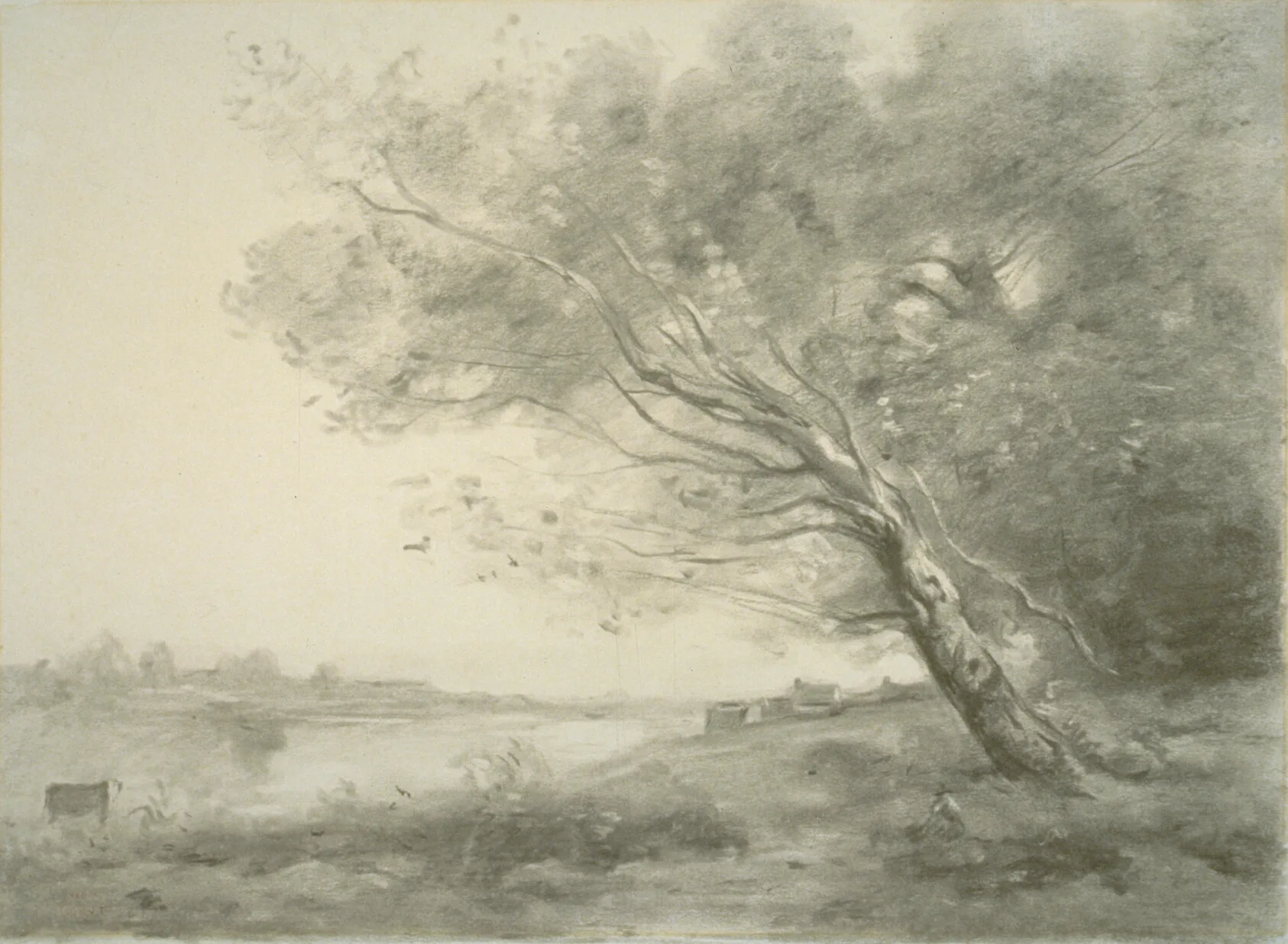
French · 1796 to 1875 · 60 works
Jean-Baptiste-Camille Corot
Corot is the rare master whose own life maps the whole of this program. He arrived in Rome at the end of 1825, aged twenty-nine, and spent three years drawing the city and the Campagna with a sharp lead pencil: hill town…
Abbotsford, Dryburgh, Melrose, Old College Wynd: the Borders and the Old Town, in line.
Scottish · 1880 · linked works
Robert Smith Forrest
Robert Smith Forrest trained in Edinburgh and worked as a portrait painter and etcher. He exhibited between 1908 and 1934, showing around six works at the Royal Scottish Academy and four at the Royal Scottish Society of …
Lineage
The British and continental architectural drawing tradition Forrest worked in, in public-domain hands.
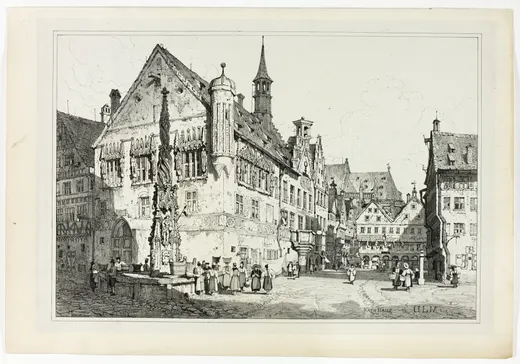
1783 to 1852 · 22 works
Samuel Prout
The broken line that taught a century how to draw old stone.
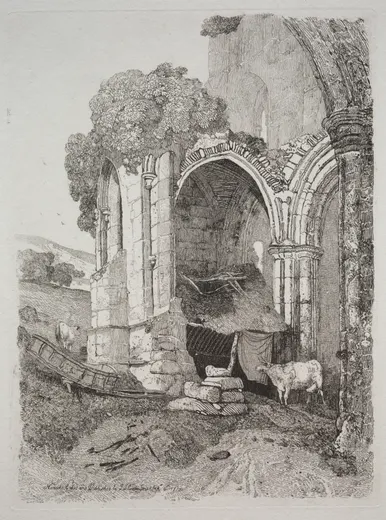
1782 to 1842 · 22 works
John Sell Cotman
Big flat shapes, exact architecture, and the abbeys of Yorkshire and Normandy.
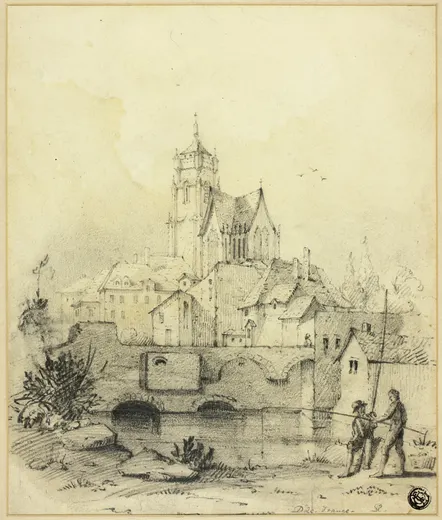
1796 to 1864 · 6 works
David Roberts
An Edinburgh house-painter's apprentice who drew the architecture of three continents.
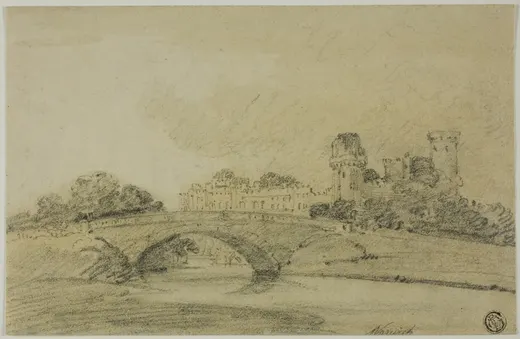
1775 to 1802 · 8 works
Thomas Girtin
Dead at twenty-seven; Turner said that had Girtin lived, he himself would have starved.
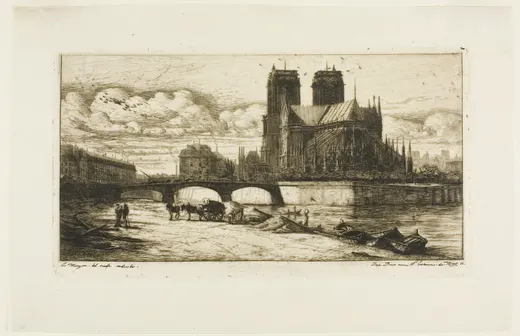
1821 to 1868 · 12 works
Charles Meryon
A colour-blind naval officer who etched Paris as if it were carved from one dark stone.
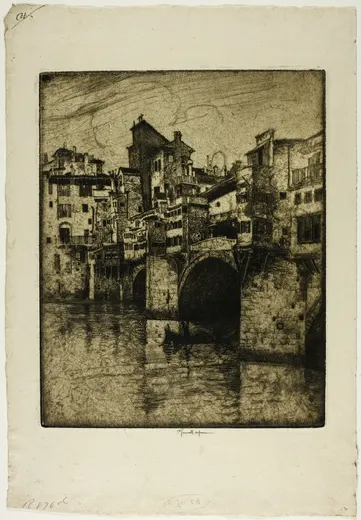
1857 to 1926 · 10 works
Joseph Pennell
He wrote the textbooks on pen drawing and etching, and then went out and drew every city he could reach.
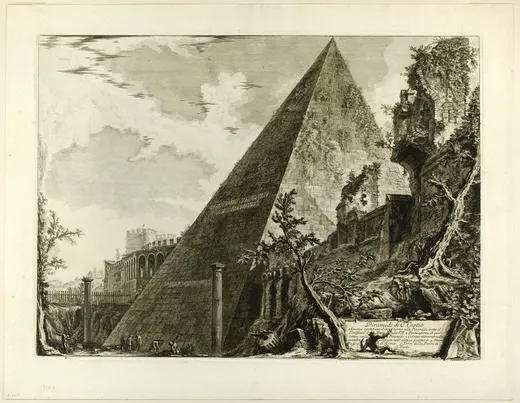
1720 to 1778 · 8 works
Giovanni Battista Piranesi
Rome made enormous: tiny figures, colossal ruins, and the deepest blacks an etching needle can reach.