Lineage of Corot · French · 1837 to 1911
Alphonse Legros
Landscape in silverpoint: the hardest line there is, and trees that stand in it.
Legros was born in Dijon, trained in Paris with Lecoq de Boisbaudran (the teacher of memory drawing whose method Corot admired), moved to London in 1863 and became Slade Professor at University College, where he taught a generation to draw from memory and to etch. He revived metalpoint, drawing on prepared paper with a silver or gold stylus that cannot be erased and barely varies in weight, and his landscapes in that medium are the purest line drawings of the nineteenth century.
He belongs here for two reasons. The silverpoint landscapes show what a hard, pale, unerasable line forces you to do: decide before you touch the paper. And his etched farms, rivers and willows are Corot's France drawn by a man trained in the same memory method, with the same economy.
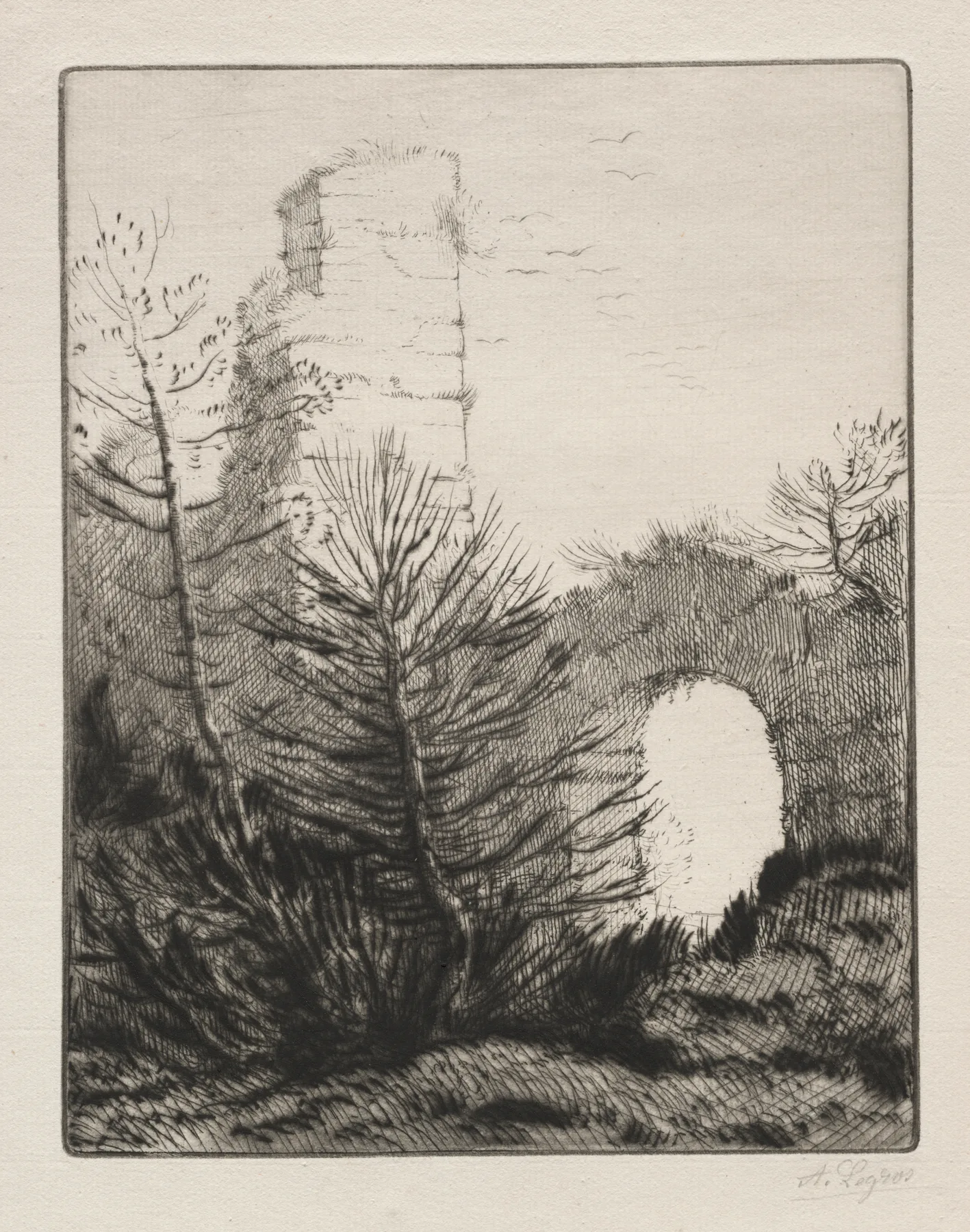
Legros, Ruins of a Monastery, c. 1857–1911. etching.
The Cleveland Museum of Art · Gift of Ralph King
What to steal
- 1Decide, then draw. The metalpoint line cannot be taken back; draw your 2H as if it could not either.
- 2A tree as a few long directional lines with the leaf mass implied.
- 3Memory drawing: look for a minute, turn away, draw.
How to look
- Notice that the line barely changes weight and the drawing still has depth. Where does the depth come from?
- Find the horizon and how little is drawn beyond the middle distance.
Studies 2 guided · 15 plate copies
All 17 →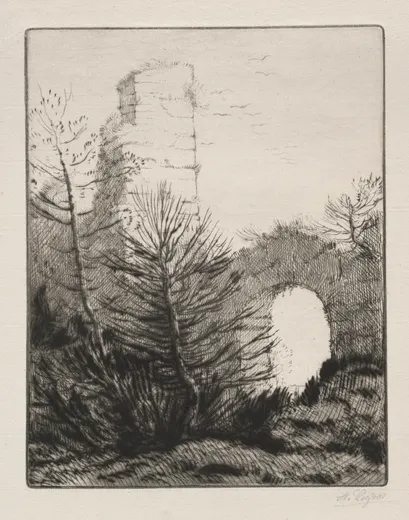 Master study
Legros
Ruins of a Monastery
A ruined wall, an arch of pure paper, and trees drawn in long lines
2h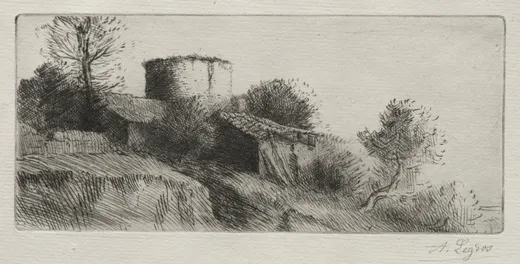 Master study
Legros
The Pigeon Tower
A round tower on a low hill, the simplest landscape in the catalogue
1.5h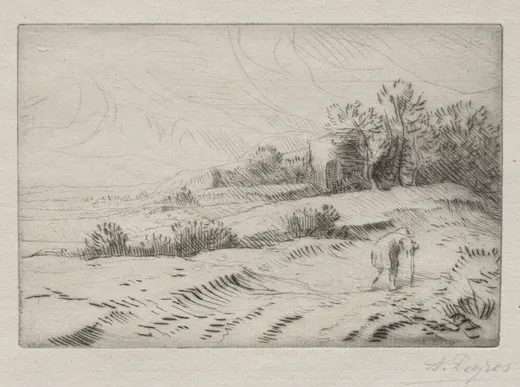 Plate copy
Legros
The Tower
Legros, c. 1857–1911: a plate copy from an etched line
2.5h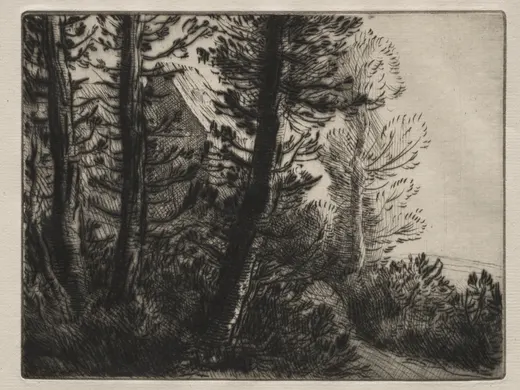 Plate copy
Legros
Guard House
Legros, c. 1857–1911: a plate copy from an etched line
2.5h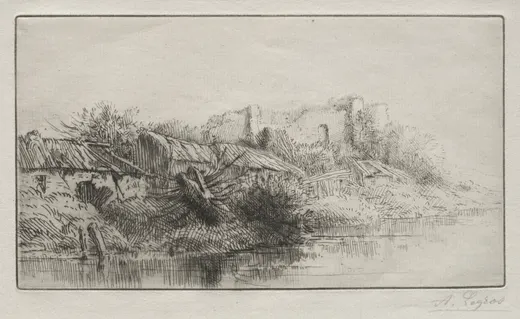 Plate copy
Legros
Abandoned Village
Legros, c. 1857–1911: a plate copy from an etched line
2.5h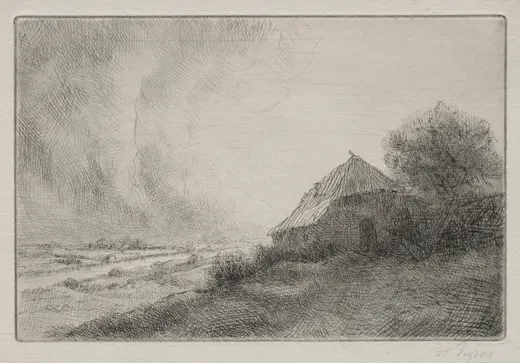 Plate copy
Legros
Ruined House on a Hillside
Legros, c. 1857–1911: a plate copy from an etched line
2.5h
Works
17 public-domain
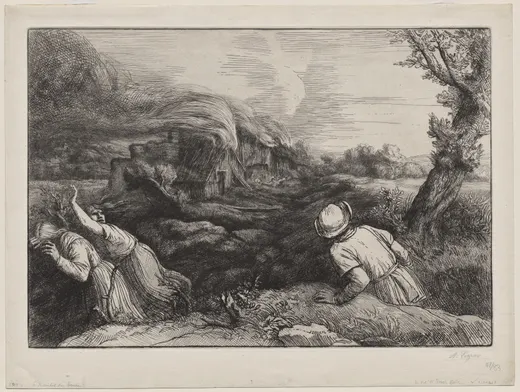
The Village in Flames (L'Incendie du Hameau)
1893–1894 · etching
The Tower
c. 1857–1911 · etching
Pigeon Tower
c. 1857–1911 · etching
Guard House
c. 1857–1911 · etching
Abandoned Village
c. 1857–1911 · etching
Ruins of a Monastery
c. 1857–1911 · etching
Ruined House on a Hillside
c. 1857–1911 · etching
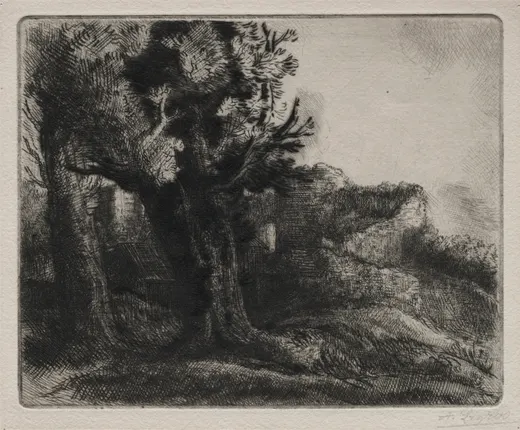
In the Ruins
c. 1857–1911 · etching
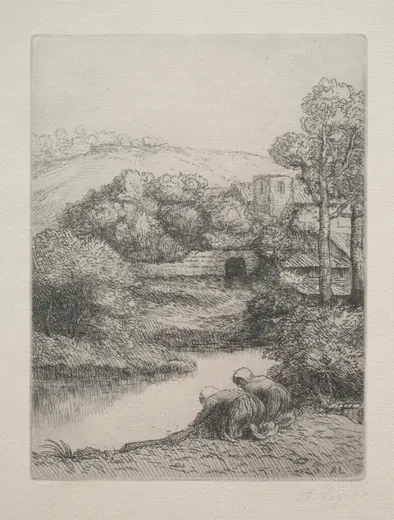
The Wash House
c. 1857–1911 · etching
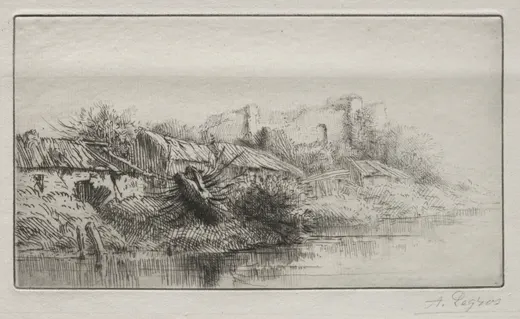
Deserted Village
c. 1857–1911 · etching
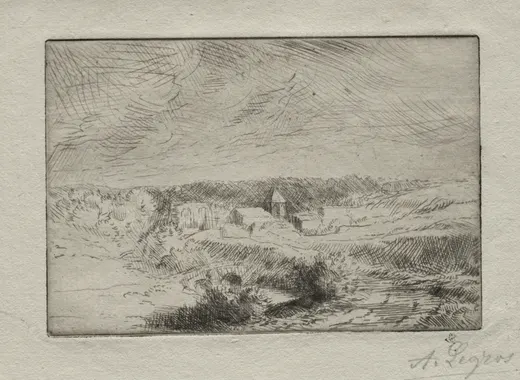
Village of Wimille, near Boulogne
c. 1857–1911 · drypoint
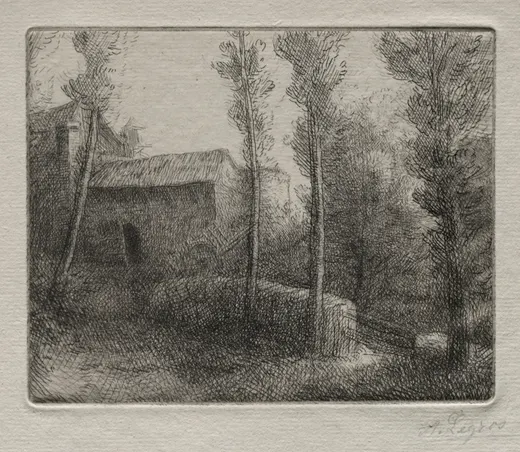
Le Pont du Moulin
c. 1857–1911 · drypoint
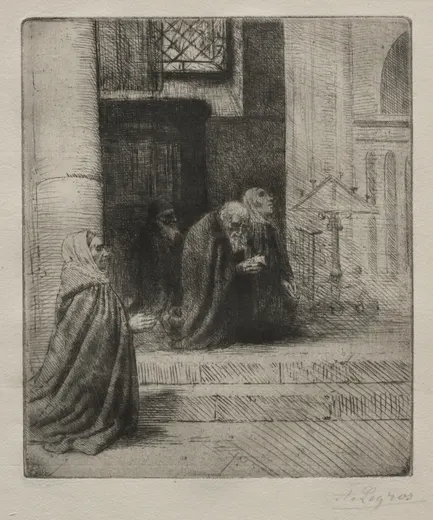
Interior of a Church
c. 1857–1911 · etching and aquatint
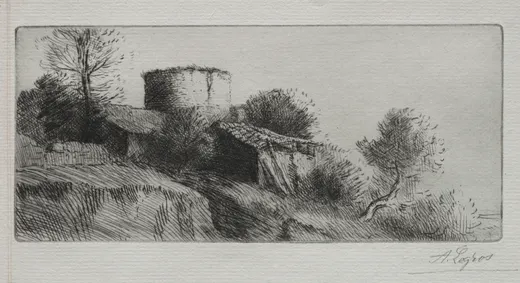
The Pigeon Tower
c. 1857–1911 · drypoint
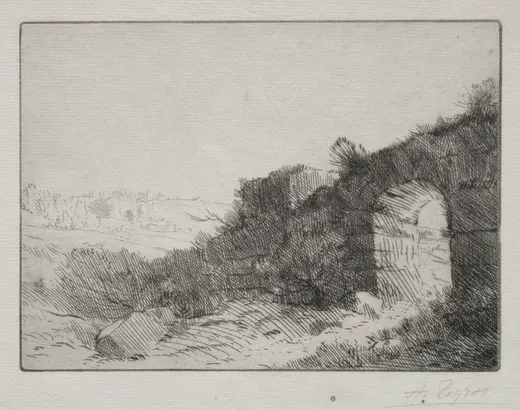
Roman Ruins
c. 1857–1911 · drypoint
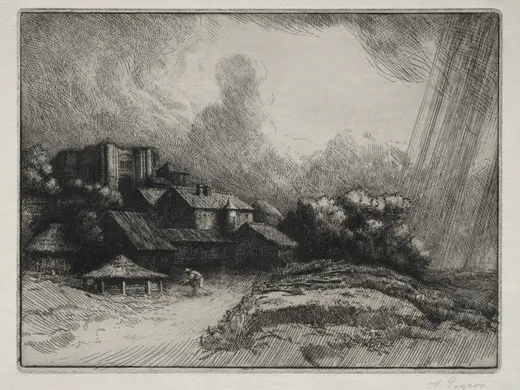
The Abbey Farm
c. 1857–1911 · etching and drypoint
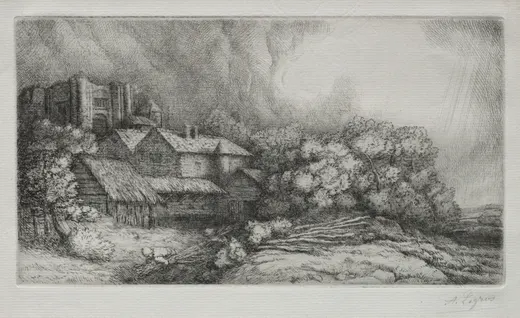
The Abbey Farm (La Ferme de l'abbaye)
c. 1893 · etchingand drypoint