Lineage of Forrest · American · 1857 to 1926
Joseph Pennell
He wrote the textbooks on pen drawing and etching, and then went out and drew every city he could reach.
Pennell, from Philadelphia, was the most prolific architectural etcher of Forrest's own generation and the author of Pen Drawing and Pen Draughtsmen (1889) and Etchers and Etching (1919), which were the standard manuals when Forrest was exhibiting. He was Whistler's friend and biographer. He etched London, Venice, Florence, Philadelphia and the new skyscrapers of New York with the same structural eye.
He is useful here because he is close in time and in method to Forrest: dense, dark, rhythmical line; the stacked windows of the Ponte Vecchio; a doorway in Venice with the whole tonal range from paper to black inside a few square inches.
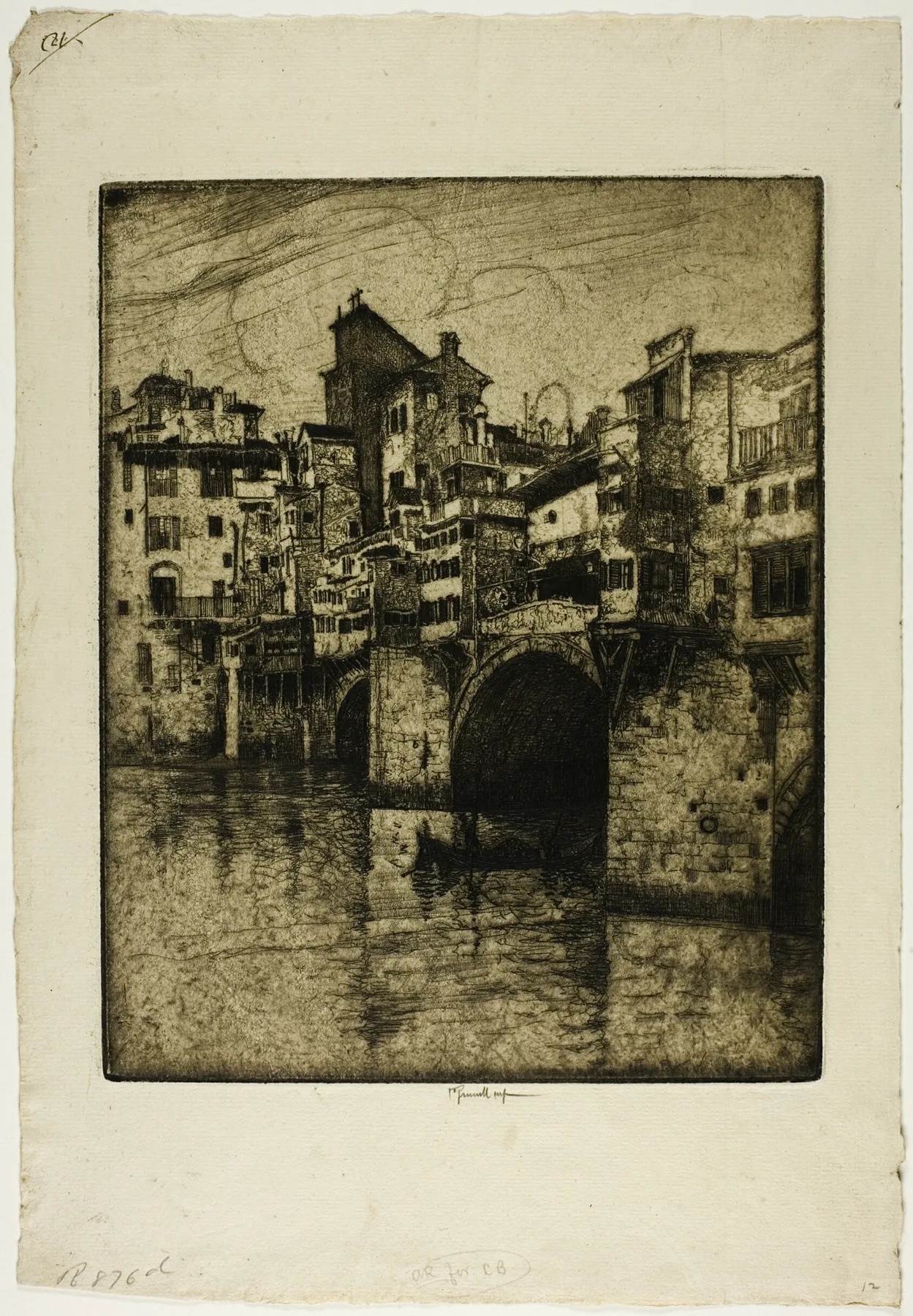
Pennell, Ponte Vecchio, Florence, 1883. Etching on cream laid paper.
The Art Institute of Chicago · The Joseph Brooks Fair Collection
What to steal
- 1Rhythm. Repeating windows, arches and piers drawn as a beat, with variation in weight so they never go mechanical.
- 2A full tonal range in a small space: paper, halftone and black within a single doorway.
How to look
- Find the lightest and darkest passage. Measure the distance between them. It is usually small.
- Count the repeated elements (windows, arches) and notice that no two are drawn identically.
Works
10 public-domain
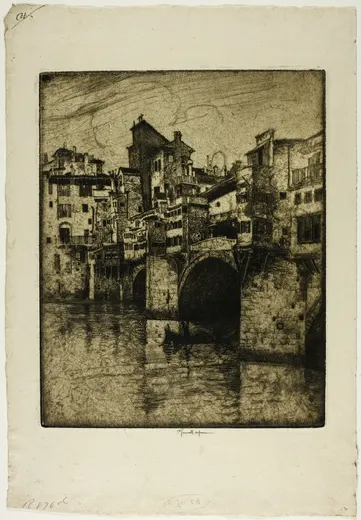
Ponte Vecchio, Florence
1883 · Etching
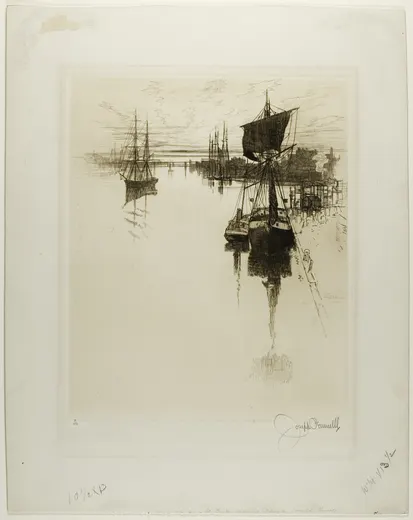
Below Chestnut Street Bridge, Philadelphia
1884 · Etching
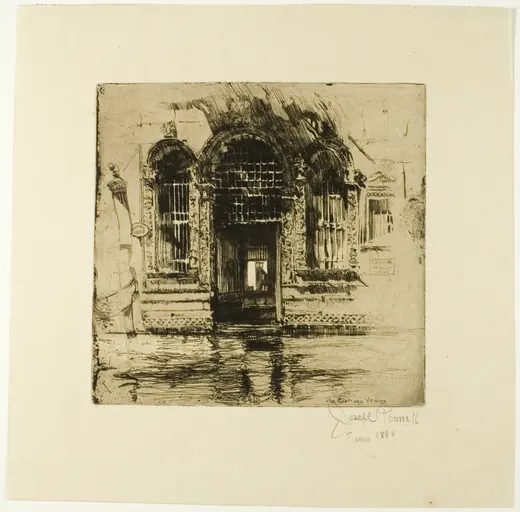
Doorway, Venice
1884 · Etching
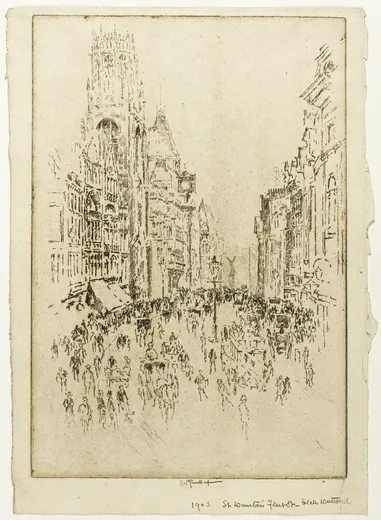
St. Dunstan's, Fleet Street
1903 · Etching
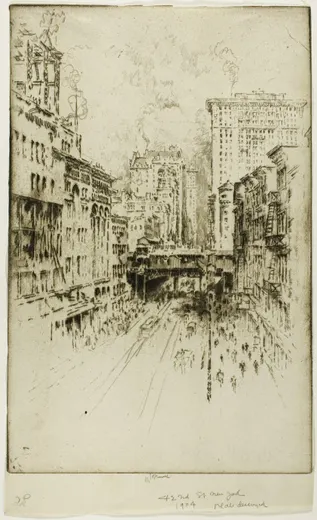
Forty-Second Street
1904 · Etching
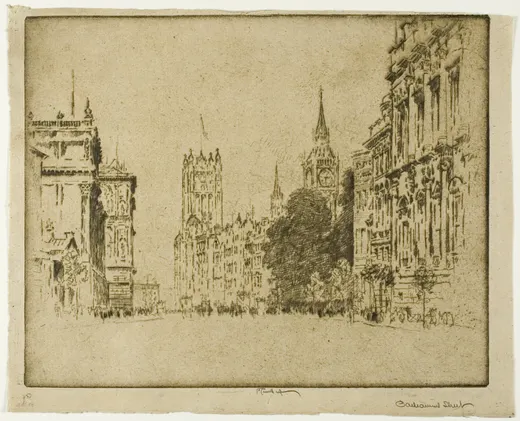
Parliament Street, Westminster
1904 · Etching
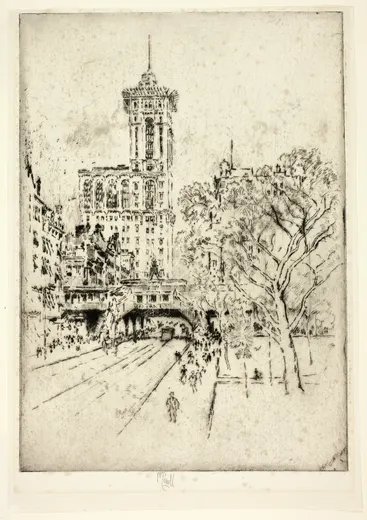
Times Building and 42nd Street
1904 · Etching
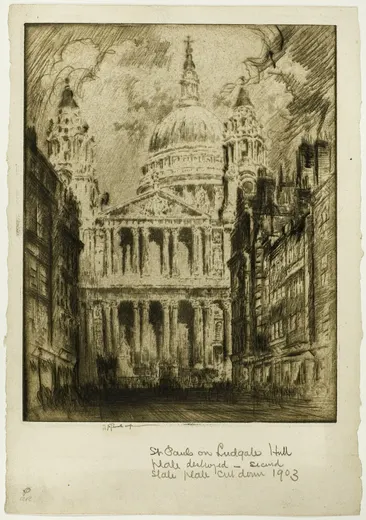
Saint Paul's, Fleet Street, London
1905 · Etching and drypoint
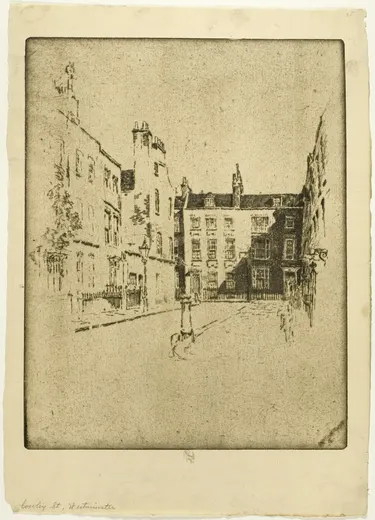
Cowley Street, Westminster
1906 · Etching
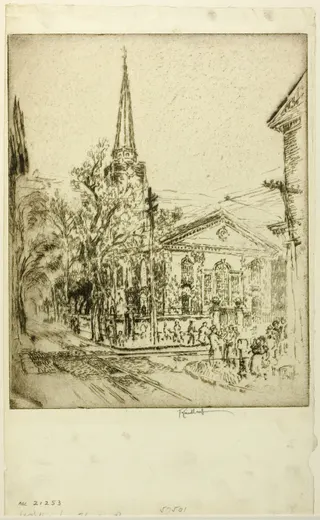
St. Peter's, From Pine Street, Philadelphia
1920 · Etching