Lineage of Forrest · Scottish · 1796 to 1864
David Roberts
An Edinburgh house-painter's apprentice who drew the architecture of three continents.
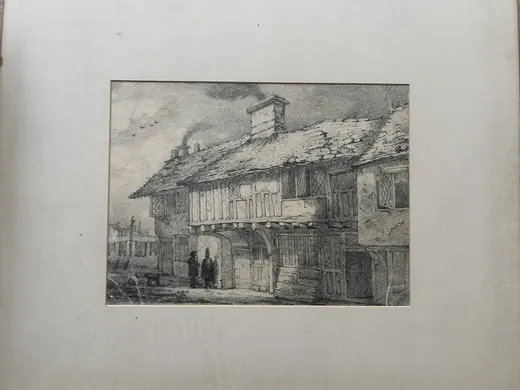
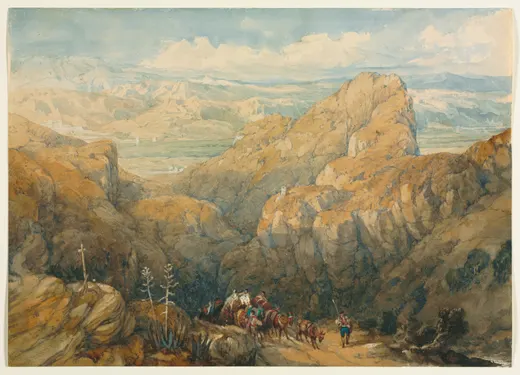
Roberts was born in Stockbridge, Edinburgh, apprenticed to a house painter, and rose through theatre scene-painting to the Royal Academy. He is the Scottish architectural draughtsman of his century: Spain in 1832 and 1833, then Egypt and the Holy Land in 1838 and 1839, the drawings published as the great lithographic volumes with Louis Haghe.
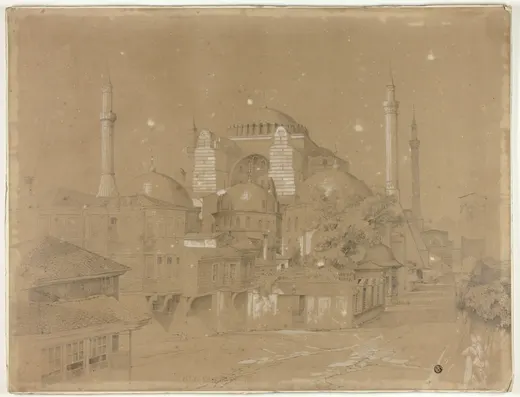
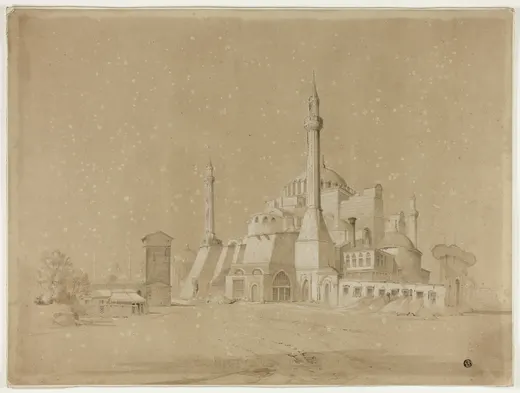
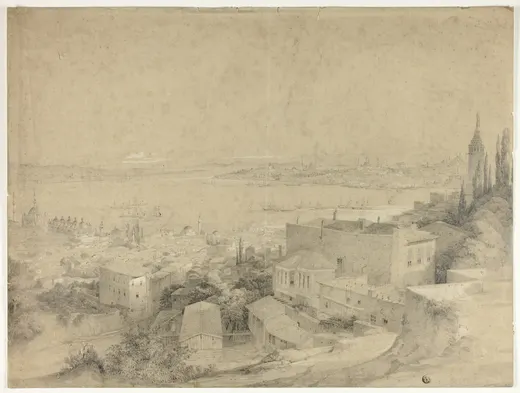
For this program his graphite sheets matter most. He drew on toned paper, pencil for the structure and white heightening for the lights, which is the fastest way to learn that paper is a middle value and that lights must be added as deliberately as darks. The Constantinople panoramas show aerial perspective at full stretch: a near foreground of walls and trees, then a city dissolving into pale planes toward the water.
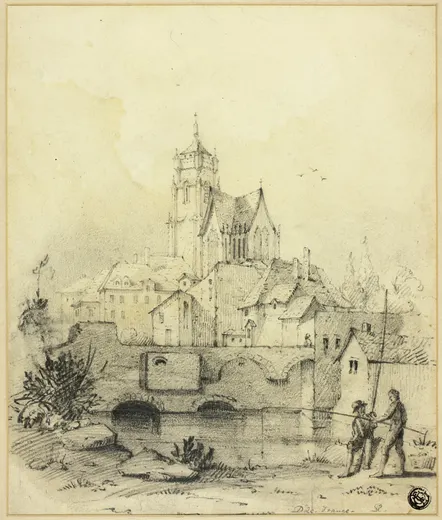
He is also a lesson in confidence. A Roberts church above a river, like Dole in France, is drawn in firm, continuous construction with hatching held to the shadow planes, and it never apologises.
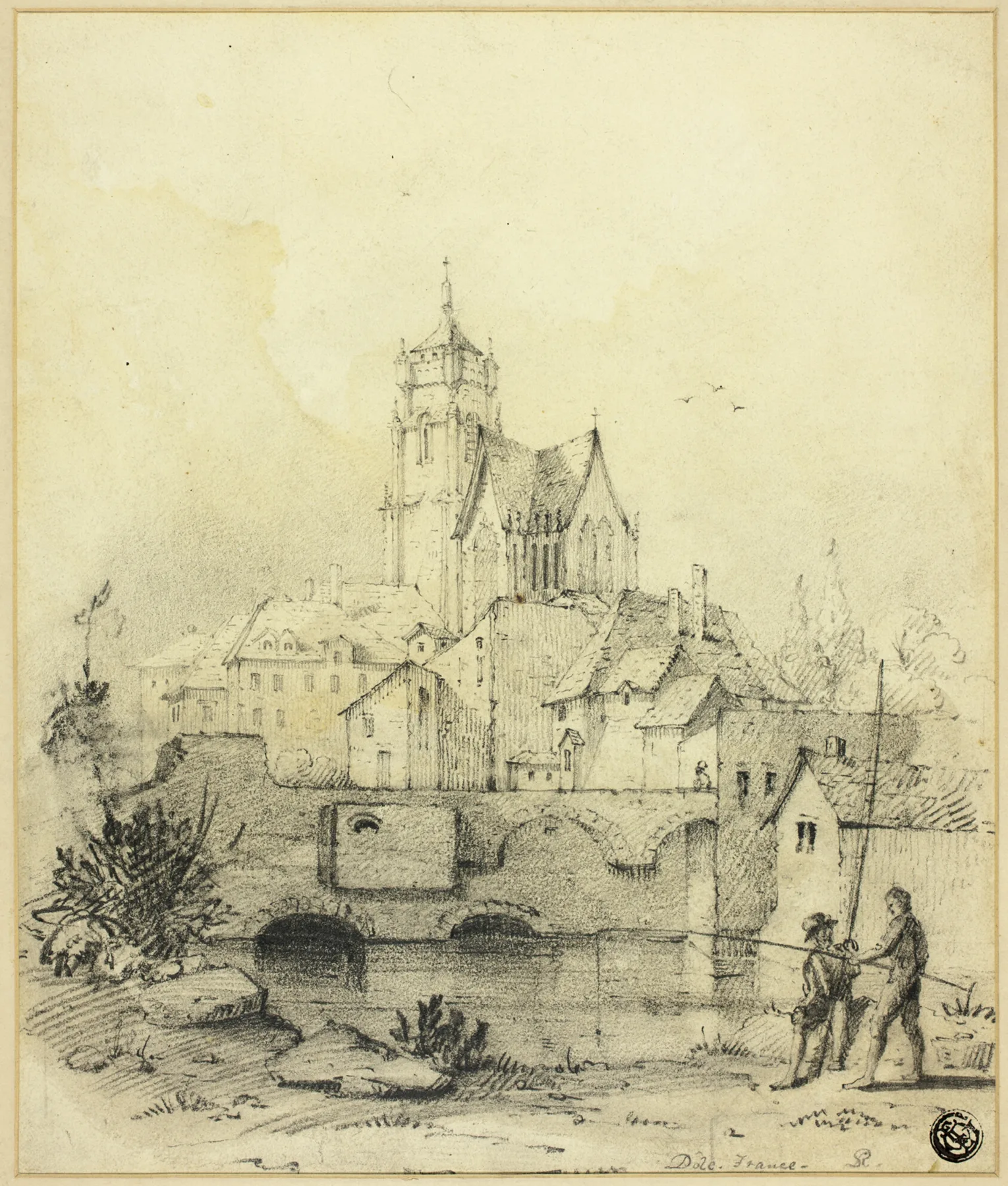
Roberts, Dole, France, n.d.. Graphite and black crayon, on cream wove paper, laid down on tan board.
The Art Institute of Chicago · The Leonora Hall Gurley Memorial Collection
What to steal
- 1Toned paper with white: let the paper be your halftone and spend your lights as carefully as your darks.
- 2Aerial perspective over a whole city: contrast falls off with every street back.
- 3Firm construction, then hatching only on the planes that turn from the light.
How to look
- In the Constantinople sheets, find where the white heightening is and notice how little of it there is.
- Trace the value of the buildings from the foreground back. Each row is a step lighter.
- In Dole, find the eye level (the bridge arches give it away) and check that every window sill obeys it.
Works
6 public-domain