Lineage of Forrest · English · 1819 to 1900
John Ruskin
The eye that drew one capital, one rock, one branch, until it was understood.
Ruskin, the great Victorian critic, was also a draughtsman of ferocious accuracy who believed drawing was a way of seeing rather than a way of making pictures. His studies of Venetian capitals, Abbeville gables, Alpine rocks and single boughs were made to understand the thing, and The Elements of Drawing (1857) is still the most useful book a beginner can read: it begins with a pen and a square inch of shading.
He drew in pencil, pen and wash, usually of a fragment rather than a whole view, and that is the lesson: draw one window of the close, one bay of the abbey, completely, before you attempt the facade. His Modern Painters chapter on the truth of trees is the best thing ever written about branch logic.
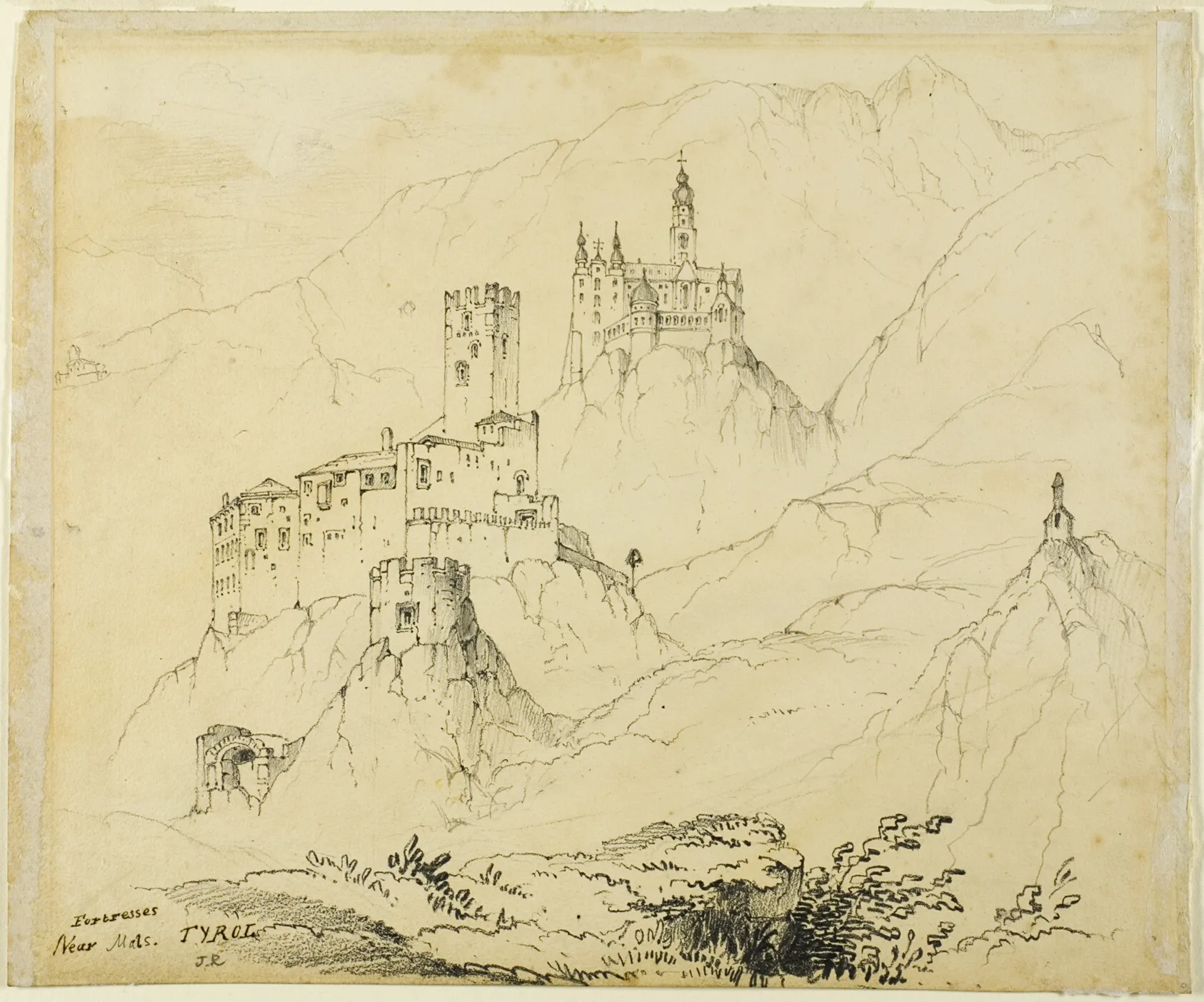
Ruskin, Fortresses in Tyrol, near Mals (recto); Castle in Lenzburg (verso), 1839/1900. Graphite (recto and verso) on buff wove paper.
The Art Institute of Chicago · Gift of Charles Deering McCormick, Brooks McCormick, and the Estate of Roger McCormick
What to steal
- 1Draw the fragment. One capital, one bough, one course of stones, all the way to understanding.
- 2Shading as a slow, even skin laid with a fine point, never a smudge.
- 3Look longer than you draw.
How to look
- Find the part he finished and the part he abandoned. The finished part is the subject.
- Count the courses of masonry he actually drew.
Studies 3 guided · 12 plate copies
All 15 →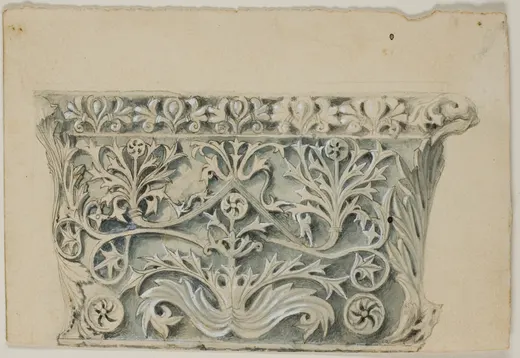 Master study
Ruskin
A Byzantine column capital
One fragment, drawn until it is understood
2h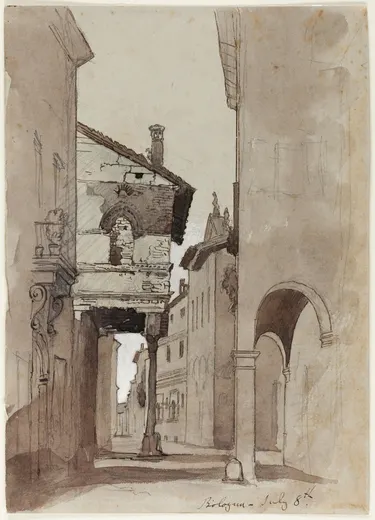 Master study
Ruskin
Street in Bologna
An arcade drawn from inside it, with the eye level in your hand
2.5h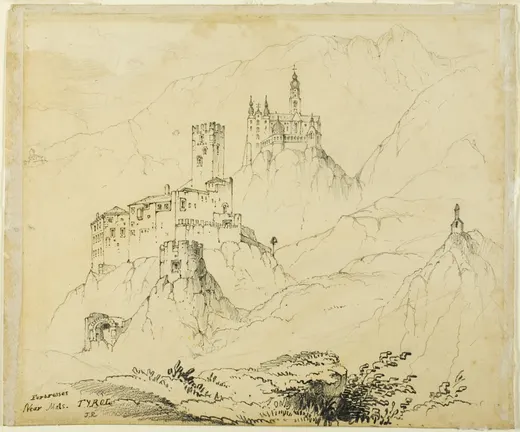 Master study
Ruskin
Fortresses in the Tyrol
A castle on a crag in pencil: the rock drawn as carefully as the wall
2h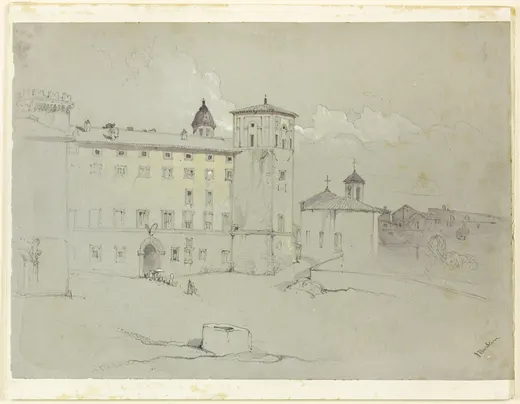 Plate copy
Ruskin
Viterbo
Ruskin, c. 1840–49: a plate copy from pencil and wash
2h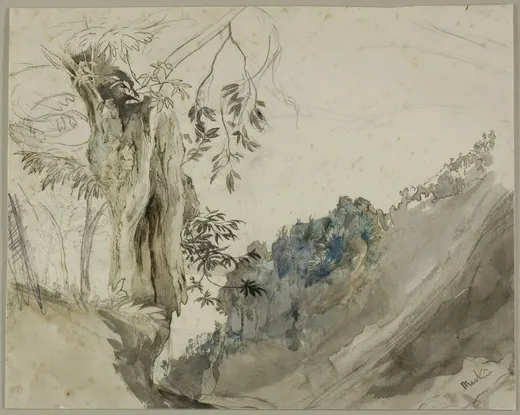 Plate copy
Ruskin
Spanish Chestnut
Ruskin: a plate copy from pencil and wash
2h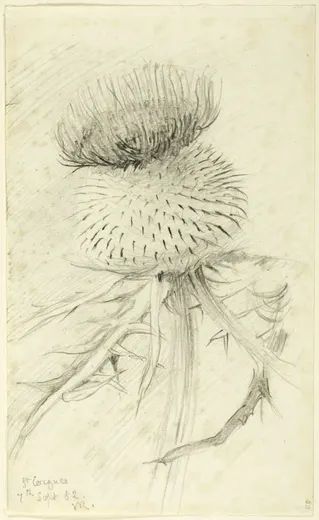 Plate copy
Ruskin
St. Cergues
Ruskin, 1882: a plate copy from graphite
2h
Works
15 public-domain
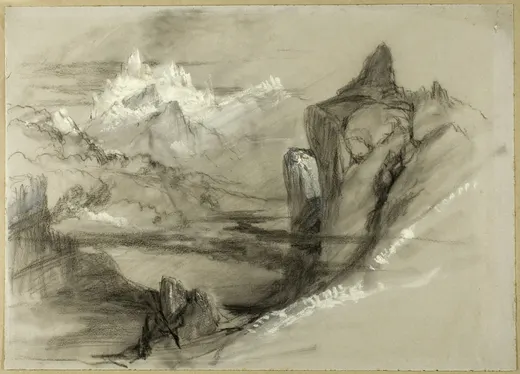
Mountain Landscape
1834/73 · Black chalk
Fortresses in Tyrol, near Mals (recto); Castle in Lenzburg (verso)
1839/1900 · Graphite (recto and verso)
Street in Bologna
1845 · Pen and brown ink
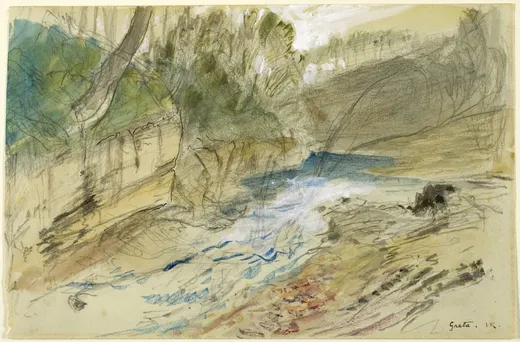
Greta
1876 · Watercolor and white gouache
St. Cergues
1882 · Graphite
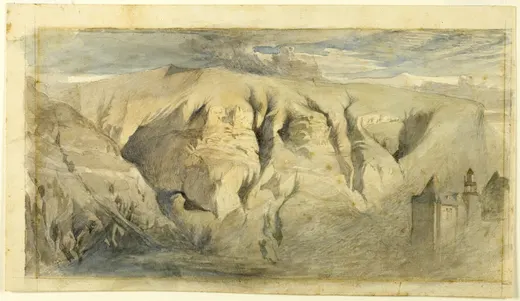
Mont Saleve
c. 1840 · Watercolor over graphite
Viterbo
c. 1840–49 · Graphite
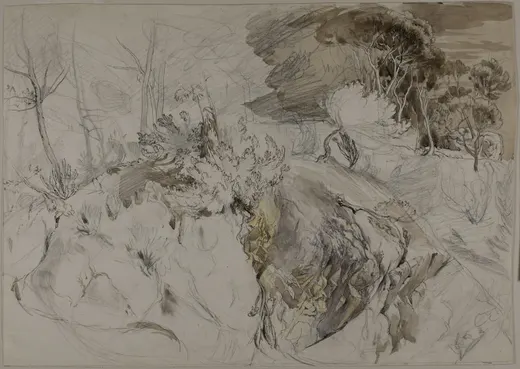
Shrubs and Trees in Rocky Landscape
c. 1845 · Pen and brown ink
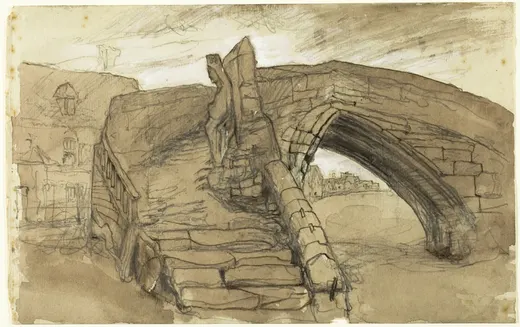
Bridge at Croyland
c. 1860–69 · Pen and brown ink
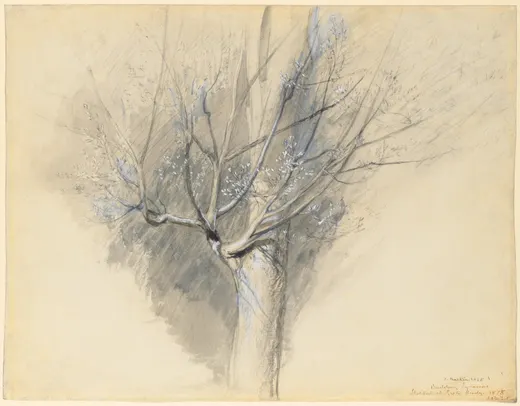
Budding Sycamore
c. 1876 · black and gray wash
Spanish Chestnut
n.d. · Pen and brown ink
Byzantine Column Capital
n.d. · Pen and black ink
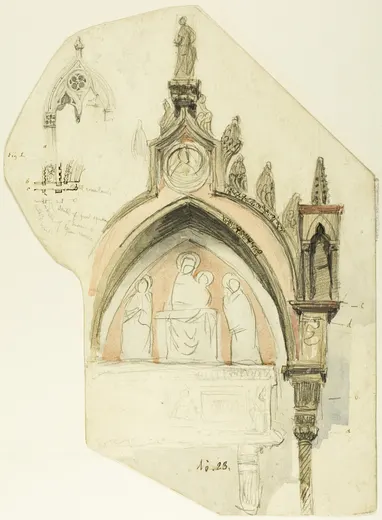
Design for an Arch
n.d. · Pen and brown ink and brush and watercolor
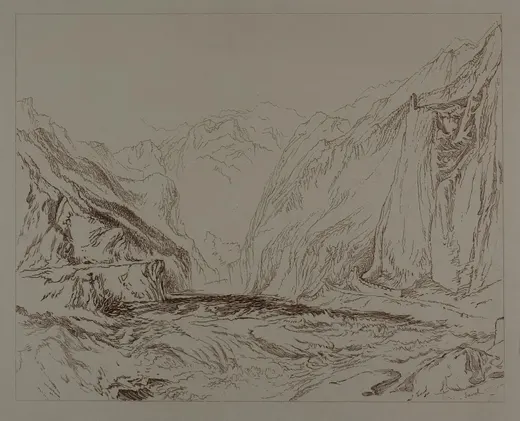
Sand Mountain Scene
n.d. · Etching
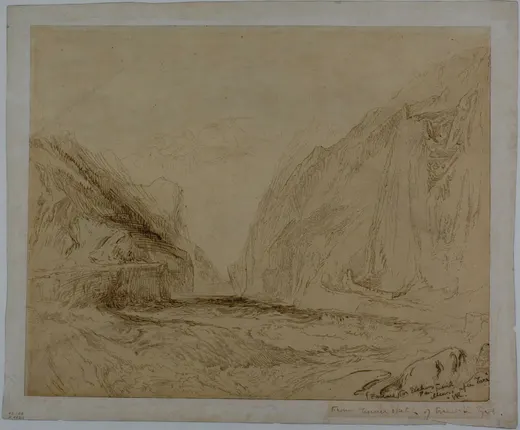
Torrent in Tyrol
n.d. · Pen and ink