Lineage of Forrest · Venetian / Roman · 1720 to 1778
Giovanni Battista Piranesi
Rome made enormous: tiny figures, colossal ruins, and the deepest blacks an etching needle can reach.
Piranesi trained as an architect in Venice and spent his life in Rome etching the Vedute di Roma, 135 views of the city's monuments and ruins, alongside the imaginary prisons of the Carceri. He pushed the tonal range of etching further than anyone before him: velvety blacks beside bare paper, skies drawn with sweeping broken lines, stone textured course by course on surfaces the size of a wall.
For this course he teaches scale and drama. The Pyramid of Cestius is one vast plane graded from light to dark, with gnarled trees and a few tiny figures telling you how big it is. He is where Corot's Roman subjects and the British antiquarian tradition both begin.
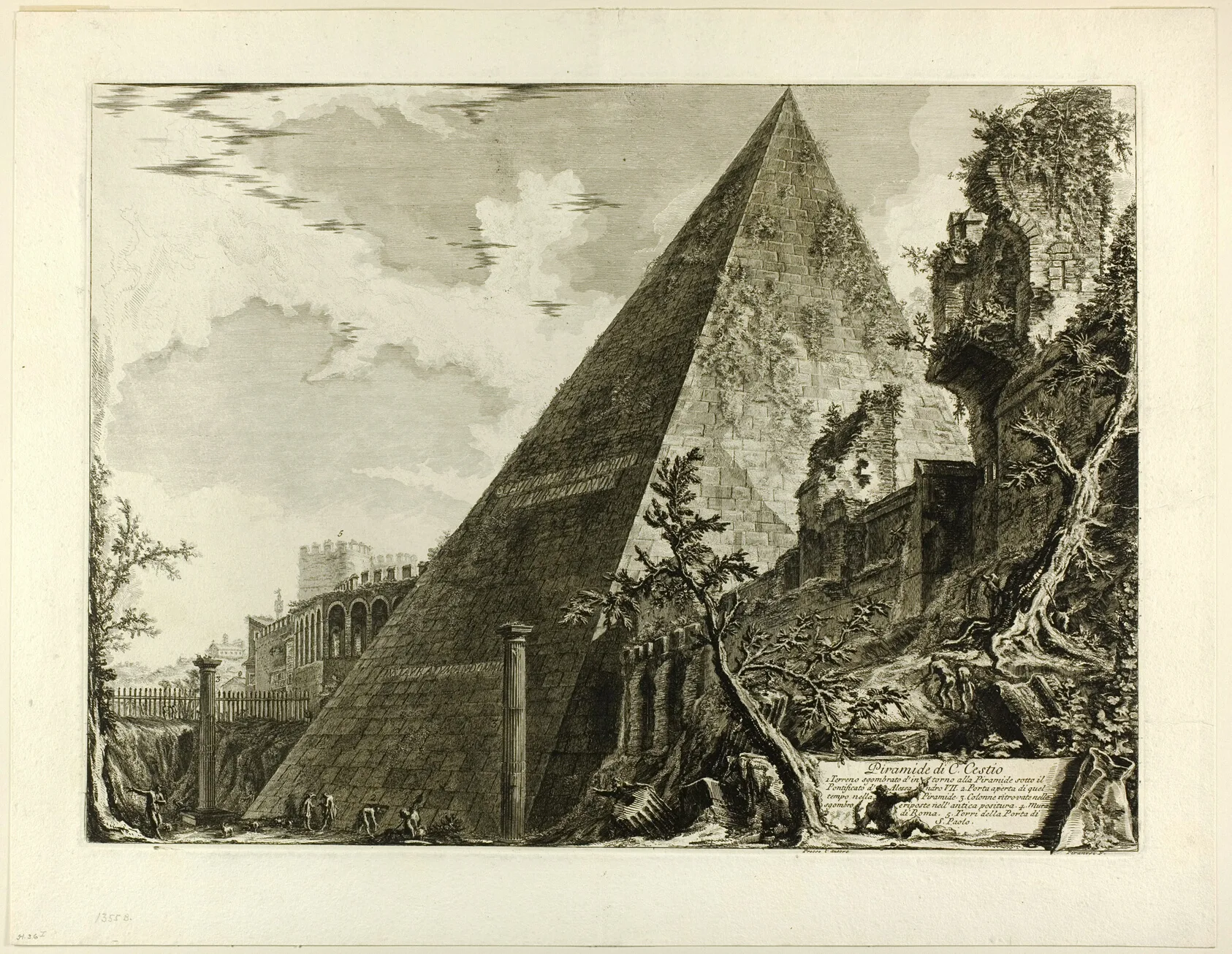
Piranesi, The Pyramid of Gaius Cestius, from Views of Rome, 1750/59, published 1800–07. Etching on heavy ivory laid paper.
The Art Institute of Chicago · The Charles Deering Collection
What to steal
- 1A single huge plane graded smoothly, with texture only where the eye lands.
- 2Figures as scale: make them small and the building becomes monumental.
- 3Dramatic value range used with a plan: the deepest dark is a decision, not an accident.
How to look
- Find the figures first. Then look at how big the architecture has become because of them.
- Follow the gradient on the largest plane. It never bands.
- Look at his skies: broken, directional lines, never flat hatching.
Works
8 public-domain
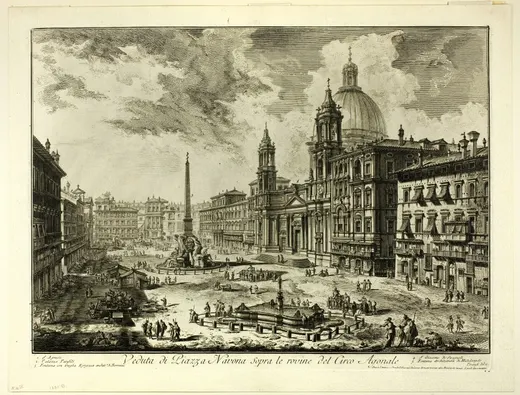
View of Piazza Navona above the ruins of the Circus of Domitian, from Views of Rome
1750/59 · Etching
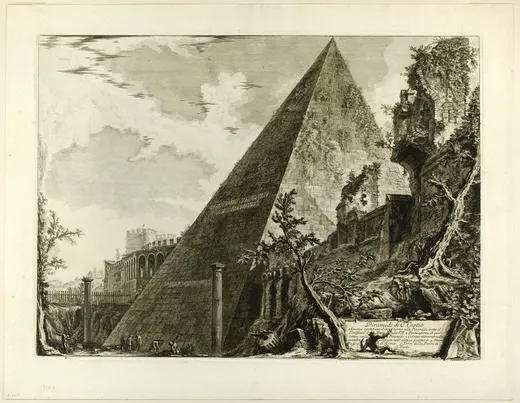
The Pyramid of Gaius Cestius, from Views of Rome
1750/59, published 1800–07 · Etching
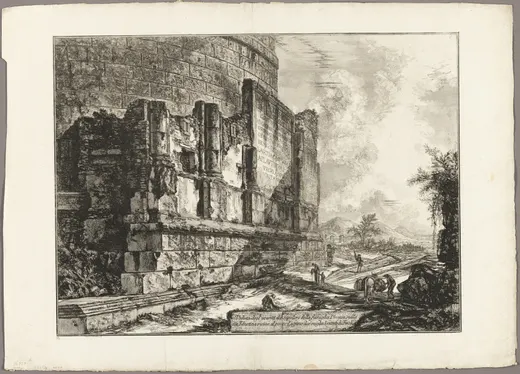
View of the Remains of the Tomb of the Plautii on the Via Tiburtina, near the Ponte Lugano, two miles distant from Tivoli, from Views of Rome
1760/69, published 1800–07 · Etching
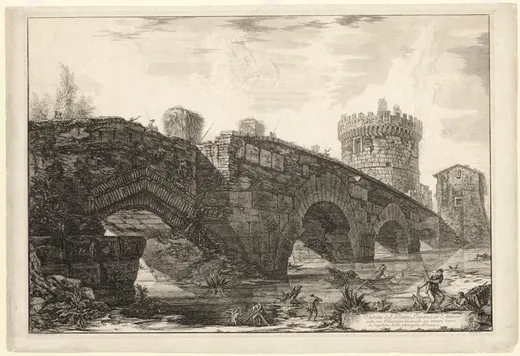
View of Ponte Lugano on the Anio, from Views of Rome
1763, published 1800–07 · Etching
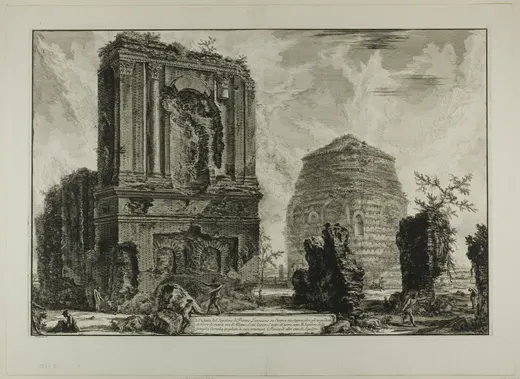
A. View of the Tomb of Licinianus Piso on the ancient Appian Way... B. Tomb of the Cornelii..., from Views of Rome
1764, published 1800–07 · Etching
![Ruins of the Antonine Baths [Baths of Caracalla], from Views of Rome, Piranesi](/art/t/aic-64537.webp)
Ruins of the Antonine Baths [Baths of Caracalla], from Views of Rome
1765, published 1800–07 · Etching
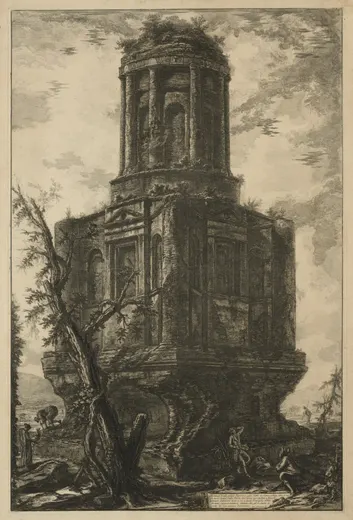
Views of Rome: The Tomb, called La Connocchia
1776 · etching and engraving
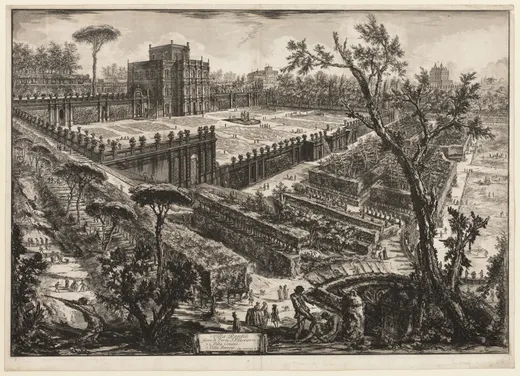
Villa Pamphili outside Porta S. Pancrazio, from Views of Rome
1776, published 1800–07 · Etching