The nine-step scale, properly
The nine-step scale, properly
Rebuild the scale with everything you now know, and learn to name values aloud
Make a value scale with genuinely even steps, and start the habit of naming the value of everything you look at.
- Difficulty
- Time
- about 0.5 h
- You draw with
- All five pencils
Why this one
- Unit 1 of the program: Instrument Control.
- A scale with nine even, matte steps.
- Three objects drawn as flat shapes of named values that read correctly when squinted.
From your kit
The whole kit →- 1Kneaded eraser and the Mono Zero press-and-lift corrections only; the Mono Zero for a single sharp light.
- 2Alpha sketchbook 9 x 6 draw at the book's size and keep the proportions; date the page.
In general, this study asks for
- Drawing pad
- All five pencils
Watch first
All videos →All six mark families in one sitting.
YouTube

The plan
4 stages · ~41 min- 1
Rebuild it
12 minNine boxes again. This time each box is a flat-tone field made with layers, matte, even. Fill 9, then 5, then 3 and 7, then the rest. Compare with your Day One scale from the box. Keep both; the difference is your first evidence.
FigureLights 1 to 3, halftones 4 to 6, darks 7 to 9. Checklist0 / 1 - 2
Name the room
12 minLook around the room you are in. Say aloud the value of ten things: the ceiling, 1. The wall, 2. The shadow under the table, 7. The inside of the open doorway, 8. Do it fast and do not agonise. Then look at a Corot and do the same.
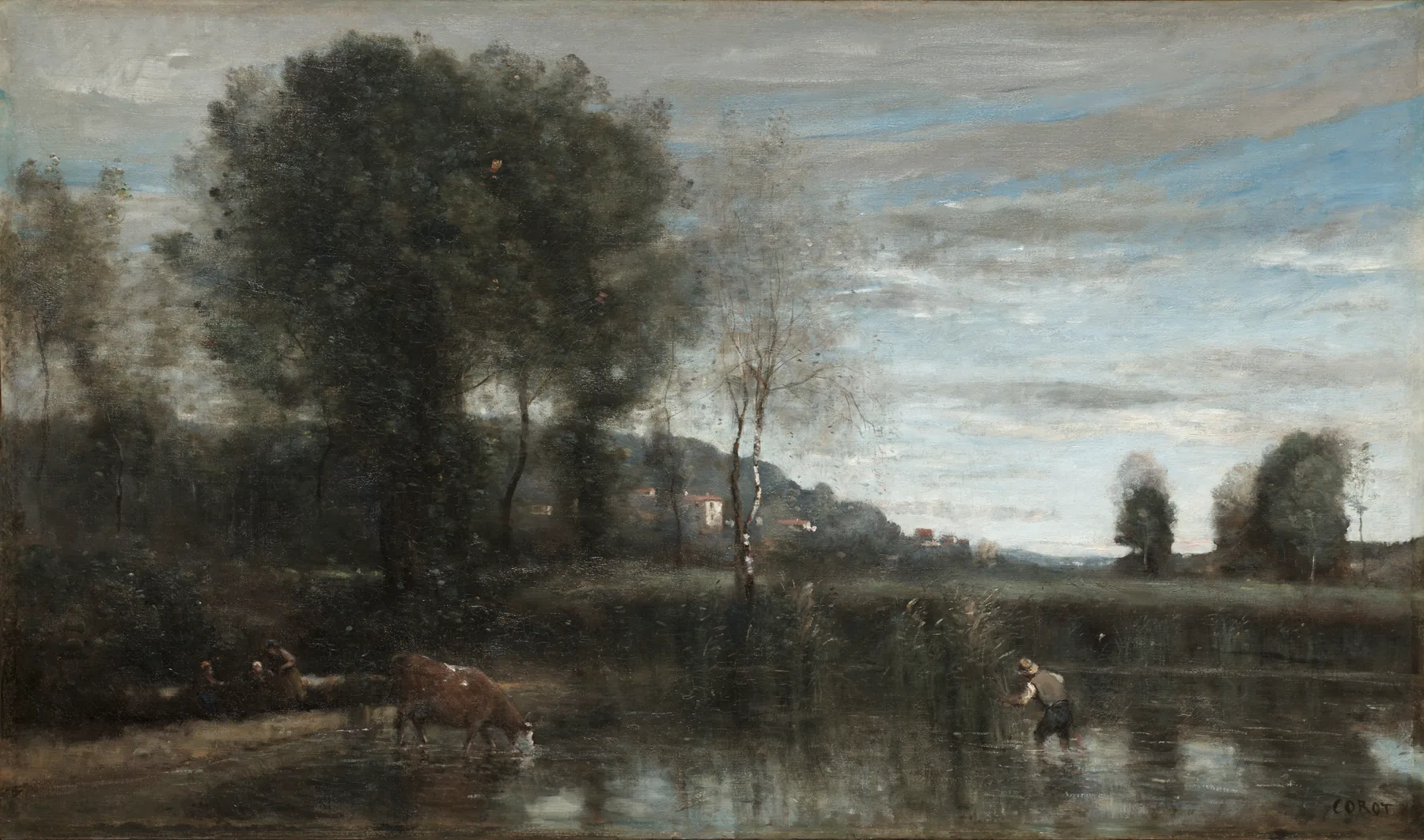
Corot, Pond at Ville-d'Avray, late 1860s. oil on fabric.
Corot, Pond at Ville-d'Avray. Name the values: sky, water, far bank, trees, trunk. Toggle the squint view to check yourself.
The Cleveland Museum of Art · Elisabeth Severance Prentiss Collection
Checklist0 / 1 - 3
Draw the names
12 minChoose three objects on your table. For each, name the value of its lit side, its shadow side and its cast shadow (for example 2, 5, 7). Then draw the three objects as flat shapes filled with exactly those values, no outlines, no detail. Values only. Squint at the drawing and at the table; they should match.
Checklist0 / 1 - 4
Self-check
5 minTick each item honestly. If one is a no, the session is not finished; go back to that step.
Checklist0 / 3
What it should look like
- A scale with nine even, matte steps.
- Three objects drawn as flat shapes of named values that read correctly when squinted.
Where it goes wrong
- Everything named between 2 and 5. Beginners under-read darks by two steps, always. Find the darkest thing in view, call it 9, and re-scale everything against it.
Log this session
Start the clock when you pick up the pencil. Stop it when you put it down. Log it. Every session counts toward the box.
Status
How did it go?