Lineage of Forrest · Scottish · 1865 to 1945
Sir David Young Cameron
The Scottish etching revival at its height: cathedrals as masses of dark, a few lit windows.
Cameron was the most celebrated Scottish etcher of Forrest's lifetime, a Glasgow man who trained in Edinburgh and became a Royal Academician, a knight, and the King's Painter and Limner in Scotland. His architectural plates, the Five Sisters of York, Ben Ledi, the Chimera of Amiens, the Palace at Stirling, sold for extraordinary prices in the etching boom of the 1920s, the same decade Forrest turned to the needle.
What he does that a beginner can use is value design on a building. A Cameron interior is two or three enormous dark masses, a single plane of light, and a few lines of tracery drawn with a draughtsman's exactness. The detail is real but it is never allowed to break the big shape. He also drew in pencil and chalk with the same economy, and his small drypoints of Scottish towns are close cousins of Forrest's closes.
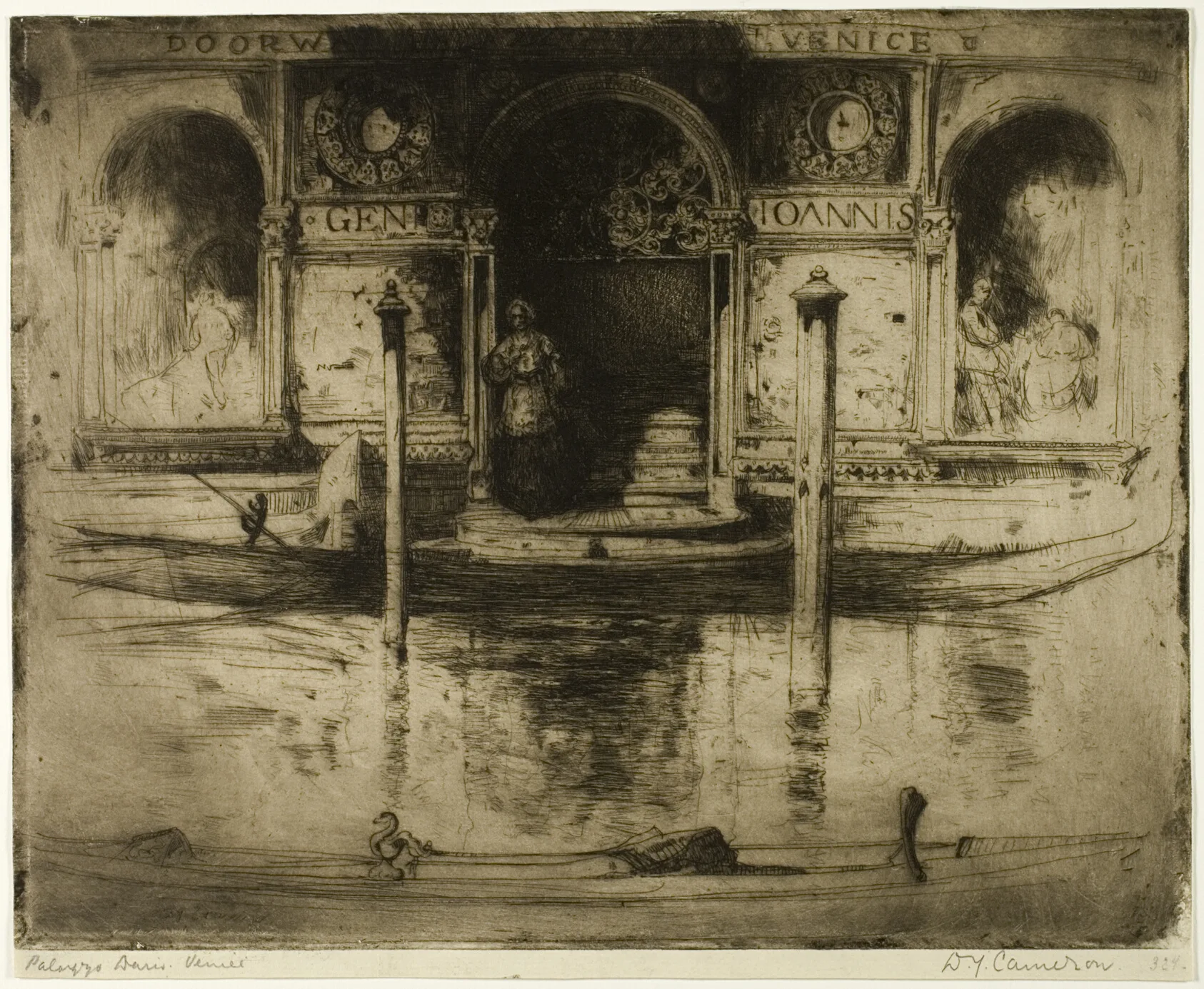
D. Y. Cameron, The Palace Doorway, plate 22 from the North Italian Set, 1895. Etching on ivory laid paper.
The Art Institute of Chicago · Bryan Lathrop Collection
What to steal
- 1Design the building as masses of dark before you draw a single moulding.
- 2One lit plane. Everything else is a step darker than it, and nothing competes.
- 3Tracery as exact line inside an inexact mass: precision where it counts, nowhere else.
How to look
- Squint. Count the masses. It is rarely more than three.
- Find the lightest plane and notice how much paper is left bare around it.
- Follow one line of tracery and see how few others there are.
Studies 3 guided · 21 plate copies
All 24 →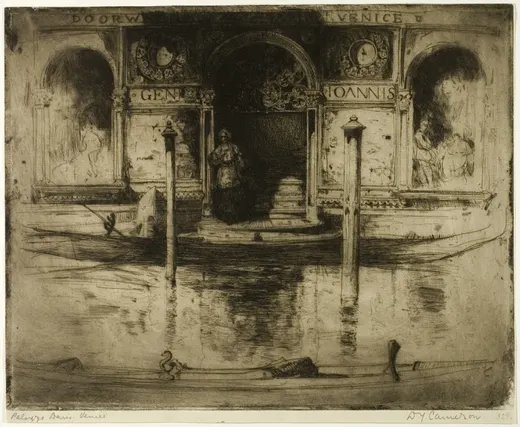 Master study
D. Y. Cameron
The Palace Doorway, Venice
A facade as two masses of dark and one plane of light
2.5h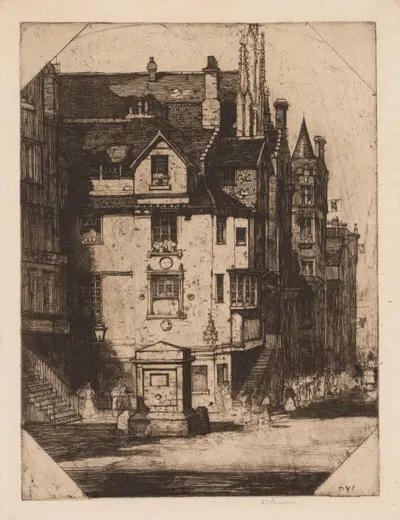 Master study
D. Y. Cameron
John Knox's House
The Royal Mile's timber gallery, drawn as Forrest's teacher would
3h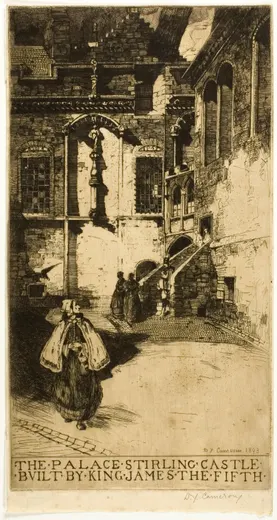 Master study
D. Y. Cameron
The Palace, Stirling Castle
Sculpture in a courtyard, with one figure to measure it by
2.5h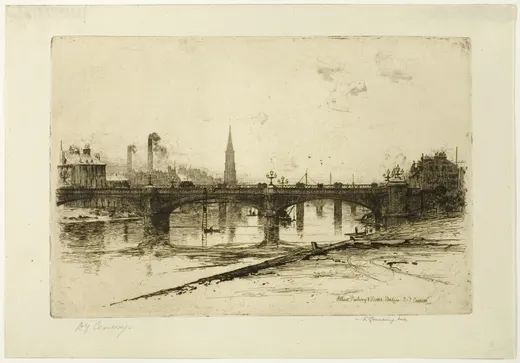 Plate copy
D. Y. Cameron
Albert, Railway, and Victoria Bridges
D. Y. Cameron, 1889: a plate copy from an etched line
2.5h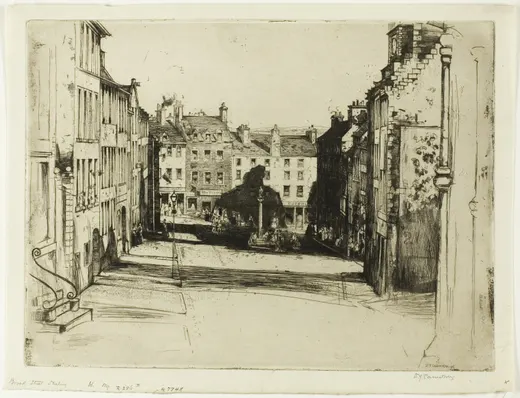 Plate copy
D. Y. Cameron
Broad Street, Stirling
D. Y. Cameron, 1899: a plate copy from an etched line
2.5h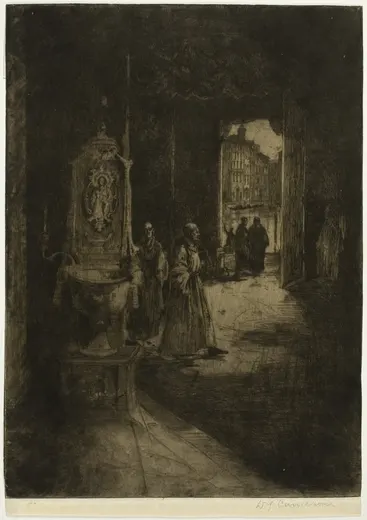 Plate copy
D. Y. Cameron
Church Interior, Venice
D. Y. Cameron, 1896: a plate copy from an etched line
2.5h
Works
24 public-domain
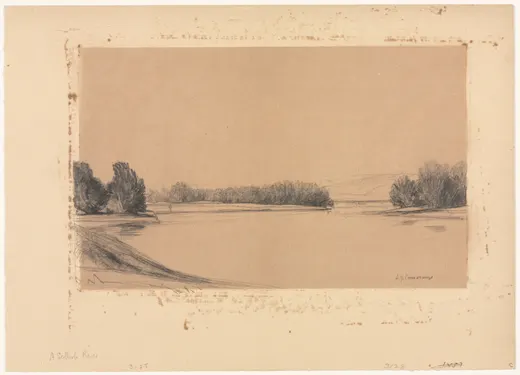
A Scottish River
c. 1875–1940 · graphite
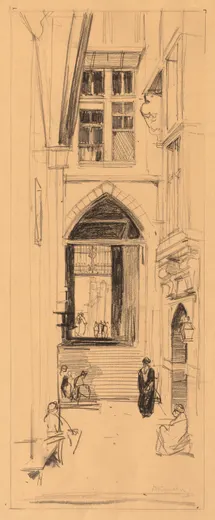
A Courtyard in Cairo
c. 1885–1940 · charcoal and graphite
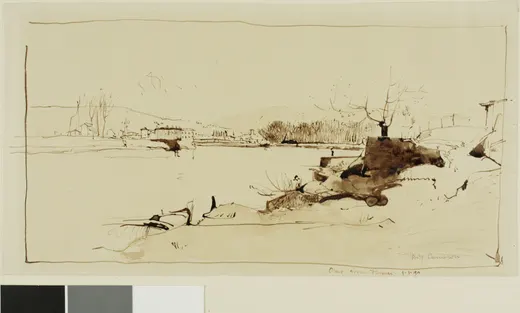
Arno above Florence
September 3, 1900 · Pen and brown ink
Albert, Railway, and Victoria Bridges, plate six from the Clyde Set
1889 · Etching
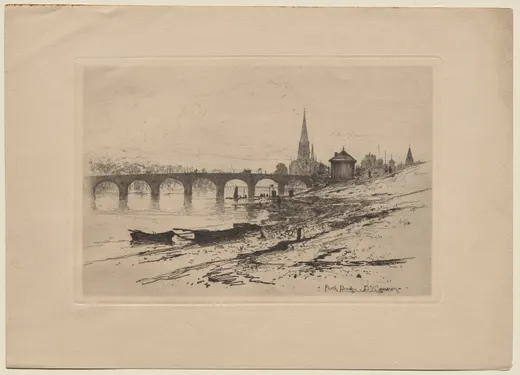
Perth Bridge
1889 · etching
The Palace, Stirling Castle
1893 · Etching
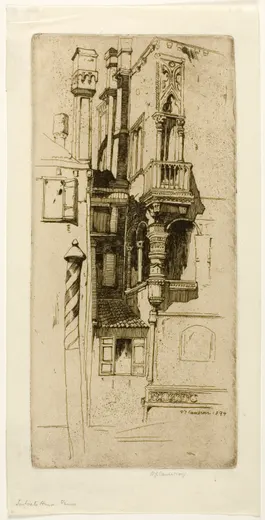
Tintoret's House, plate six from the North Italian Set
1894 · Etching
The Palace Doorway, plate 22 from the North Italian Set
1895 · Etching
Church Interior, Venice, plate sixteen from the North Italian Set
1896 · Etching
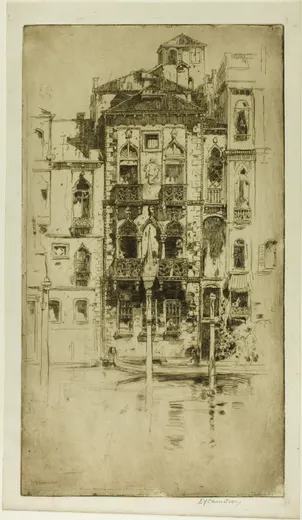
A Venetian Palace
1898 · Etching
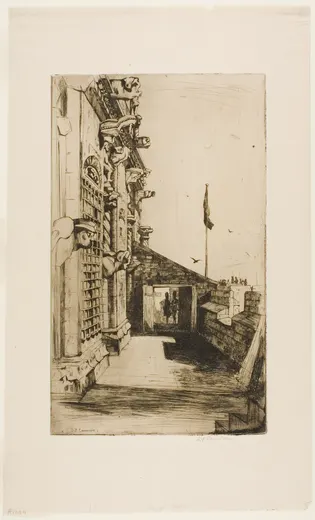
The Gargoyles, Stirling Castle
1898 · Etching
Broad Street, Stirling
1899 · Etching
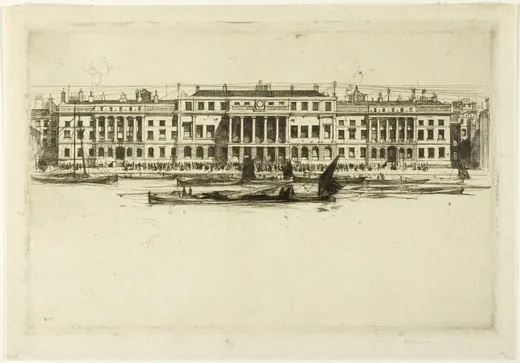
Custom House, plate one from the London Set
1899 · Etching and drypoint
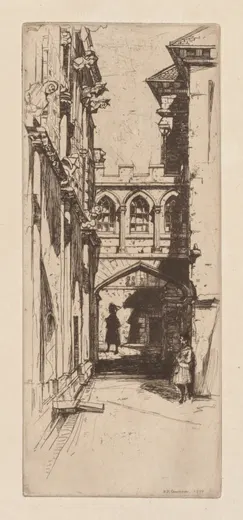
In Stirling Castle or A Scottish Palace (Un Palais Ecossais)
1899 · Etching
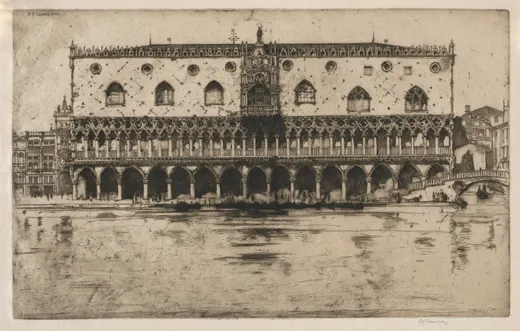
Doge's Palace
1902 · etching and drypoint
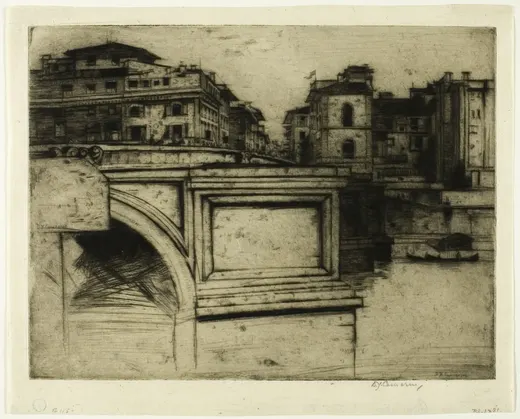
Ponte della Trinità
1902–07 · Etching and drypoint
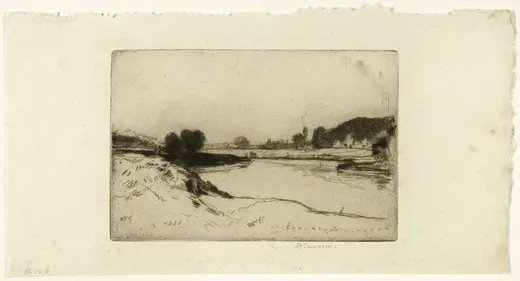
The Forth
1904 · Etching and drypoint
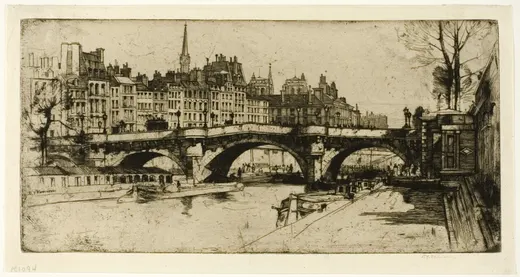
Pont Neuf, plate one from the Paris Set
1904 · Etching
John Knox's House
1905 · Etching and drypoint
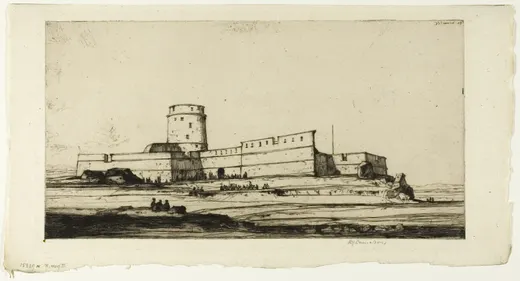
The Turkish Fort
1909 · Etching and drypoint
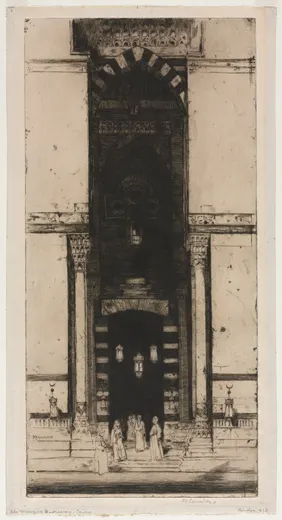
The Mosque Doorway, Cairo
1910 · etching and drypoint
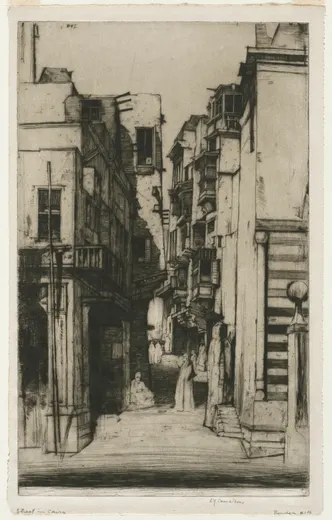
Street in Cairo
1910 · etching and drypoint
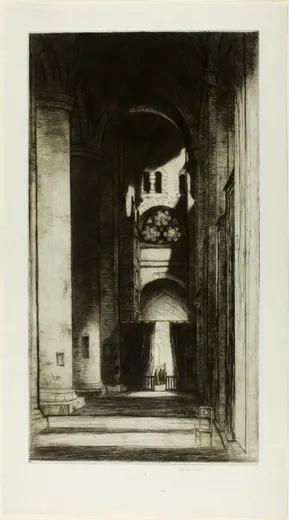
Tewkesbury Abbey
1915 · Etching and drypoint
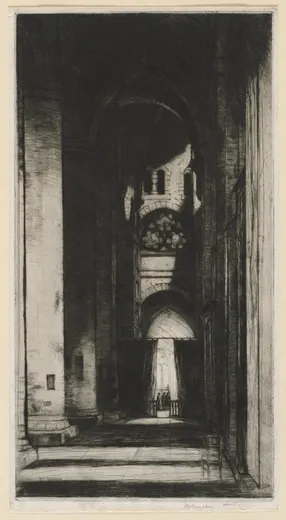
Tewksbury Abbey
1915 · etching and drypoint