Lineage of Forrest · French · 1821 to 1868
Charles Meryon
A colour-blind naval officer who etched Paris as if it were carved from one dark stone.
Meryon left the French navy, discovered he was colour-blind, and turned to etching. Between 1850 and 1854 he produced the Eaux-fortes sur Paris: the apse of Notre-Dame seen across the Seine, the Petit Pont, the Pompe Notre-Dame, the gargoyle Le Stryge, the Pont-au-Change. Baudelaire and Victor Hugo recognised them at once. He died in the asylum at Charenton.
For an architectural draughtsman he is the standard for tone built from line. His skies are ruled horizontals, his stone is layered cross-hatching counted to the exact value, his reflections are vertical strokes broken by a few horizontals, and his cathedral is a silhouette first and a building second. Everything the Line unit of this course teaches can be checked against a Meryon.
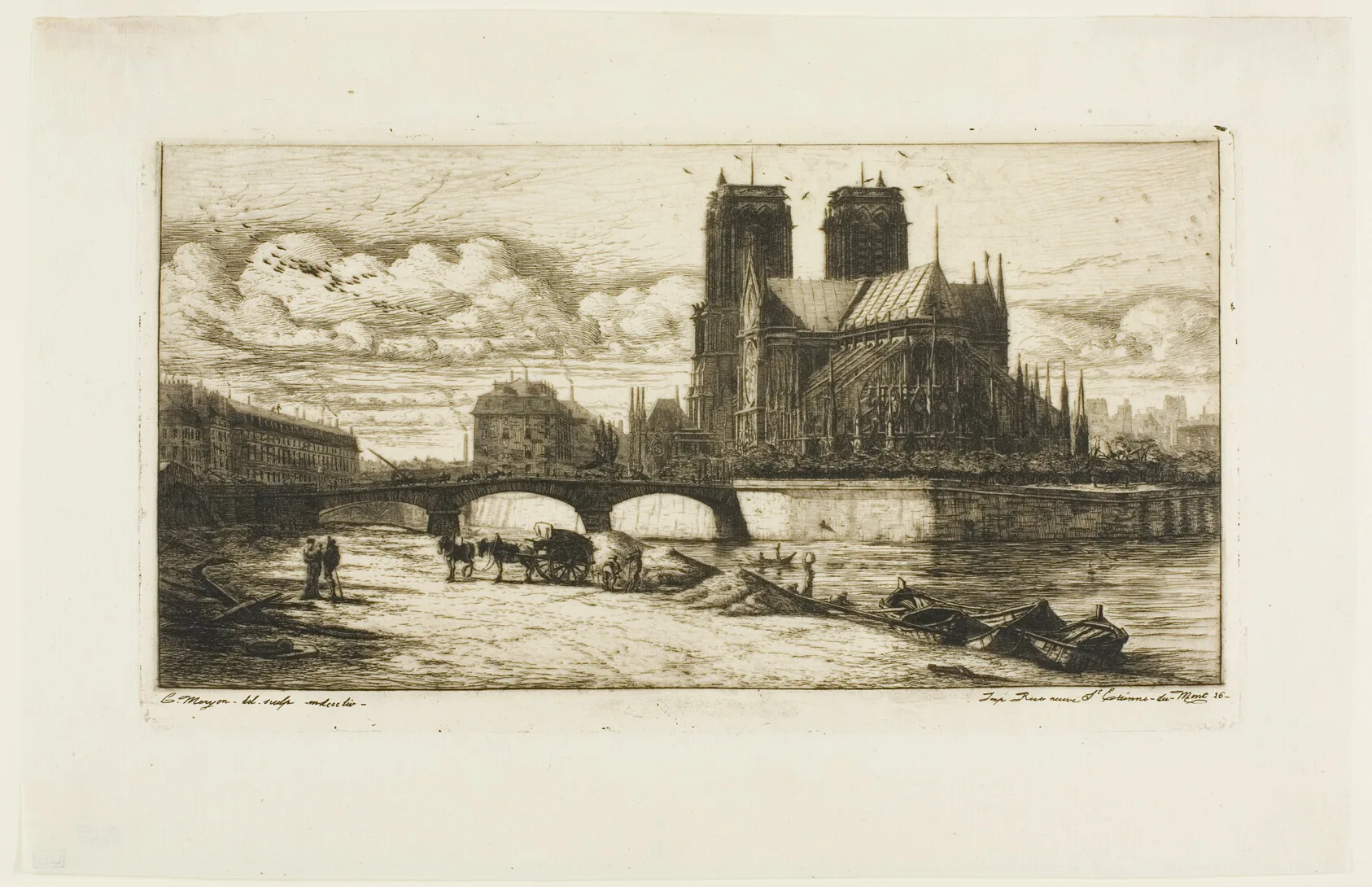
Meryon, The Apse of Notre-Dame, Paris, 1854. Etching and drypoint ivory laid paper.
The Art Institute of Chicago · Clarence Buckingham Collection
What to steal
- 1Counted tone: each shadow is a known number of hatch layers, and the darkest sits beside the lightest paper.
- 2Architecture as silhouette: the skyline of Notre-Dame reads before one buttress does.
- 3Reflections: vertical, a half-step darker, broken by three horizontals.
How to look
- Half-close your eyes until the lines vanish. Count the values that remain. Then open them and count the layers that made each one.
- Follow the eye level across the Apse print: the bridge, the quay and the figures all confirm it.
- Find the one place where the deepest black touches untouched paper. That is the focal point.
Works
12 public-domain
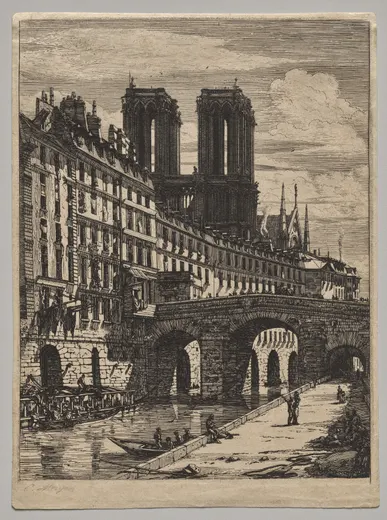
The Petit Pont
1850 · etching with engraving
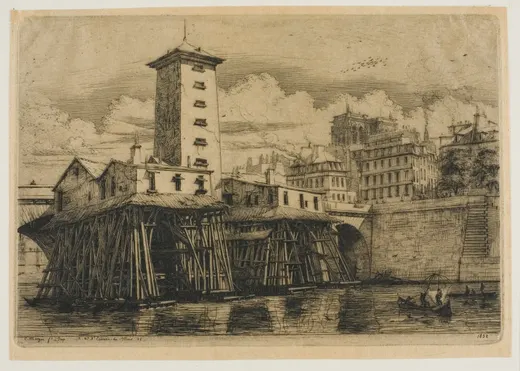
La Pompe Notre-Dame, Paris
1852 · Etching with drypoint
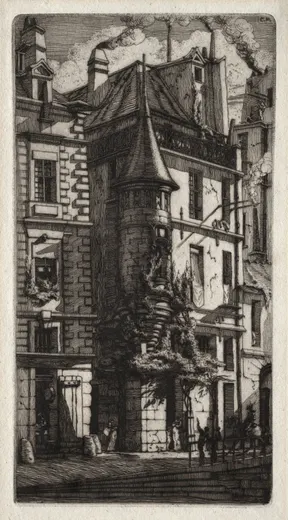
Etchings of Paris: House with a Turret, Weavers' Street
1852 · etching
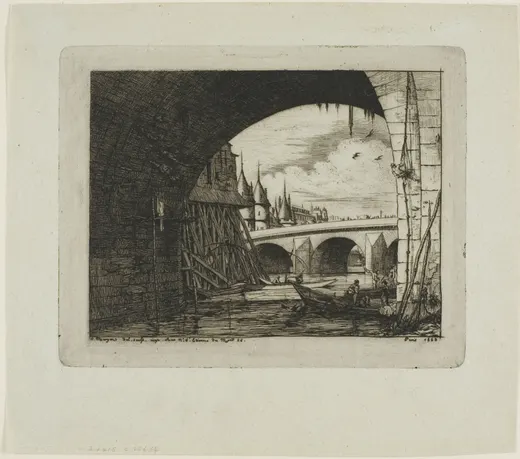
An Arch of Pont Notre-Dame, Paris
1853 · Etching and drypoint
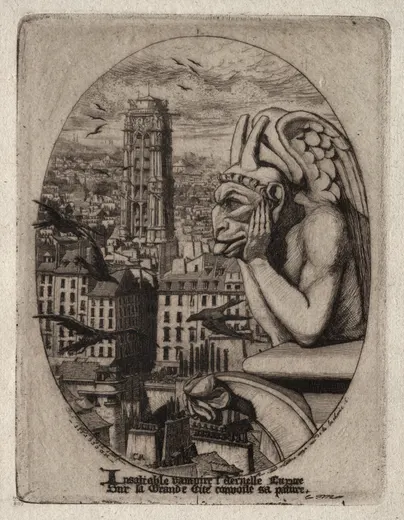
Etchings of Paris: The Gargoyle
1853 · etching
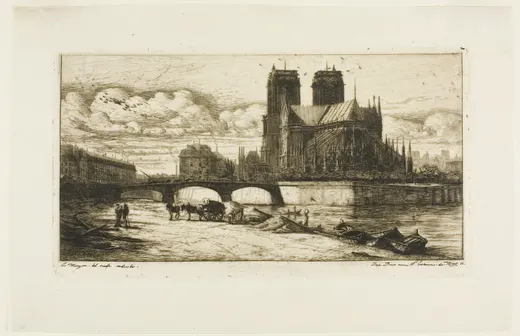
The Apse of Notre-Dame, Paris
1854 · Etching and drypoint ivory laid paper
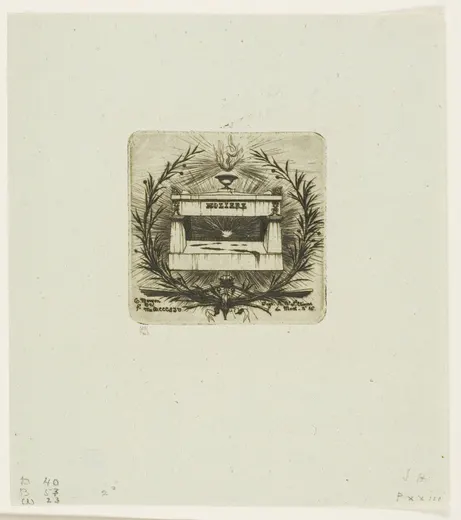
Molière's Tomb, Père-Lachaise Cemetery, Paris
1854 · Etching in warm black
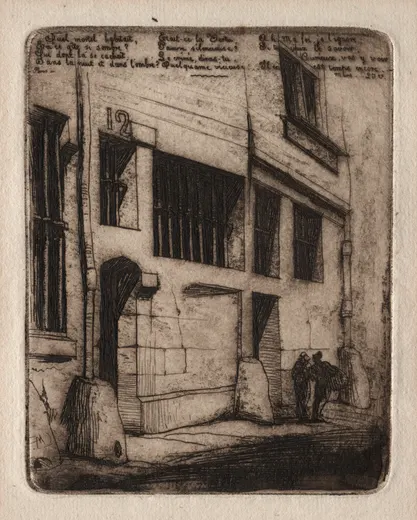
Etchings of Paris: The Street of the Bad Boys
1854 · etching
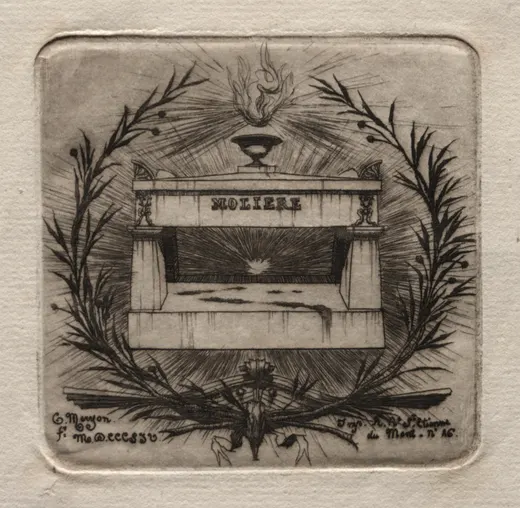
Etchings of Paris: Molière's Tomb in Père Lachaise Cemetery
1854 · etching
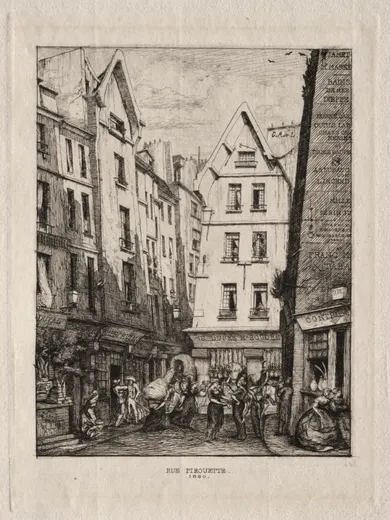
Pirouette Street, near the Markets, Paris
1860 · etching
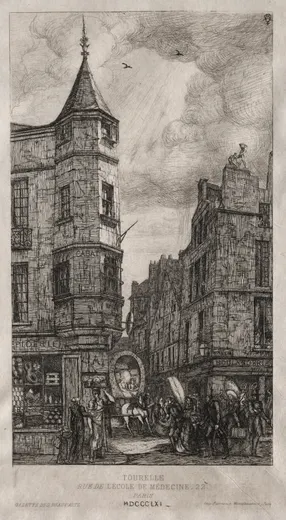
House with a Turret, No. 22 Street of the School of Medicine
1861 · etching
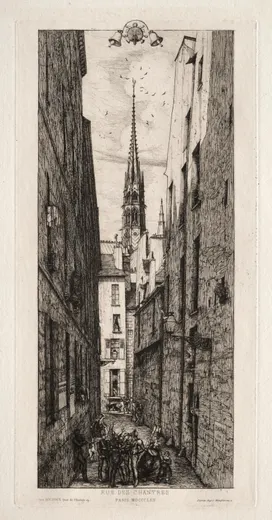
Chantrey Street, Paris
1862 · etching