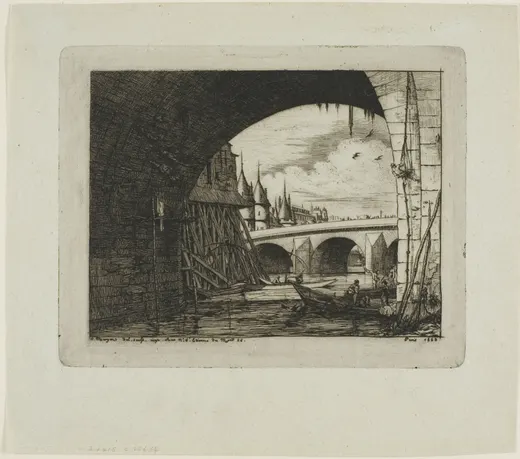
The Apse of Notre-Dame, Paris
1854 · Etching and drypoint ivory laid paper · Image, including stray marks: 16.6 × 30.2 cm (6 9/16 × 11 15/16 in.); Plate: 16.5 × 30 cm (6 1/2 × 11 13/16 in.); Sheet: 23.6 × 36.3 cm (9 5/16 × 14 5/16 in.)
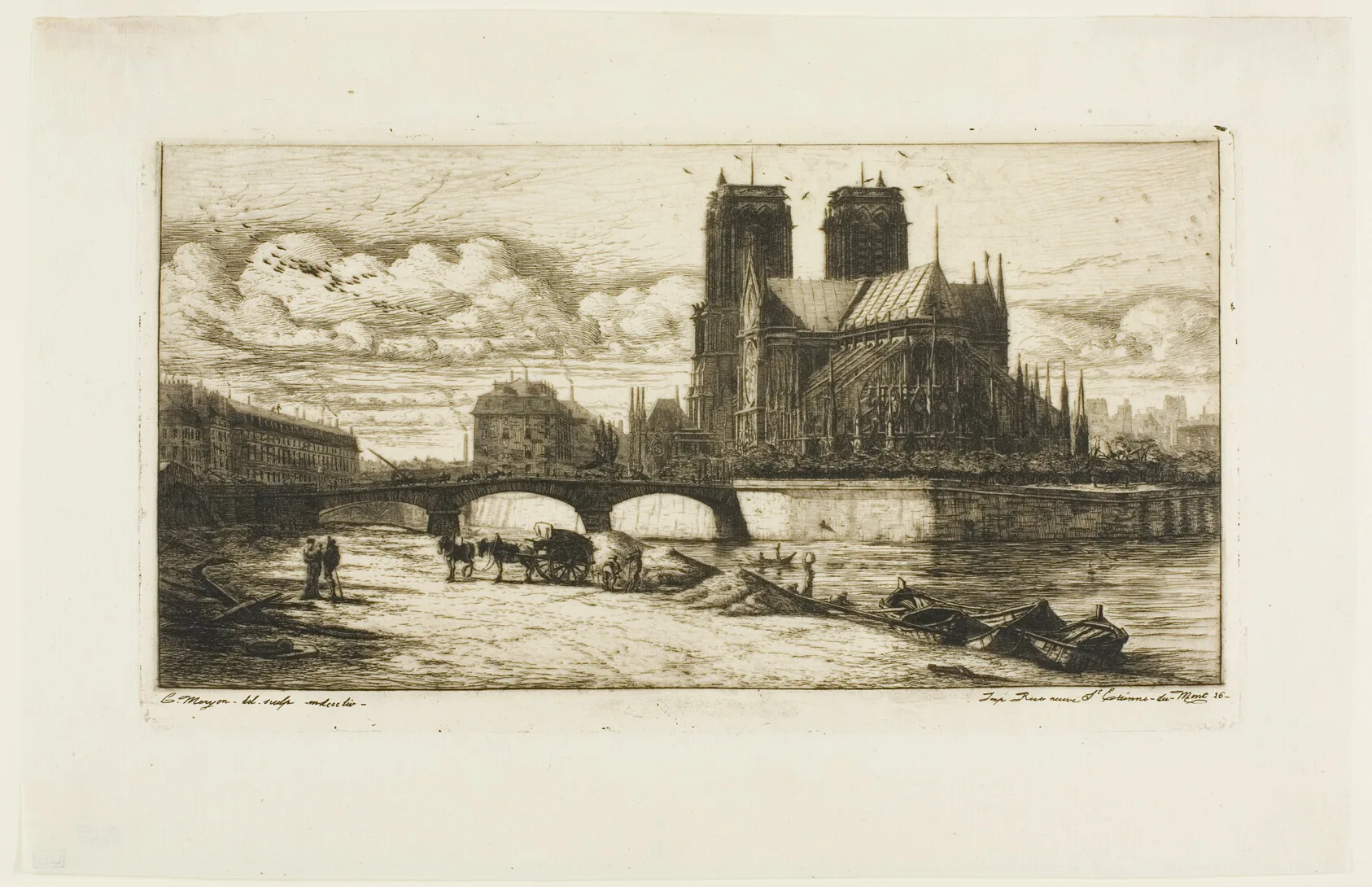
Meryon, The Apse of Notre-Dame, Paris, 1854. Etching and drypoint ivory laid paper.
Meryon, The Apse of Notre-Dame, Paris, 1854, etching and drypoint.
The Art Institute of Chicago · Clarence Buckingham Collection
How to look at a Meryon
- Half-close your eyes until the lines vanish. Count the values that remain. Then open them and count the layers that made each one.
- Follow the eye level across the Apse print: the bridge, the quay and the figures all confirm it.
- Find the one place where the deepest black touches untouched paper. That is the focal point.
Draw this
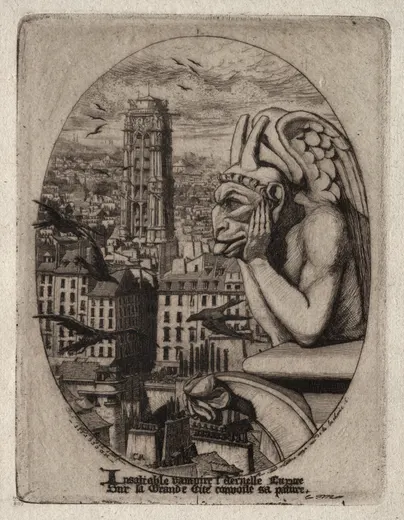
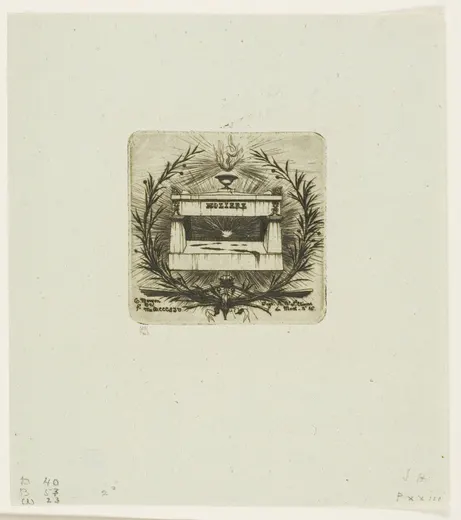
4 studies of this work
 Master study
Meryon
The Apse of Notre-Dame, Paris
Counted tone across an entire city
4h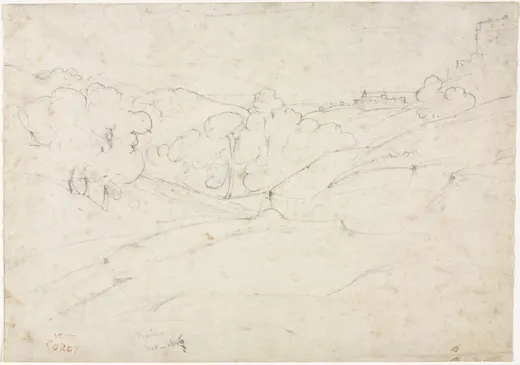 Foundation
Corot · Unit 0
Meet the two hands
A looking session: six drawings, no pencil
0.5h- Foundation
Meryon · Unit 4
Tone from line
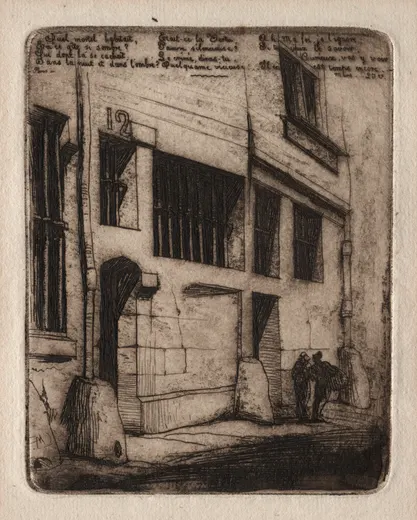
A doorway in counted layers
1h - Foundation
Meryon · Unit 6
Focal hierarchy and edges
One place where everything coincides
1h