Lineage of Forrest · American · 1834 to 1903
James McNeill Whistler
The etched line that taught Cameron, Bone and Forrest where to stop.
Whistler's Thames Set (1859 to 1871) and the two Venice sets (1880 and 1886) are the fountainhead of the architectural etching every Scottish etcher after him worked in. The early Thames plates are dense and exact: warehouses, rigging, brick courses, every window. The Venice plates are the opposite lesson: a doorway drawn fully, the rest of the palazzo suggested with a few lines and left to the paper.
For a pencil draughtsman the Venice method is the useful one. Decide where the eye goes, draw that completely, and let the drawing dissolve outward from it. Whistler called it finishing the picture in the middle. The Art Institute holds the largest Whistler collection anywhere, so the selection here is wide.
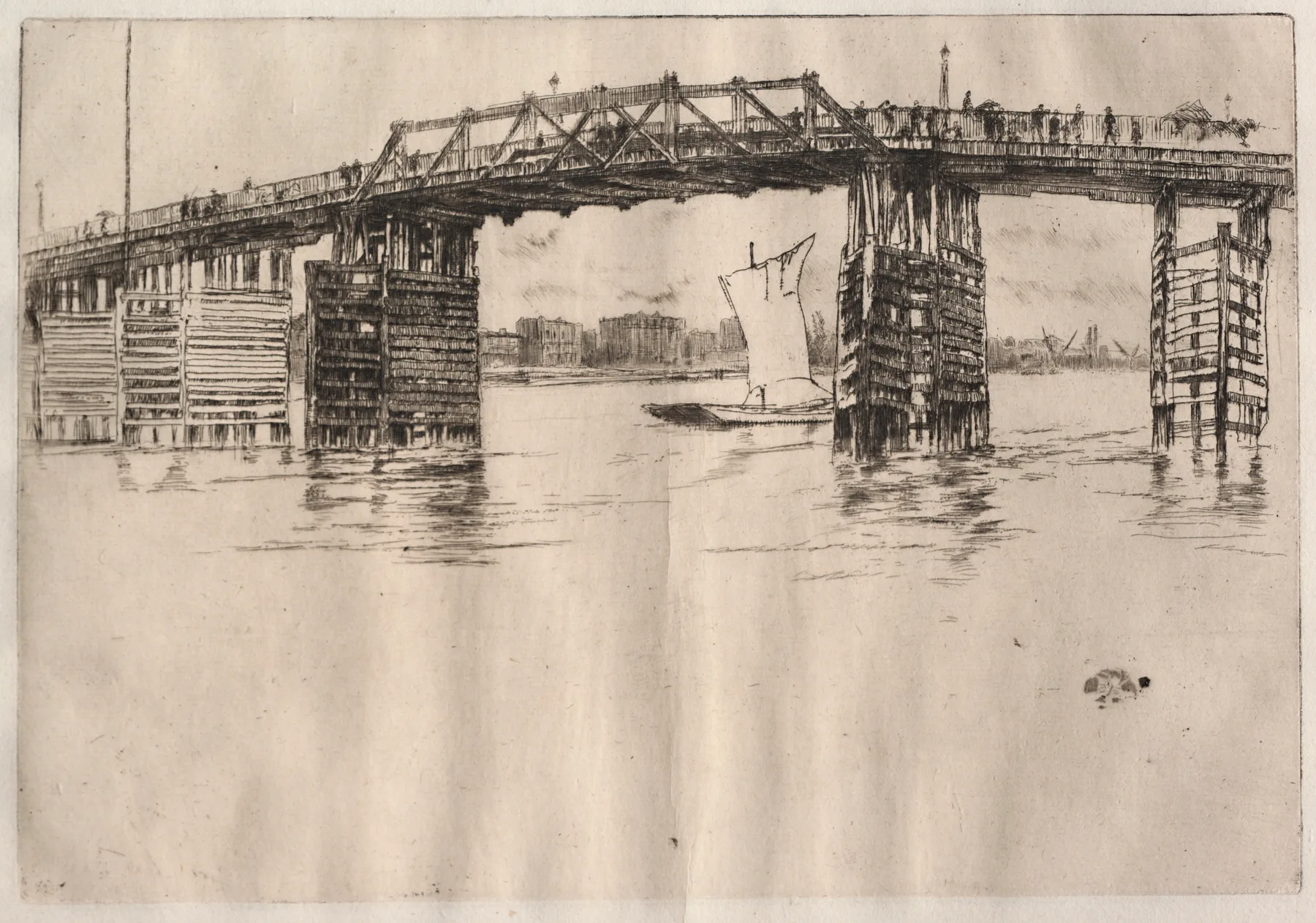
Whistler, Old Battersea Bridge, 1879. etching and drypoint.
The Cleveland Museum of Art · Gift of Mr. and Mrs. Ralph King
What to steal
- 1Finish in the middle. One passage fully drawn, the rest fading to paper.
- 2Vertical lines for reflections; broken horizontals for water.
- 3A doorway as the darkest dark and the key to the whole plate.
How to look
- Find the most finished square inch. Everything else is subordinate to it.
- Count how many windows are actually drawn and how many are implied.
Studies 3 guided · 13 plate copies
All 16 →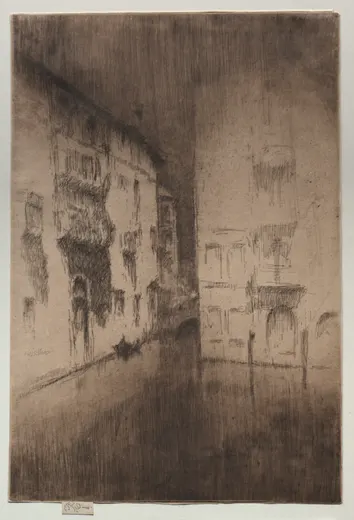 Master study
Whistler
Nocturne: Palaces
A canal at night, drawn with what is left out
2h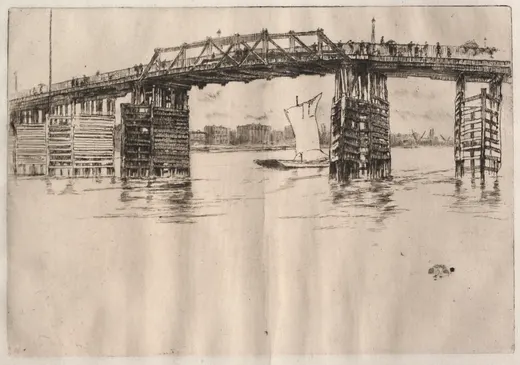 Master study
Whistler
Old Battersea Bridge
A timber bridge drawn in full, a river drawn in fragments
2h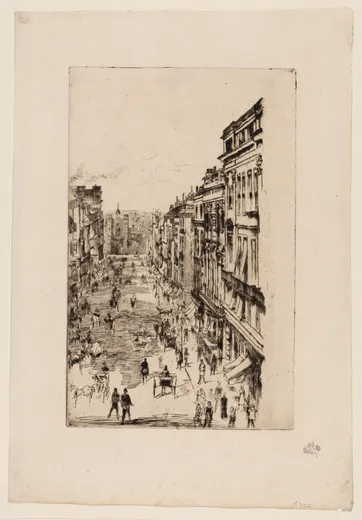 Master study
Whistler
St James's Street
A street in one-point, finished where the eye goes and fading everywhere else
2.5h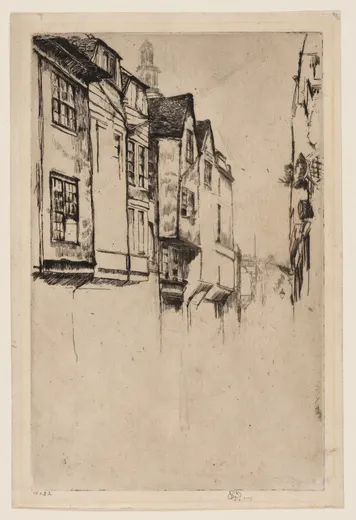 Plate copy
Whistler
Wych Street, London
Whistler, 1877: a plate copy from an etched line
2.5h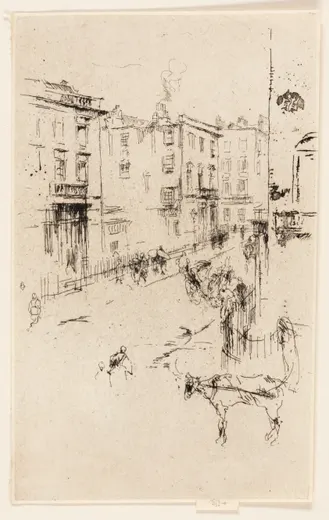 Plate copy
Whistler
Alderney Street
Whistler, 1881: a plate copy from an etched line
2.5h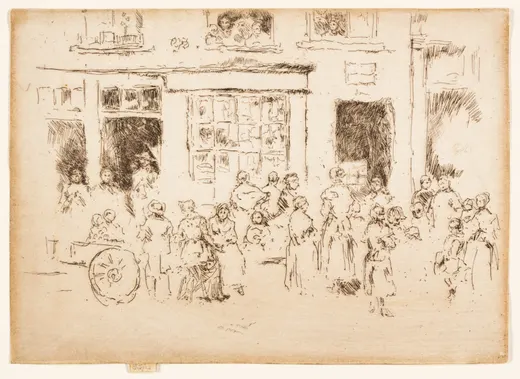 Plate copy
Whistler
High Street, Brussels
Whistler, 1887: a plate copy from an etched line
2.5h
Works
16 public-domain
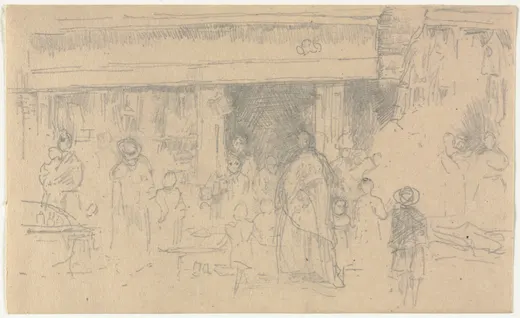
Street Scene
pencil
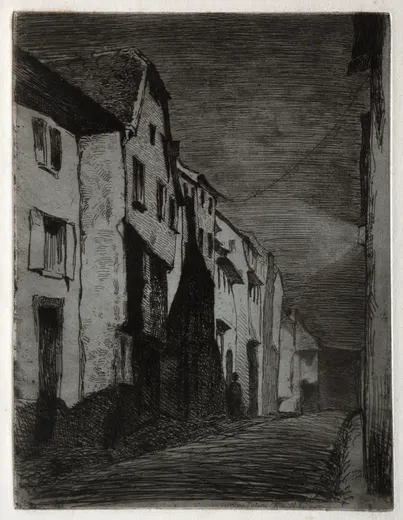
Street at Saverne
1858 · etching
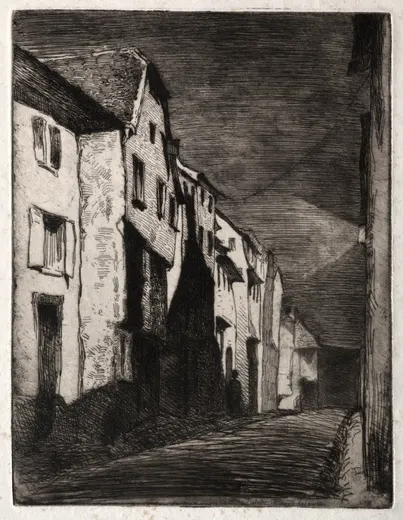
Twelve Etchings from Nature: Street in Saverne
1858 · etching
Wych Street, London
1877 · Etching with foul biting in black ink
St. James's Street
1878 · Etching in black ink
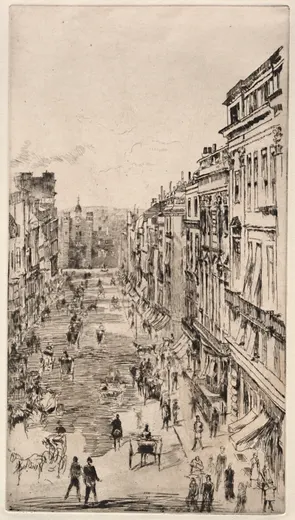
St. James Street
1878 · etching
Old Battersea Bridge
1879 · etching and drypoint
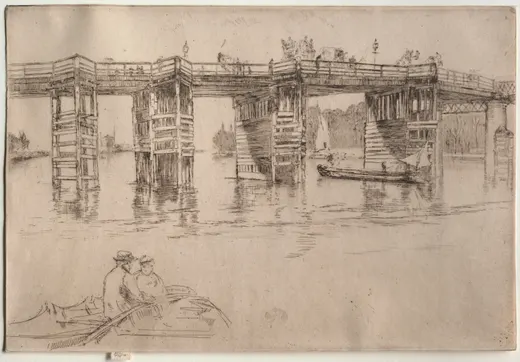
Old Putney Bridge
1879 · etching
Nocturne: Palaces
1879–80 · etching
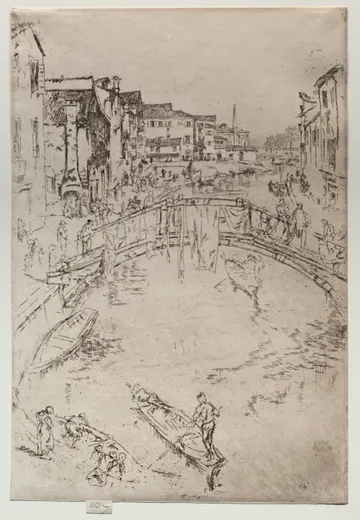
The Bridge
1879–80 · etching
Alderney Street
1881 · Etching with foul biting in black ink
High Street, Brussels
1887 · Etching with foul biting in black ink
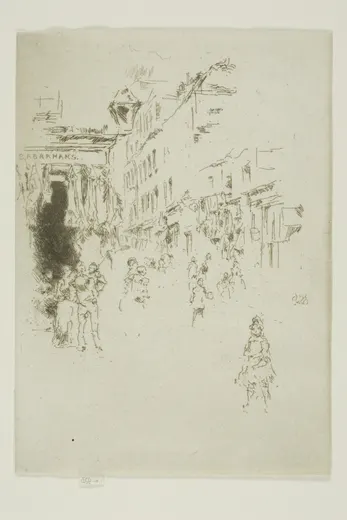
Cutler Street, Hounsditch
1887 · Etching with foul biting in black ink
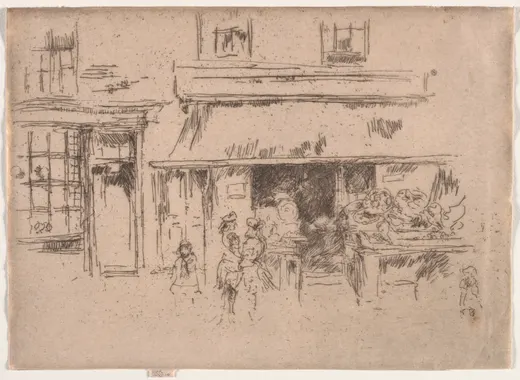
Exeter Street
1887 · etching
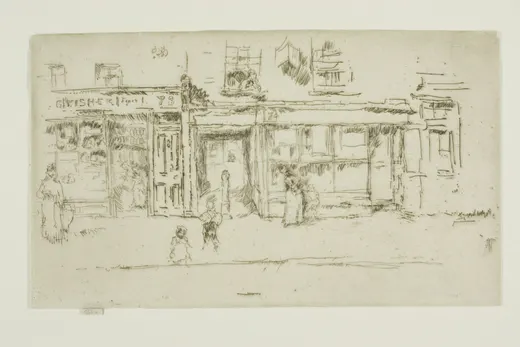
York Street, Westminster
1888 · Etching and drypoint with foul biting in black ink
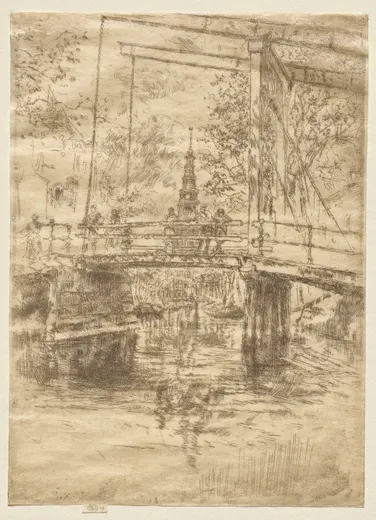
Little Drawbridge, Amsterdam
1889 · etching