Lineage of Corot · German · 1815 to 1905
Adolph Menzel
The greatest pencil draughtsman of the nineteenth century, who drew everything, all the time, with a carpenter's pencil.
Menzel, a tiny Berliner who never stopped drawing, filled more than seventy sketchbooks with the most searching pencil studies ever made: hands, railings, boots, a cathedral vault, a dying man's head, a plaster cast, a rolling mill, all with the same ferocious attention. Degas revered him. He used a broad carpenter's pencil, pressed hard, and built his darks by burnishing the graphite into the paper.
He is here because he is the standard for what graphite can do when the person holding it refuses to approximate. A Menzel study of a window or a staircase is a lesson in drawing only what is there, at the scale it is there, with the pressure it needs. For the Line side of this program he is the ceiling.
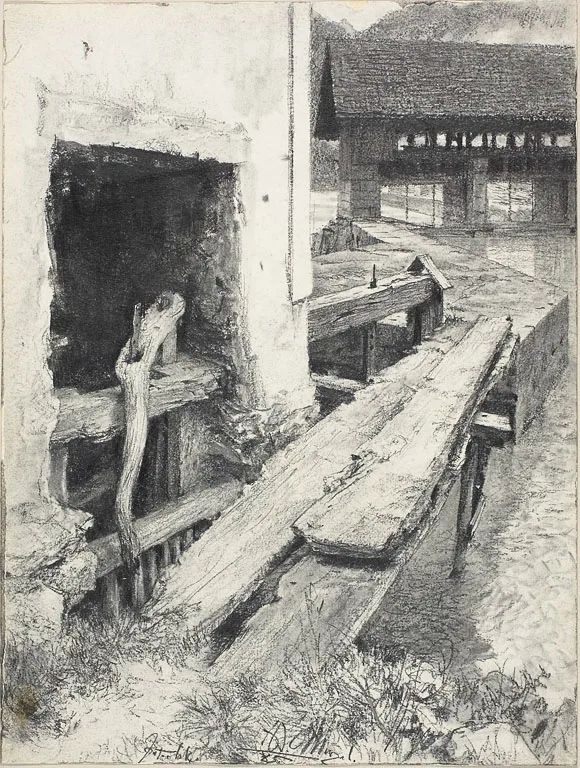
Menzel, Sluice, 1885. Graphite with stumping on ivory wove paper.
The Art Institute of Chicago · Mr. and Mrs. Henry C. Woods Fund
What to steal
- 1Draw what is in front of you, not what you know is there.
- 2Pressure as a tool: lean on the soft grades until the paper shines, then put a hard grade over it for the edge.
- 3Everything is worth drawing. A railing is as serious as a cathedral.
How to look
- Find the darkest passage and notice it is burnished, not hatched.
- Follow a single edge and see where it is hard, where it is lost, and why.
Studies 3 guided · 11 plate copies
All 14 →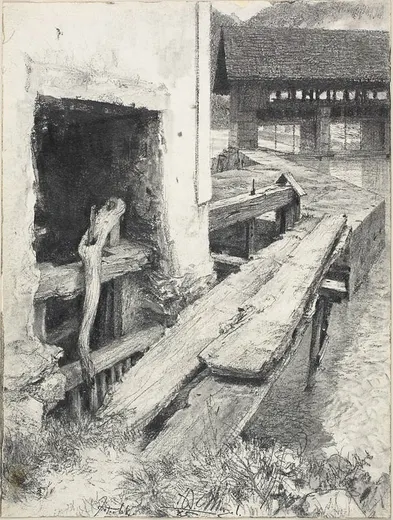 Master study
Menzel
Sluice
Timber in perspective, drawn with pressure as a tool
3h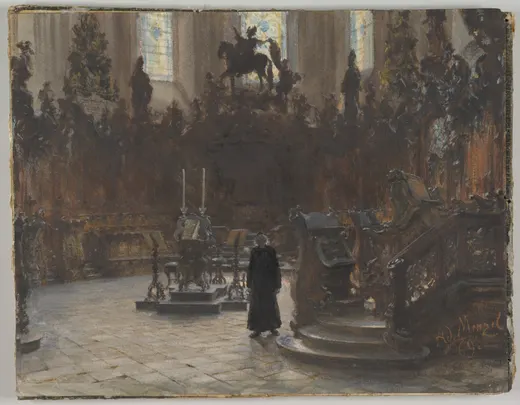 Master study
Menzel
The choirstalls in Mainz Cathedral
A dark interior with one window of light, translated to graphite
2.5h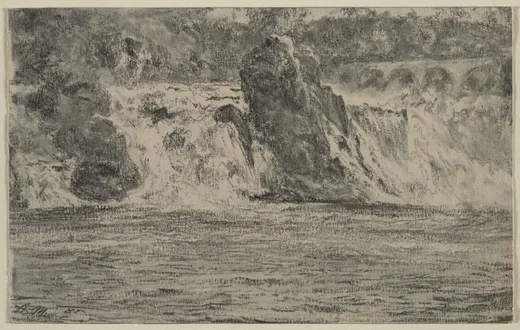 Master study
Menzel
Falls of the Rhine at Schaffhausen
Falling water as lifted light, with stumping as the second tool
2h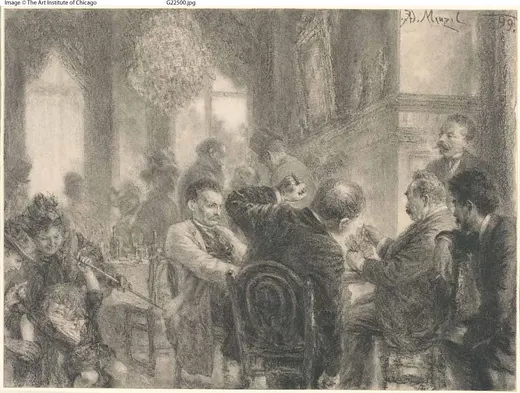 Plate copy
Menzel
The Card Game
Menzel, 1899: a plate copy from charcoal and chalk
2h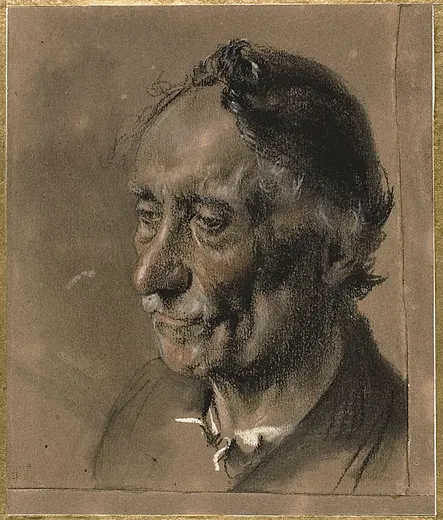 Plate copy
Menzel
Head of an Old Man
Menzel, c. 1850: a plate copy from charcoal and chalk
2h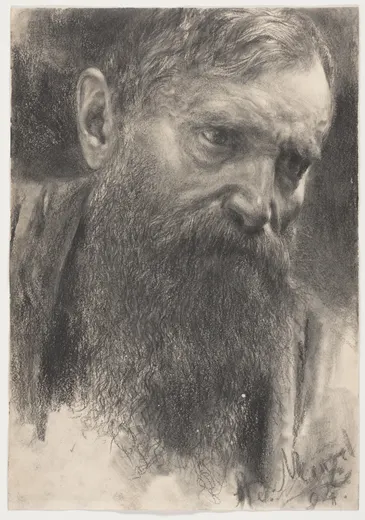 Plate copy
Menzel
Head of a Bearded Man in Half-Profile
Menzel, 1894: a plate copy from graphite
2h
Works
14 public-domain
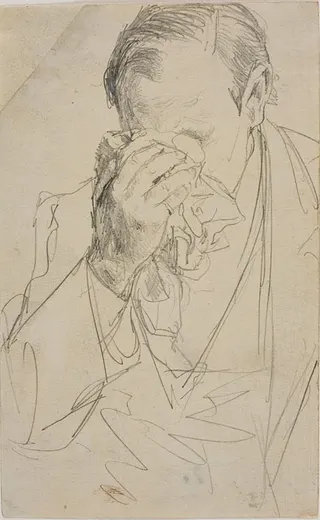
Weeping Man
1850/59 · Graphite
The Choirstalls in the Mainz Cathedral
1869 · Watercolor and gouache (with gum arabic); framing lines in graphite
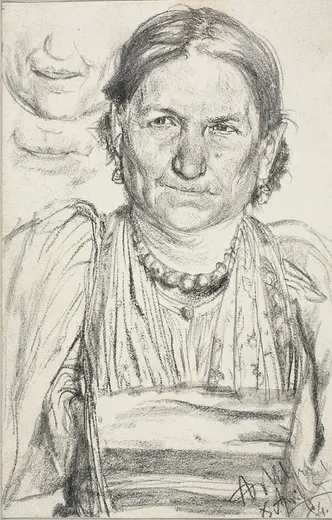
Portrait of a Peasant Woman
1884 · Charcoal and graphite
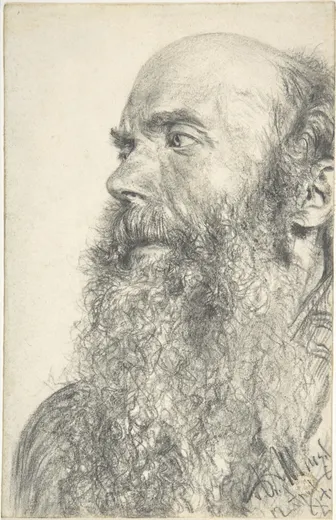
Head of a Bearded Man
1884 · Graphite
Sluice
1885 · Graphite with stumping
Falls of the Rhine at Schaffhausen (Rheinfall von Schaffhausen)
1885 · graphite
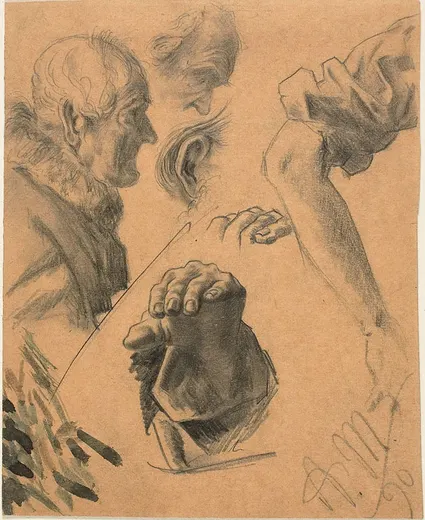
Sketches of Hands, Arms, and Heads
1890 · Graphite
Head of a Bearded Man in Half-Profile
1894 · Graphite
The Card Game
1899 · Graphite and fabricated black chalk
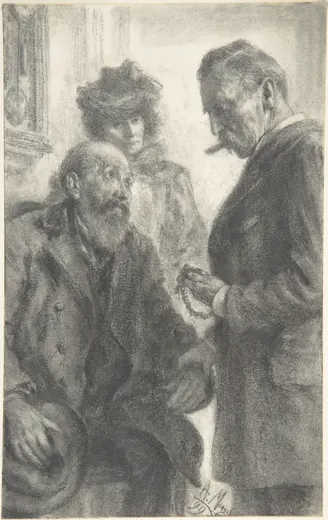
Doctor and Patient
1899 · Graphite
Head of an Old Man
c. 1850 · Charcoal and pastel
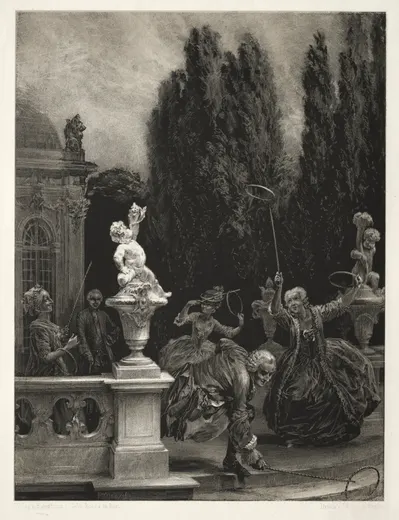
Essay on Stone with Brush and Scraper: Playing at Hoops on the Castle Terrace
1851 · lithograph
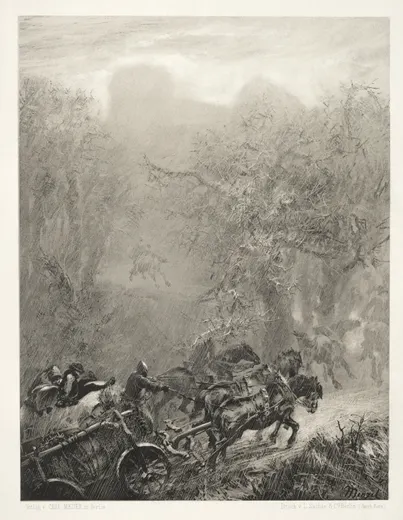
Essay on Stone with Brush and Scraper: The Convoy of Prisoners through a Woods
1851 · lithograph
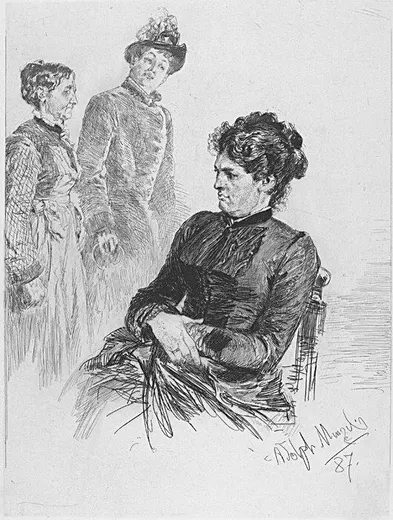
Stille Teilnahme
1887 · Etching