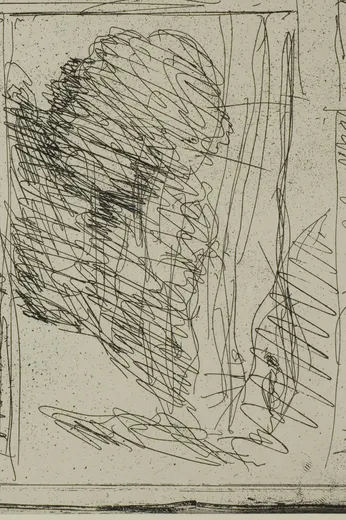
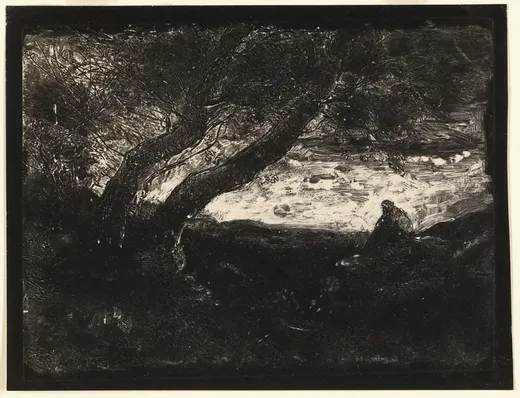
The Rider in the Woods, large plate
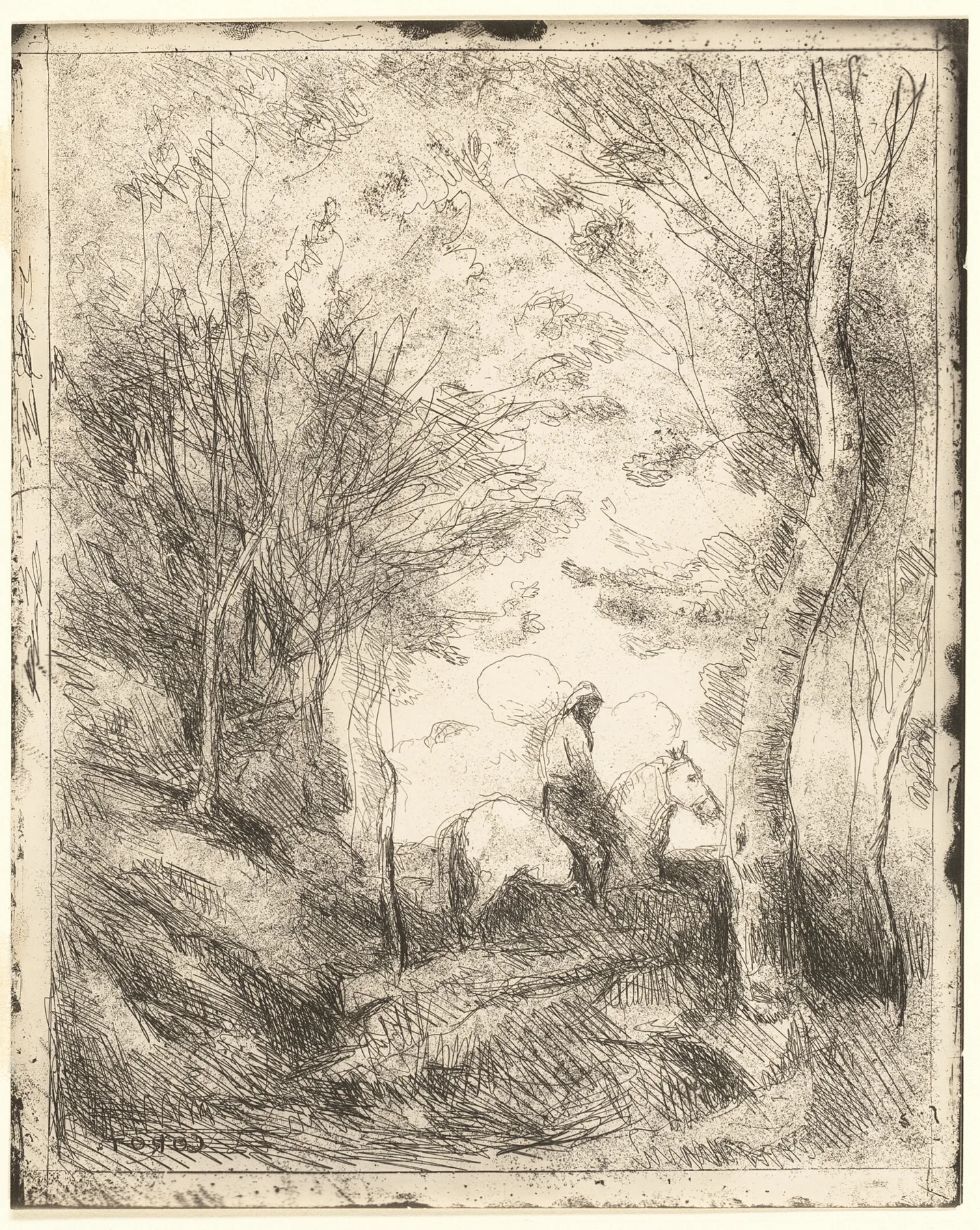
Corot, The Rider in the Woods, large plate, c. 1854. Cliché-verre on ivory photographic paper.
Pins mark where to look before you draw.
The Art Institute of Chicago · Gift of the Print and Drawing Club
The Rider in the Woods, large plate
Horse and rider as a single mass
About 1854: a rider on a pale horse under trees. The horse is the lightest shape on the plate because Corot scratched it most; the rider is dark by omission. A figure study for people who do not draw figures: one light mass, one dark mass, a few lines of trees.
- Difficulty
- Time
- about 1.5 h
- You draw with
- scratchboard and stylus, or 4B tone and a precision eraser
Why this one
- A figure handled as two values and a silhouette.
- Shows that the whole design is light-against-dark, decided before any detail.
From your kit
The whole kit →- 1Grafwood 4B laid flat, then the Mono Zero lay an even tone with the side, then draw the lights out with the eraser as if it were the stylus.
- 2Kneaded eraser (warm it) and the clean Mono Zero press-and-lift corrections only; the Mono Zero for a single sharp light.
- 3Alpha sketchbook 9 x 6 draw at the book's size and keep the proportions; date the page.
In general, this study asks for
- A scratchboard (black clay-coated) and stylus, or
- 4B graphite laid as a flat tone plus a Tombow Mono Zero eraser
Watch first
All videos →Curators handle Corot's actual glass plates and prints. French; the images carry it even without captions.
YouTube
The plan
3 stages · ~70 min- 1
Two-value plan
10 minOn paper: the horse as a light shape, the rider dark, the trees mid. Two or three values, no more.
Checklist0 / 1 - 2
Scratch the horse first
50 minThe horse's silhouette by dense marks, the rider untouched, the trees in open loops.
Checklist0 / 1 - 3
Compare
10 minInvert and compare. Box.
Checklist0 / 1
What it should look like
- A pale horse and dark rider that read from across the room.
Where it goes wrong
- Drawing the rider's features. Faces attract pencils. The rider is a silhouette. Nothing inside it.
Log this session
Start the clock when you pick up the pencil. Stop it when you put it down. Log it. Every session counts toward the box.
Status
How did it go?
Before this, ideally