Lineage of Forrest · English · 1783 to 1852
Samuel Prout
The broken line that taught a century how to draw old stone.
Prout was the most influential architectural draughtsman in Britain in the first half of the nineteenth century. Born in Plymouth, he became Painter in Water-Colours in Ordinary to George IV and then to Queen Victoria, and he published the drawing manuals (Rudiments of Landscape, Prout's Microcosm, Hints on Light and Shadow) that a generation learned from. Ruskin, who adored him, said Prout had taught the public to see the picturesque in old buildings.
His signature is the broken, wiry line: a contour that stops, wobbles, thickens and returns, so that stone reads as old and weathered instead of new and machine-cut. His continental street scenes, published as Facsimiles of Sketches made in Flanders and Germany in 1833, show the full method: a Gothic town hall drawn with structural confidence, two or three figures for scale, a market in the foreground, and tone built from hatching that follows the planes.
The Cleveland sketchbook of 1814 is a gift to a beginner. It is a working book from a tour of the Scottish Borders (Norham, the Eildon Hills above Melrose) and shows what a real sketch page looks like: pencil, a little wash, unfinished edges, notes. This is the same country Forrest drew a century later.
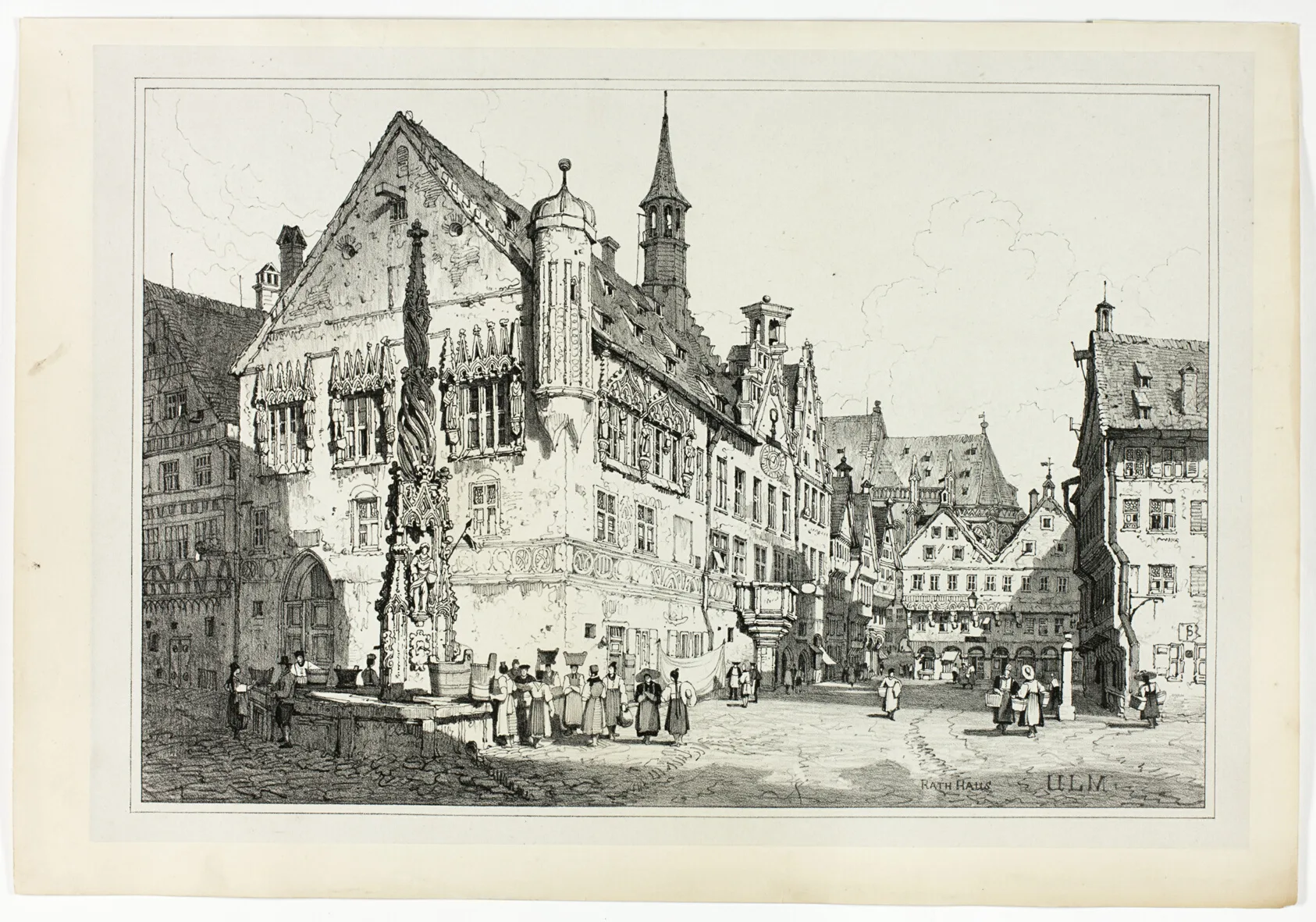
Prout, Rath Haus, Ulm, from Facsimiles of Sketches made in Flanders and Germany, 1833. Lithograph in black on grayish-ivory chine, laid down on ivory wove paper.
The Art Institute of Chicago · The Leonora Hall Gurley Memorial Collection
What to steal
- 1The broken line. Lift the pencil mid-stroke and let it wander; suggest two stones per course, not twelve.
- 2Figures as rulers. Two or three small figures, heads on the eye level, and the building has a size.
- 3A sketchbook habit: pencil first, a light wash of tone, and the courage to leave it unfinished.
- 4Tone that follows the planes: hatching runs with the wall, not across it.
How to look
- Find a long straight edge in a Prout and notice it is not a single line. Count the breaks.
- Look at the figures. Their heads line up with the horizon. Their feet tell you how far away they stand.
- Find the darkest doorway and the lightest sunlit wall. They are nearly always touching.
Works
22 public-domain
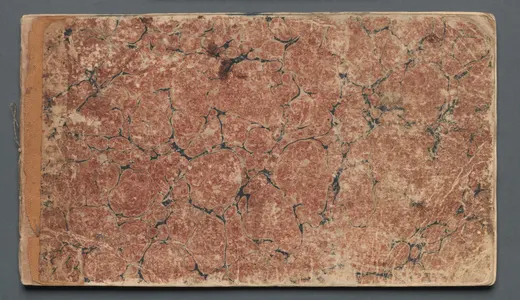
Sketchbook
1814 · graphite with gray and brown wash
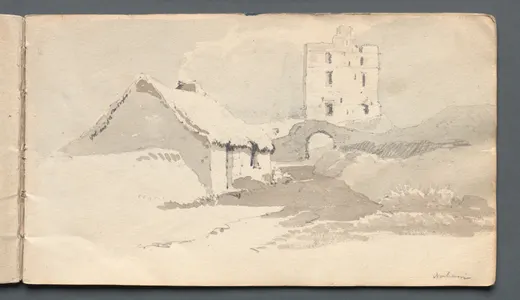
Sketchbook: Norham
1814 · graphite with gray and brown wash
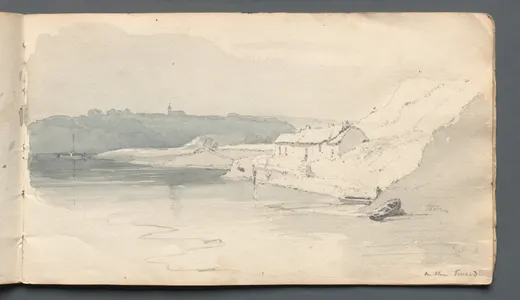
Sketchbook: On the ?
1814 · graphite with gray wash
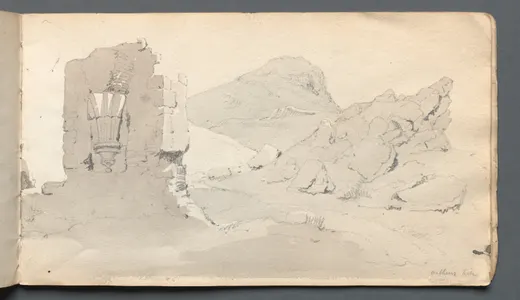
Sketchbook: "Ruin"
1814 · graphite with gray and tan wash
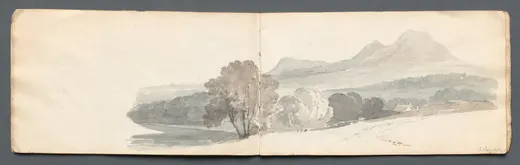
Sketchbook: Eildon Hills
1814 · graphite with gray and brown wash
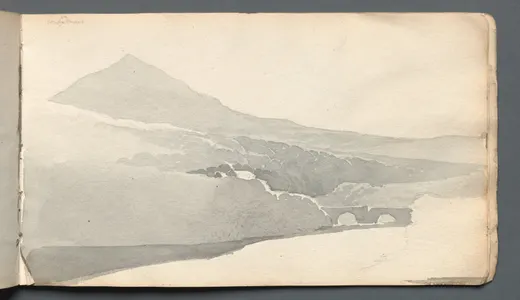
Sketchbook: "Mountainous Landscape with Bridge"
1814 · graphite with gray wash
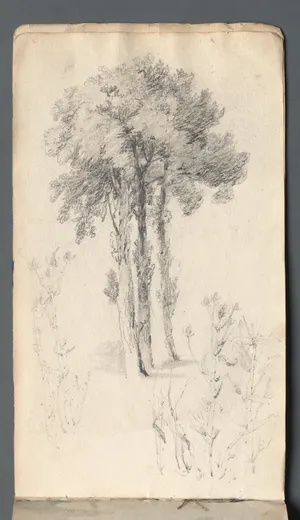
Sketchbook: Tree Study
1814 · graphite
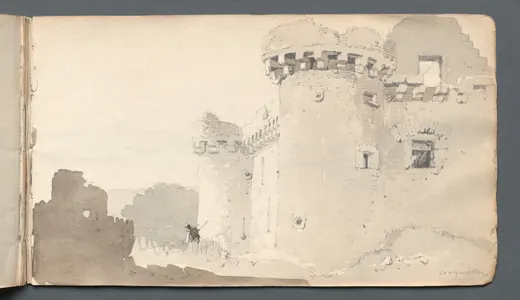
Sketchbook: "Ruined Castle"
1814 · graphite with gray and brown wash
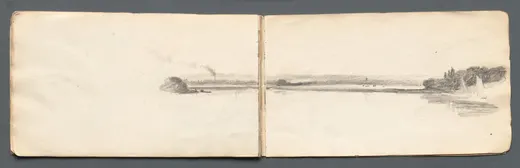
Sketchbook: "Landscape with Sailboats"
1814 · graphite
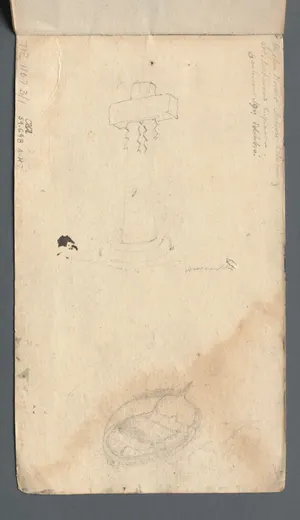
Sketchbook: Study of Cross and Rowboat (on back cover)
1814 · graphite
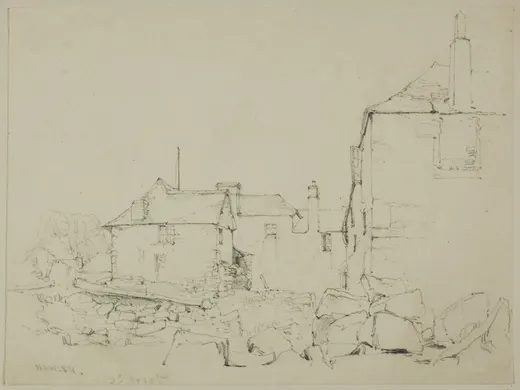
Houses and Stone Wall, Newlyn
n.d. · Graphite
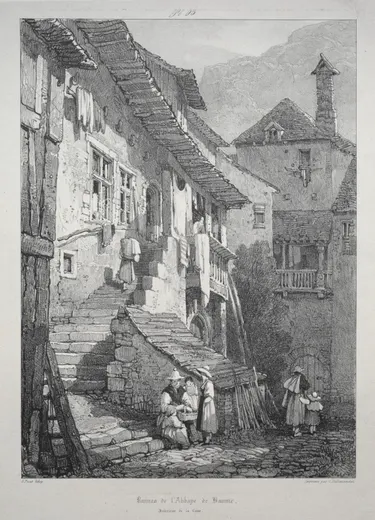
Ruins of the Abbey of Baume. Interior of the Court
1798–1852 · lithograph
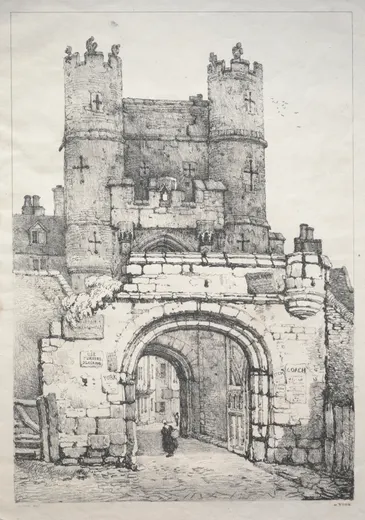
A Series of Ancient Buildings and Rural Cottages in the North of England: At York, Medieval Gate
1821 · softground etching
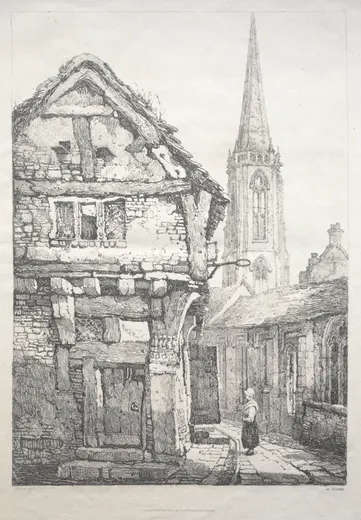
A Series of Ancient Buildings and Rural Cottages in the North of England: At York, Street beside Cloister Wall
1821 · softground etching
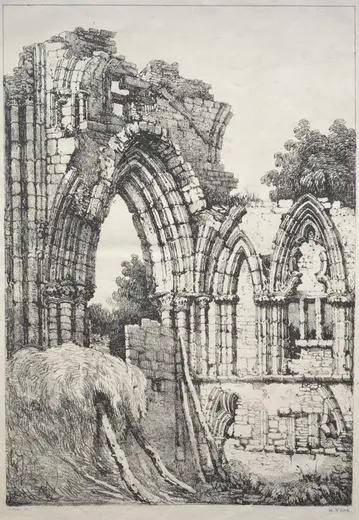
A Series of Ancient Buildings and Rural Cottages in the North of England: At York, Ruins
1821 · softground etching
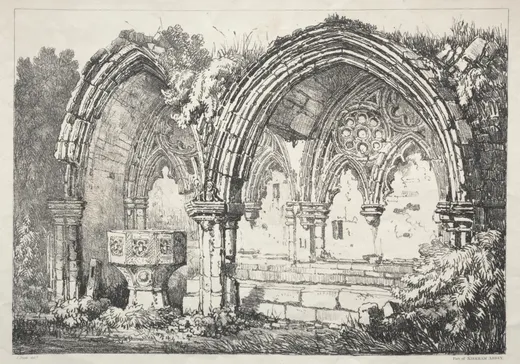
A Series of Ancient Buildings and Rural Cottages in the North of England: Part of Kirkham Abbey
1821 · softground etching
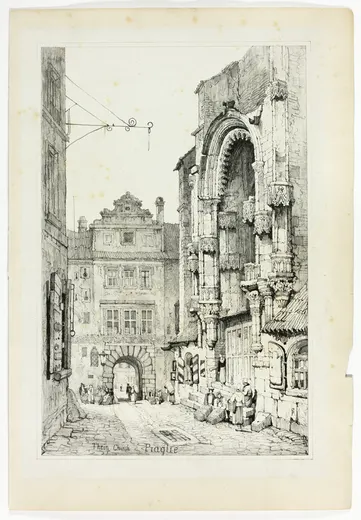
Thein Church, Pragrue, from Facsimiles of Sketches made in Flanders and Germany
1833 · Lithograph in black
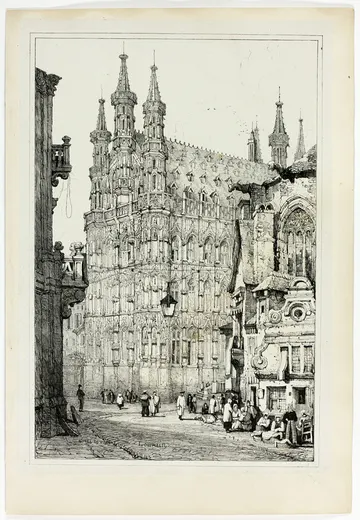
Hotel de Ville, Louvain, from Facsimiles of Sketches made in Flanders and Germany
1833 · Lithograph in black
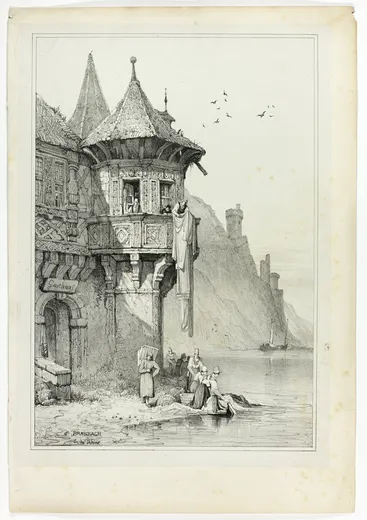
At Braubach on the Rhine, from Facsimiles of Sketches made in Flanders and Germany
1833 · Lithograph in black
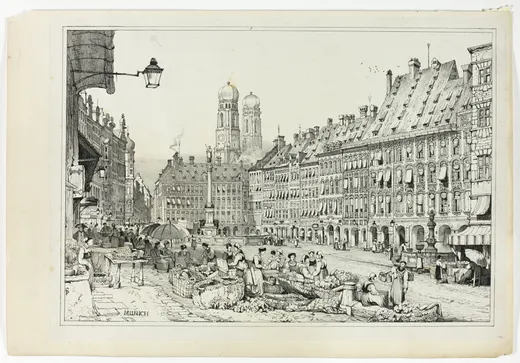
Munich, from Facsimiles of Sketches made in Flanders and Germany
1833 · Lithograph in black
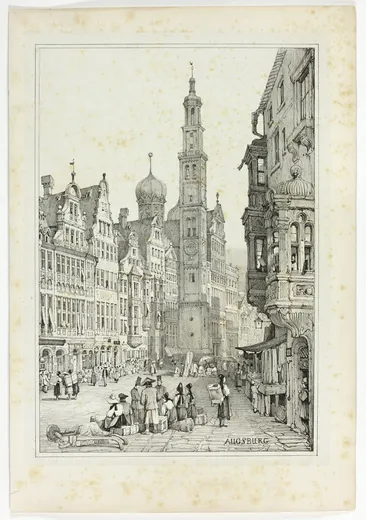
Augsburg, from Facsimiles of Sketches made in Flanders and Germany
1833 · Lithograph in black
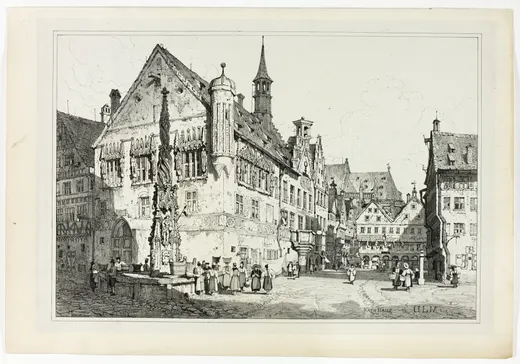
Rath Haus, Ulm, from Facsimiles of Sketches made in Flanders and Germany
1833 · Lithograph in black