Light on form
Light on form
A sphere and a cube under one lamp
Shade a sphere and a cube with all six zones of light, from observation, under a single light source.
- Master
- John Sell Cotman
- Difficulty
- Time
- about 1 h
- You draw with
- HB, 2B, 4B
Why this one
- Unit 2 of the program: Seeing.
- A sphere that turns and sits.
- A cube with three distinct flat planes and a cast shadow that glues it down.
From your kit
The whole kit →- 1Grafwood HB, 2B, 4B HB for layout and line; 2B, 4B for the darks. Long points from the Blackwing on everything up to B.
- 2Kneaded eraser and the Mono Zero press-and-lift corrections only; the Mono Zero for a single sharp light.
- 3Alpha sketchbook 9 x 6 draw at the book's size and keep the proportions; date the page.
In general, this study asks for
- Drawing pad
- HB, 2B, 4B
- Kneaded eraser
- An orange or ball, a small box, one lamp, other lights off
Watch first
All videos →Squinting, value scales and why beginners under-read darks.
YouTube How to simplify your light and shadow shapesDrawing Tutorials Online · Shadow shapes as flat masses first. Shown on a portrait, but the principle is identical for a tree or a tower.
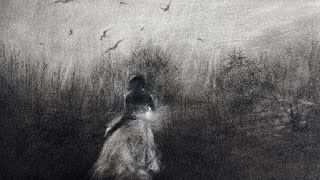 Atmospheric charcoal landscape drawing tutorialMad Charcoal · Broad charcoal masses and lifted lights; the closest thing on YouTube to a late Corot being made.
The plan
5 stages · ~57 min- 1
Set one light
13 minTurn off every light but one lamp, placed upper left of the objects. Put the ball and the box on a plain surface. Look for the six zones on the ball: highlight, light, halftone, core shadow, reflected light, cast shadow. Point at each one. Say its name.
FigureSix zones on the sphere, four planes on the cube. Checklist0 / 1 - 2
The sphere
13 minDraw the circle lightly. Lay a flat tone over everything but the highlight. Then build the halftone and core shadow as a gradient curving around the form (contour hatch or scumble, following the curve). Lift the reflected light slightly with the kneaded eraser; it stays darker than the lit side. Lay the cast shadow, darkest at the contact, softening away. Lose the edge where the shadow side meets the cast shadow.
Checklist0 / 1 - 3
The cube
13 minTop plane: paper or near it. Front: halftone, flat. Side: shadow, flat and darker. Cast shadow on the surface, darkest at the base. Flat tones, hard edges between planes; that is what makes it a cube and not a ball.
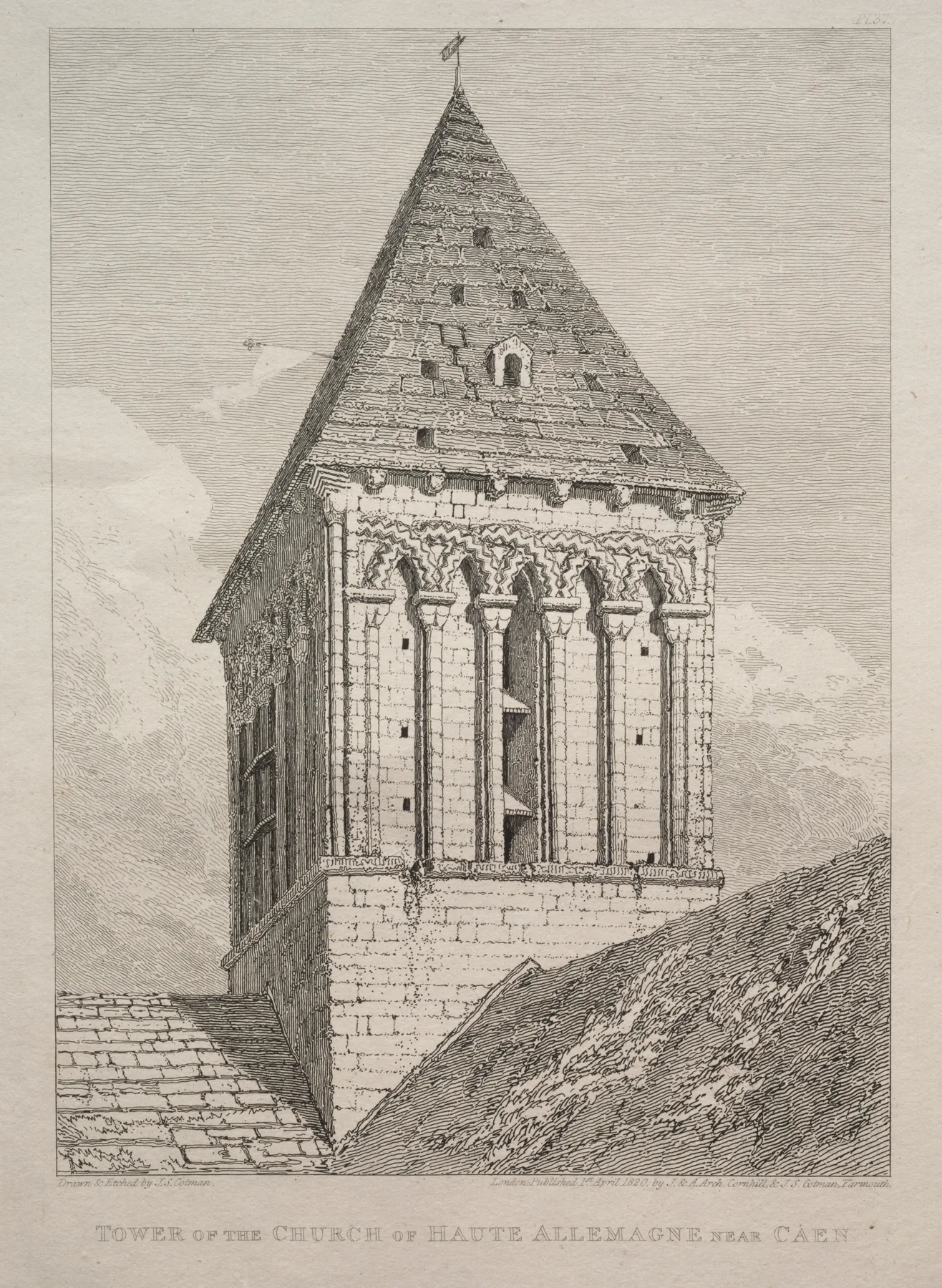
Cotman, Tower of the Church of Haute Allemagne near Caen, 1822. etching.
Cotman, Tower of the Church of Haute Allemagne. A cube with a pyramid on it, under light from the upper left. Find the four values.
The Cleveland Museum of Art · Gift of William C. Keough
Checklist0 / 1 - 4
Compare
13 minSquint at the objects, squint at the drawing. Match. Then fetch your Day One baseline from the box and put it beside today's cube. That is one month.
Checklist0 / 1 - 5
Self-check
5 minTick each item honestly. If one is a no, the session is not finished; go back to that step.
Checklist0 / 4
What it should look like
- A sphere that turns and sits.
- A cube with three distinct flat planes and a cast shadow that glues it down.
Where it goes wrong
- Reflected light as bright as the lit side. It looks bright because it is next to the core shadow. It is one step lighter than the core shadow. No more.
- Cast shadow the same value everywhere. Not looking at the contact point. Darkest and sharpest at the base, softer and lighter as it travels.
Log this session
Start the clock when you pick up the pencil. Stop it when you put it down. Log it. Every session counts toward the box.
Status
How did it go?