Lineage of Forrest · English · 1782 to 1842
John Sell Cotman
Big flat shapes, exact architecture, and the abbeys of Yorkshire and Normandy.
Cotman, the leading figure of the Norwich School, drew ruined abbeys and Norman churches with a clarity nobody has bettered. His Yorkshire tours around 1803 to 1805 produced the Rievaulx Abbey subjects; his three tours of Normandy between 1817 and 1820 became the two volumes of Architectural Antiquities of Normandy (1822), etched by his own hand. From 1834 he was drawing master at King's College School in London.
What makes him a teacher is design. He saw a building as a few large, flat, interlocking shapes before he saw a single moulding, and he kept that pattern intact all the way to the finished sheet. His graphite of Cley Church, Norfolk (1818) is a complete architectural elevation: tracery, buttresses, parapet, drawn in line with a grey wash for the shadow side, and nothing in it that does not need to be there.
His Liber Studiorum (1838), a set of soft-ground etchings of castles, bridges and abbeys, is a course in its own right: the same subjects this program asks you to draw, each reduced to a few values and a sure outline.
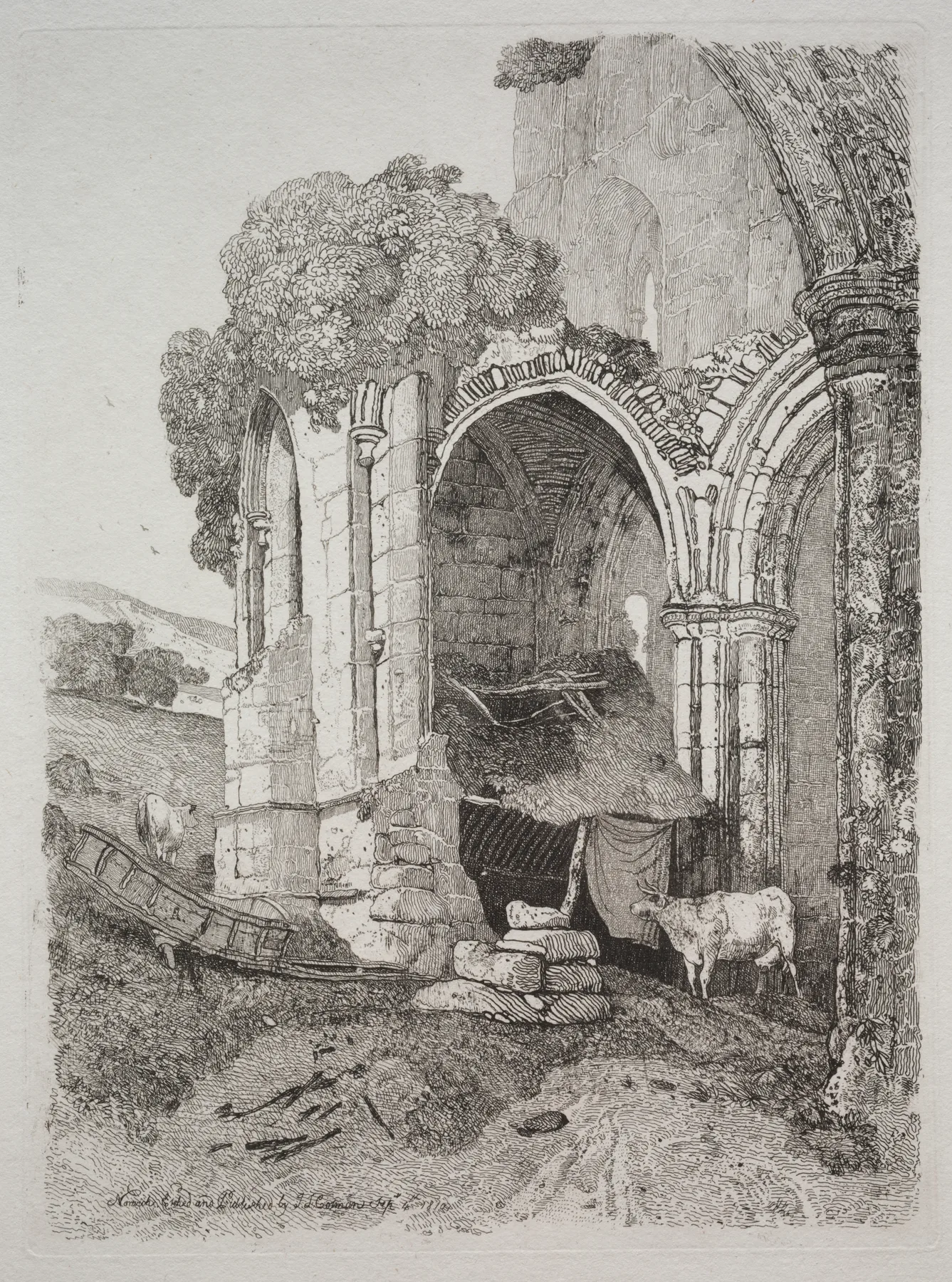
Cotman, Rievaulx Abbey, Yorkshire, 1810. etching.
The Cleveland Museum of Art · John L. Severance Fund
What to steal
- 1Shape first. Reduce the building to three or four flat shapes of value and keep them flat.
- 2The constructed arch. Every window head in Cley Church is compass geometry drawn freehand.
- 3The ruin as silhouette: one stable mass with a broken top edge, some voids showing sky, some showing dark.
- 4Economy. If a line does not change the shape, it is not drawn.
How to look
- Squint at a Cotman until it becomes a jigsaw of three values. Notice the pieces are large and few.
- Follow the main arch at Rievaulx and find the two springing points. The curve is constructed, not guessed.
- In the Normandy castle in graphite, count the stones actually drawn. Then notice where they are: edges, openings, near the ground.
Works
22 public-domain
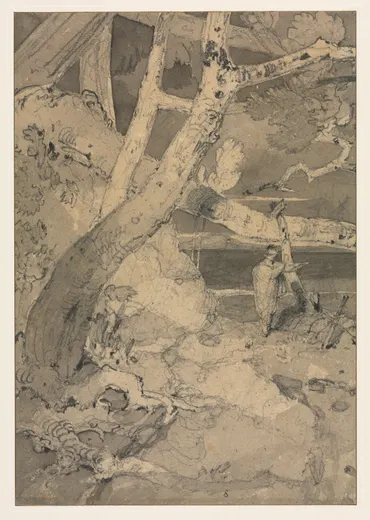
Traveler in a Woodland Landscape
1806 · graphite and gray wash
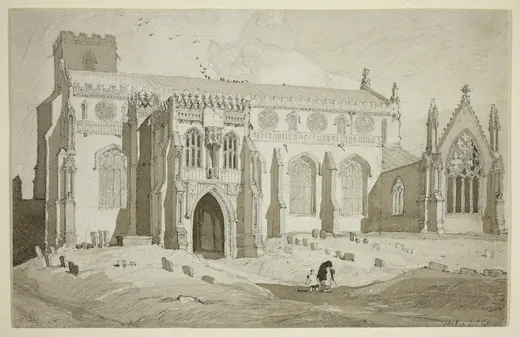
Cley Church, Norfolk
1818 · Graphite and gray wash
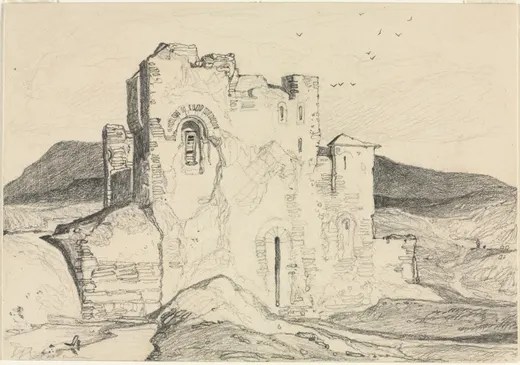
A Castle in Normandy
c. 1800–1842 · graphite
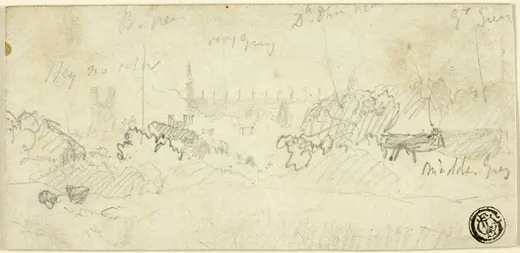
Sketch of Landscape with Cathedral
n.d. · Graphite
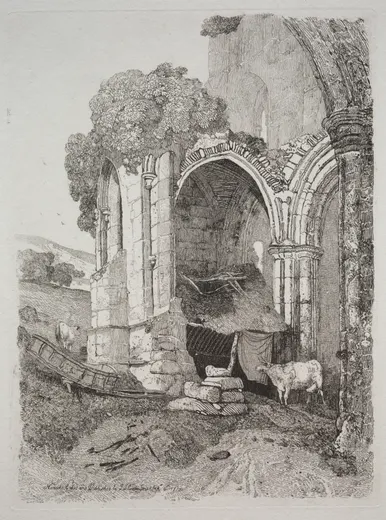
Rievaulx Abbey, Yorkshire
1810 · etching
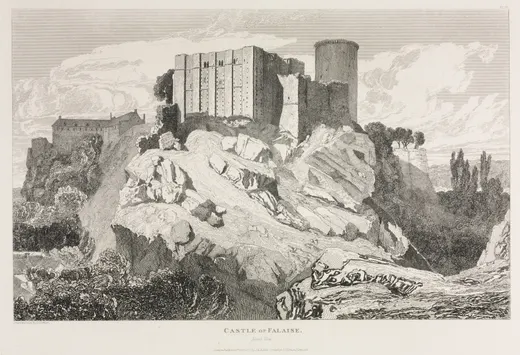
Architectural Antiquities of Normandy (Vol. II), Pl. 90: Castle of Falaise (North View)
1821 · etching
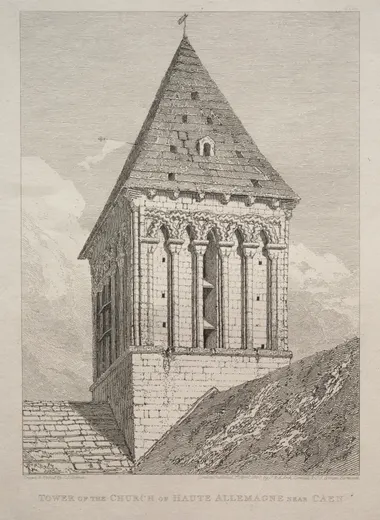
Tower of the Church of Haute Allemagne near Caen
1822 · etching
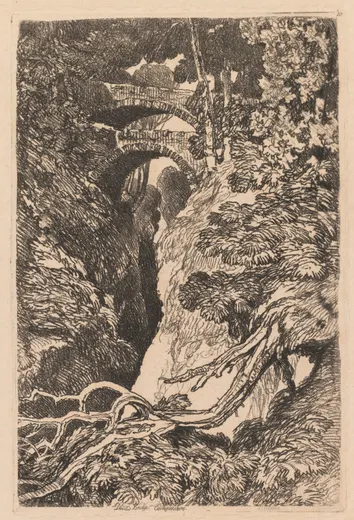
Devil's Bridge, Cardiganshire
1837 · softground etching and roulette
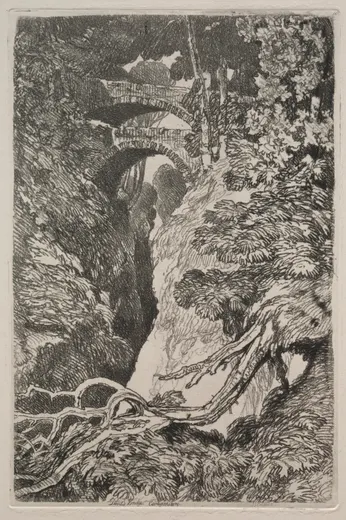
Liber Studiorum: Devil's Bridge, Cardiganshire
1838 · Soft ground etching
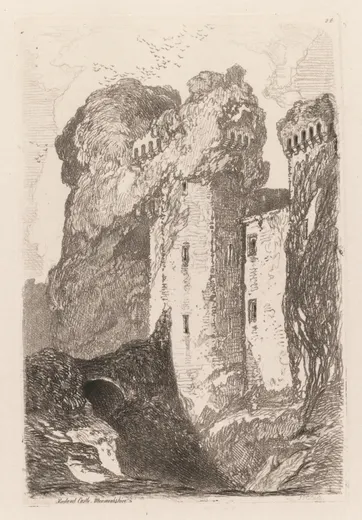
Liber Studiorium: Ragland Castle, Monmouhshire
1838 · softground etching and roulette
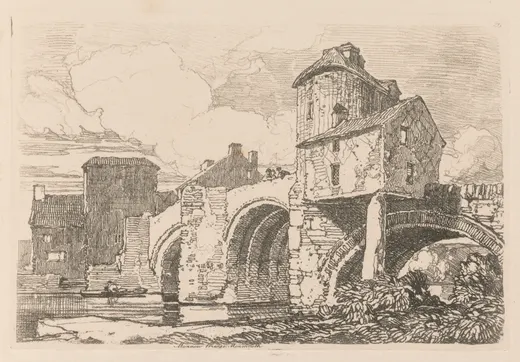
Liber Studiorum: Plate 26, Monnow Bridge, Monmouthshire
1838 · softground etching
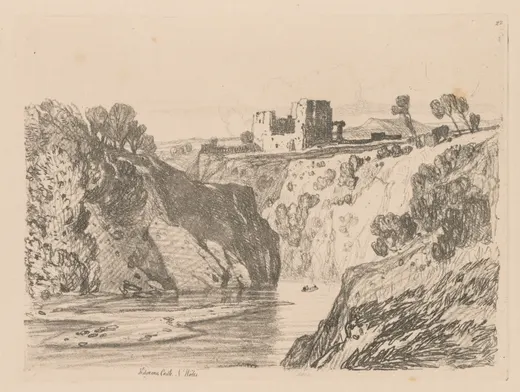
Liber Studiorum: Plate 27, Kilgarren Castle, N. Wales
1838 · softground etching
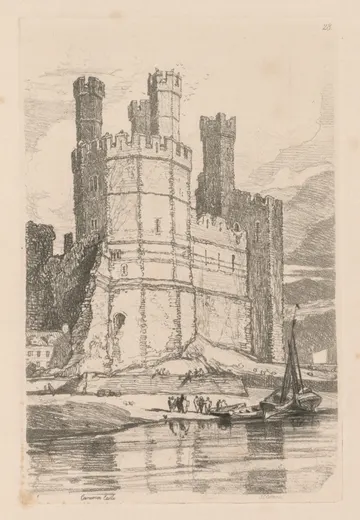
Liber Studiorum: Plate 28, Caernarvon Castle, N. Wales
1838 · softground etching
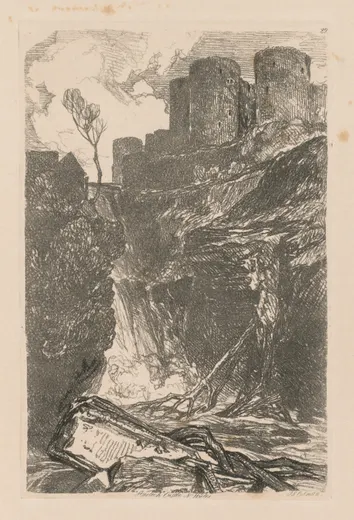
Liber Studiorum: Plate 29, Harlech Castle, N. Wales
1838 · softground etching
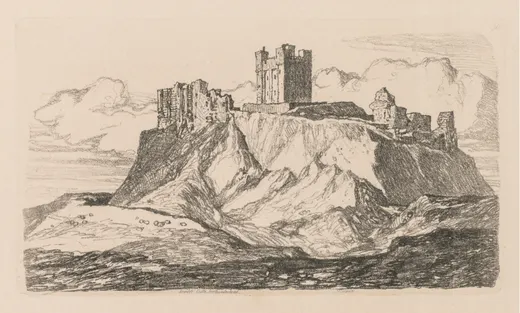
Liber Studiorum: Plate 30, Bambro' Castle, Northumberland
1838 · softground etching
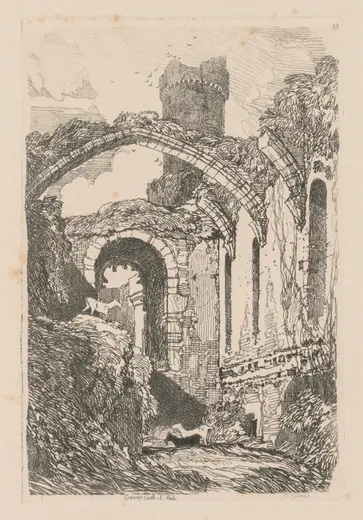
Liber Studiorum: Plate 33, Conway Castle, N. Wales
1838 · softground etching
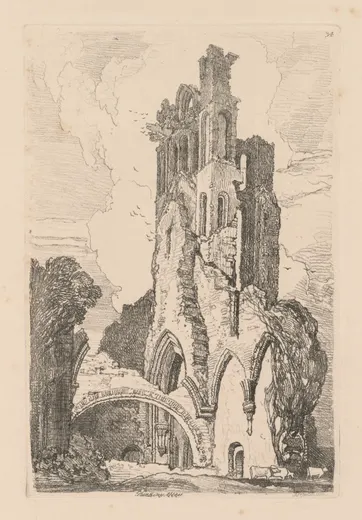
Liber Studiorum: Plate 34, Llanathony Abbey, Monmouthshire
1838 · softground etching
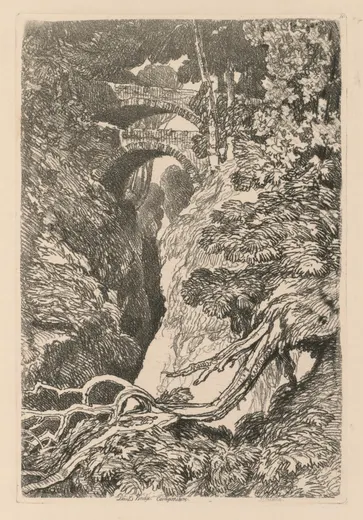
Liber Studiorum: Plate 10, The Devil's Bridge, Cardinganshire
1838 · softground etching
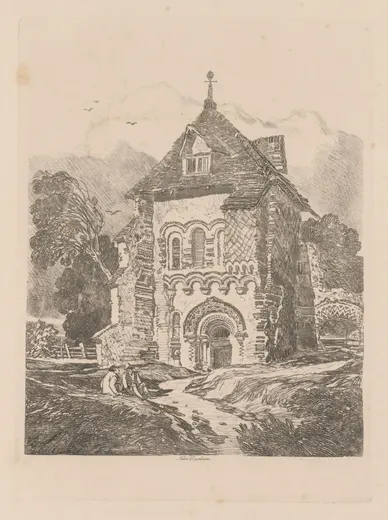
Liber Studiorum: Plate 36, Church near Durham
1838 · softground etching
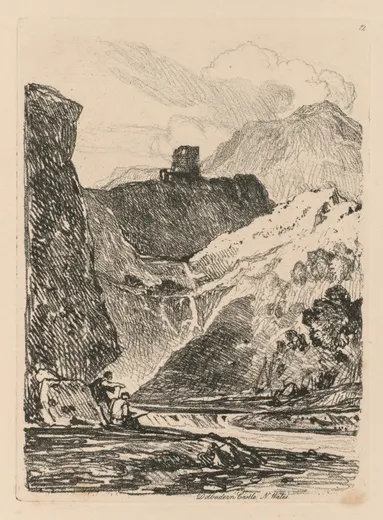
Liber Studiorum: Plate 12, Dolbadern Castle, Llanberris Lake, North Wales
1838 · softground etching
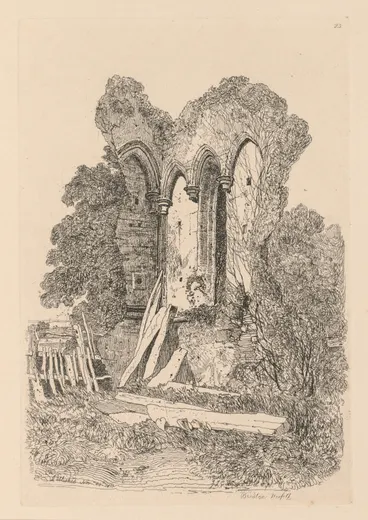
Liber Studiorum: Plate 23, Ruins at Beeston, Norfolk: No. 3
1838 · softground etching
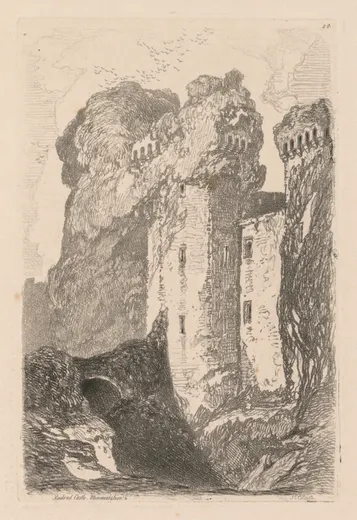
Liber Studiorum: Plate 24, Ragland Castle, Monmouthshire
1838 · softground etching