Water and ground
Water and ground
A pond after Ville-d'Avray, and a ground plane that recedes
Draw still water as a mirror a half-step off, and a ground plane that goes away from the viewer.
- Difficulty
- Time
- about 1 h
- You draw with
- 2B, 4B, 6B
Why this one
- Unit 3 of the program: Mass: the Corot Half.
- Water that reads as a surface, not a hole or a second picture upside down.
- Ground that recedes to the water's edge.
From your kit
The whole kit →- 1Grafwood 2B, 4B, 6B 2B, 4B, 6B for the darks, on their sides for mass. Long points from the Blackwing on everything up to B.
- 2Pitt Matt 8B to 12B for the big tone passages: matt, so the dark mass reads as tone, not shine.
- 3Kneaded eraser (warm it) and the clean Mono Zero lift the lights out of the mass; the Mono Zero for sky holes and lit edges.
- 4Alpha sketchbook 9 x 6 draw at the book's size and keep the proportions; date the page.
In general, this study asks for
- Drawing pad
- 2B, 4B, 6B
- Kneaded eraser
- A photo of a pond or river with trees on the far bank
Watch first
All videos →Shadow shapes as flat masses first. Shown on a portrait, but the principle is identical for a tree or a tower.
YouTube How to draw landscapes, trees, grass, foliage, water, using graphite pencilsSmoothie77 · Trees as masses in graphite, with the edge texture where it belongs.
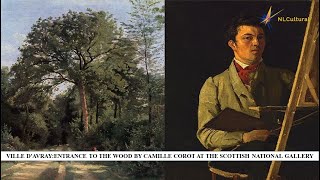 Ville d'Avray, Entrance to the Wood: Corot at the Scottish National GalleryNL Cultural · A single late Corot looked at slowly; watch for the three divisions of light and the lost edges.
The plan
4 stages · ~59 min- 1
Read Corot's pond
18 minStudy the Pond at Ville-d'Avray with the squint toggle. The reflected sky is a half-step darker than the sky. The reflected trees are a half-step lighter than the trees, softer, and drawn in verticals. A few horizontal breaks say surface.
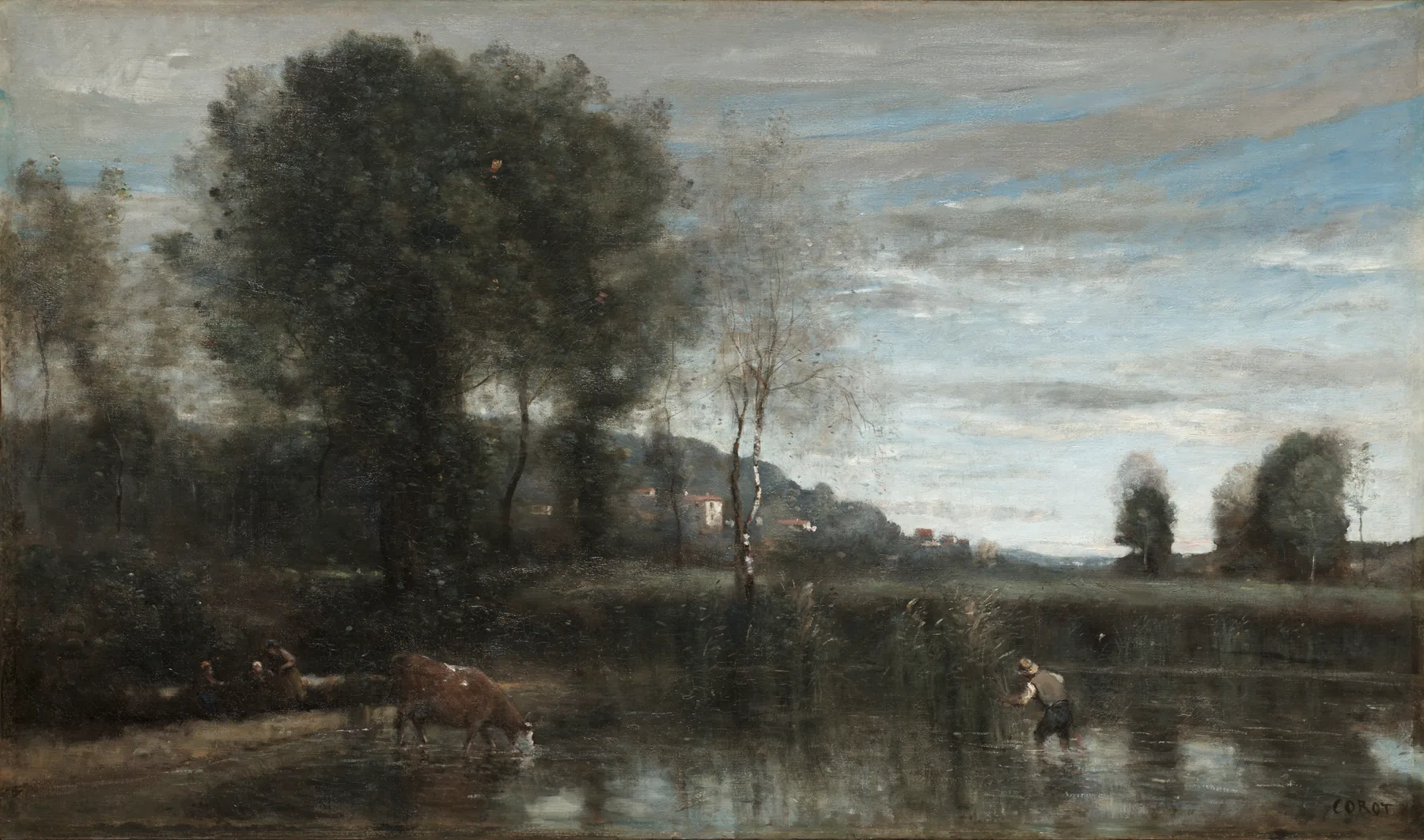
Corot, Pond at Ville-d'Avray, late 1860s. oil on fabric.
Corot, Pond at Ville-d'Avray. The sky laid flat and a half-step darker.
The Cleveland Museum of Art · Elisabeth Severance Prentiss Collection
Checklist0 / 1 - 2
The pond
18 minDraw the far bank with its trees as masses (you know how). Draw the water line. Below it, lay the reflections with vertical strokes, directly under each thing, lights slightly darker and darks slightly lighter than above, all edges softer. Then lift three or four long horizontal ripples with the edge of the kneaded eraser. Leave the paper's grain in the water for sparkle.
FigureStraight down, vertical, a half-step off, three horizontals. Checklist0 / 1 - 3
The ground
18 minIn the near foreground, lay the ground plane: a little darker and with a few marks of texture (grass, stones) in the nearest third only, grading to a flat pale wash as it recedes to the water. Horizontal or receding strokes only. Give the nearest tree or post a cast shadow that glues it down.
FigureTexture near, flat far, shadows gluing things down. Checklist0 / 1 - 4
Self-check
5 minTick each item honestly. If one is a no, the session is not finished; go back to that step.
Checklist0 / 4
What it should look like
- Water that reads as a surface, not a hole or a second picture upside down.
- Ground that recedes to the water's edge.
Where it goes wrong
- Reflections as exact copies. Copying the object instead of its reflection. Soften every edge, pull values toward the middle, break with horizontals.
- Texture across the whole ground. The plane stands up like a wall. Texture in the nearest third. Erase the rest to tone.
Log this session
Start the clock when you pick up the pencil. Stop it when you put it down. Log it. Every session counts toward the box.
Status
How did it go?