The Souls of the Righteous
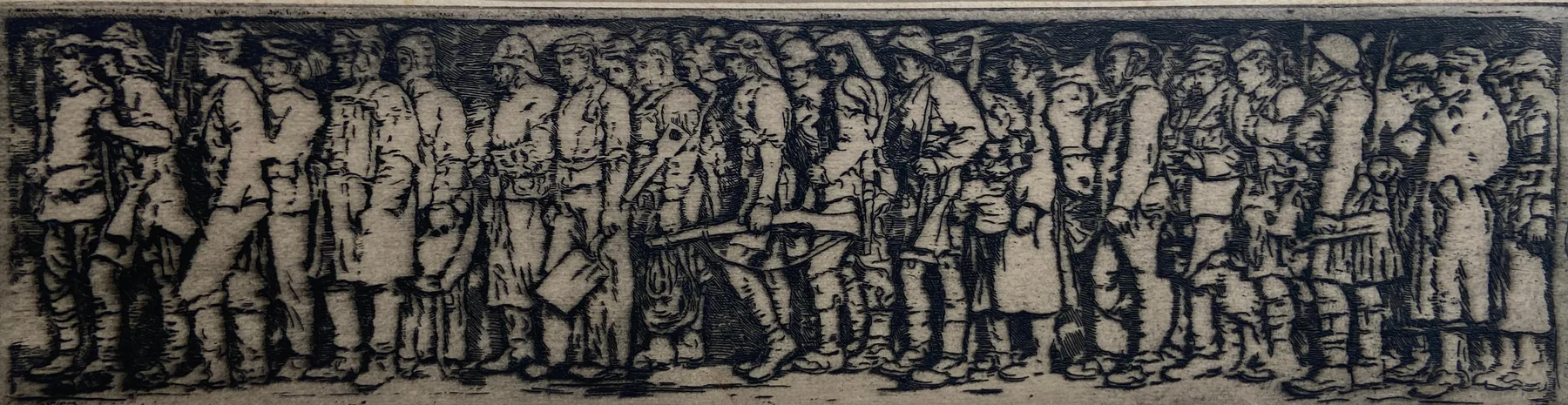
Forrest, The Souls of the Righteous (after the Scottish National War Memorial frieze), c. 1927. etching, signed in pencil.
Pins mark where to look before you draw.
Private collection (1stDibs) · Dealer photograph via 1stDibs (Toronto). The etching is in the public domain (artist d. 1943). After one of the two long bronze panels by Alice Meredith Williams in the Shrine of the Scottish National War Memorial, Edinburgh Castle.
The Souls of the Righteous
A frieze of figures after the Scottish National War Memorial bronze
About 1927, the year the Memorial opened in Edinburgh Castle, Forrest etched one of Alice Meredith Williams's two long bronze panels in the Shrine: a procession of every rank and service of the war, nurses and pipers and sappers, packed shoulder to shoulder, with a mule and a dog in the crowd. A plate only six centimetres high and twenty-five long. It is Forrest's one surviving narrative plate we could find, and the best figure study in his catalogue: a crowd drawn as one textured band, every head on one line.
In pencilAn etched frieze after a bronze relief: two translations deep. Copy it in graphite as a band of figures built from hatching that runs one way per plane, with the heads on one line and no features.
- Master
- Robert Smith Forrest
- Difficulty
- Time
- about 2.5 h
- You draw with
- H, HB and 2B graphite
Why this one
- A crowd as a single mass with a rhythm of heads, the way the closes have a rhythm of windows.
- Figures from a relief: the light comes from one side and every figure is a lit side and a shadow side.
- An extreme format, four to one, that forces a procession to read left to right.
From your kit
The whole kit →- 1Grafwood H, HB, 2B H, HB for layout and line; 2B for the darks. Long points from the Blackwing on everything up to B.
- 2Kneaded eraser and the Mono Zero press-and-lift corrections only; the Mono Zero for a single sharp light.
- 3Alpha sketchbook 9 x 6 draw at the book's size and keep the proportions; date the page.
In general, this study asks for
- Drawing pad or smooth cartridge
- 2H and H with long points
- HB for accents
- Kneaded eraser
- Sandpaper block
Watch first
All videos →Corot drew his late figures from memory of the pose. Proko shows the drill: look, close the book, draw the gesture, compare.
YouTube
The plan
4 stages · ~120 min- 1
The band
15 minMeasure the plate: about four times as wide as it is tall. Draw the envelope at that proportion, then the head line and the ground line across it. Count the figures in the plate (around twenty-five) and tick marks along the head line where each head falls.
FigureA frieze is a format problem first. Checklist0 / 3 - 2
Figures as planes
45 minH: each figure as a tall rectangle from its tick to the ground line, then the lean of each body and the overlap of each shoulder. Decide, for every pair, who is in front. No faces, no hands yet.
FigureHeads on the line. Checklist0 / 3 - 3
One light, two planes
50 minHB: name the light direction (it rakes from one side). Hatch every figure's shadow plane in one direction, leave the lit plane as paper with a few lines for the fold of a coat or the line of a rifle. 2B: the darkest gaps between figures and the shadow under the ground line.
FigureOne light, every figure a lit and a shadow side. Checklist0 / 3 - 4
Compare
10 minHold yours beside the plate. Does the crowd march? Note, date, box.
Checklist0 / 2
What it should look like
- A procession that reads left to right as one band.
- Heads on a line, feet on a line, and twenty-five people between them.
- Light from one side and no faces.
Where it goes wrong
- Faces appear. People have faces. A head is a lit side and a shadow side under a helmet. Nothing else at this scale.
- The band sags. Heads drifted off the line. Draw the head line first and keep every head touching it, as the bronze does.
Log this session
Start the clock when you pick up the pencil. Stop it when you put it down. Log it. Every session counts toward the box.
Status
How did it go?
Before this, ideally
Related studies
 Master study
Forrest · Portraits
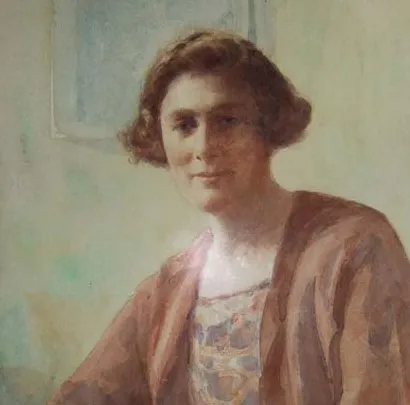
A Forrest head, in charcoal
The portrait painter, studied as masses
1.5h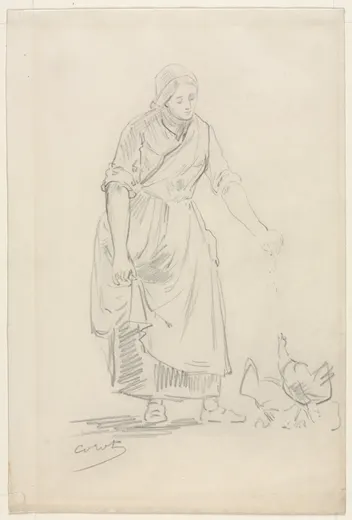 Master study
Corot · Figures and portraits
Peasant Girl Feeding Chickens
A standing figure as one envelope
1.5h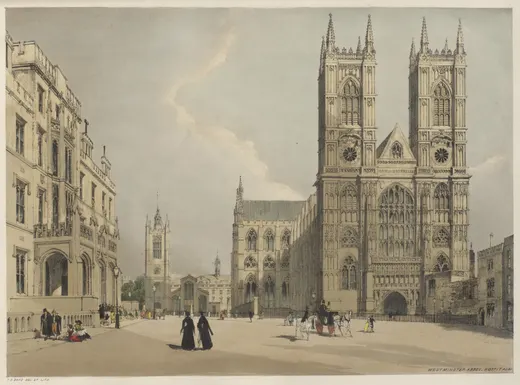 Master study
Shotter Boys
Westminster Abbey from London As It Is
A great facade in side light, with the street to measure it
3h